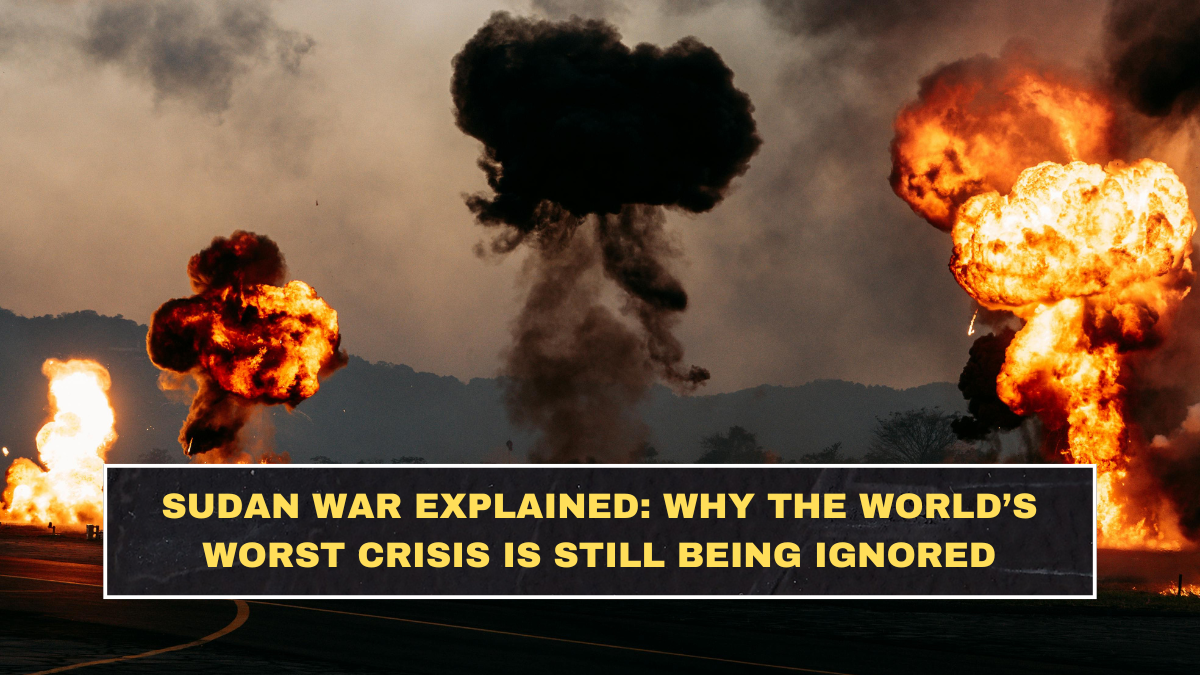
Sudan is being called the world’s worst humanitarian crisis because the scale of suffering is enormous and still growing. The United Nations says 33.7 million people in Sudan need humanitarian assistance in 2026, the highest number globally. That means almost three out of every four people in the country need some form of emergency help.
The war has also created the world’s largest displacement crisis. Millions have fled homes, cities, villages and camps since fighting broke out in April 2023 between the Sudanese Armed Forces and the Rapid Support Forces. This is not a short conflict anymore. It has become a national collapse involving hunger, disease, ethnic violence, broken hospitals and a near-total failure of protection for civilians.
Who Is Fighting In Sudan?
The war is mainly between Sudan’s army, known as the Sudanese Armed Forces, and the paramilitary Rapid Support Forces. The two sides were once uneasy partners after Sudan’s political transition began following the fall of Omar al-Bashir. But tensions over power, military integration and control of the state exploded into full-scale war in April 2023.
The fight is not only about who controls government buildings in Khartoum. It is about money, land, weapons, foreign backing, gold, border routes and regional power. Civilians are trapped between two armed forces that both claim legitimacy while ordinary people lose homes, food, schools, hospitals and basic safety. That is why calling this only a “power struggle” is too soft. It is a war that is dismantling a country.
| Crisis Indicator | Latest Reported Picture |
|---|---|
| People needing aid | 33.7 million in 2026 |
| Food insecurity | 28.9 million acutely food-insecure |
| Displacement | World’s largest displacement crisis |
| Main parties | Sudanese army and Rapid Support Forces |
| Worst-hit areas | Darfur, Kordofan, Khartoum and conflict hotspots |
Why Has The War Become So Deadly For Civilians?
The war has become deadly for civilians because fighting is happening in populated areas, aid access is blocked, hospitals have collapsed, and communities are being targeted along ethnic and political lines. Reuters reported that the United Nations estimates almost three-quarters of Sudan’s population now needs humanitarian aid. Famine or risk of famine has been declared in conflict hotspots, often worsened by blockades and bureaucratic barriers from the warring sides.
This is the part people outside Sudan often miss. Civilians are not only dying from direct violence. They are dying because food cannot reach them, medicine cannot reach them, clinics are destroyed, and diseases spread in crowded displacement areas. War kills with bullets, but it also kills slowly through hunger, infection, exposure and neglect.
How Bad Is Sudan’s Hunger Crisis?
Sudan’s hunger crisis is catastrophic. Reuters reported that 61.7% of Sudan’s population, or 28.9 million people, is acutely food-insecure according to the 2026 Humanitarian Needs and Response Plan. Aid groups have warned that millions are surviving on one meal a day, while some families in North Darfur and South Kordofan have been forced to eat leaves or animal feed.
That is not normal poverty. That is social breakdown. When people start eating leaves, animal feed or skipping meals for entire days, the crisis has already moved beyond hardship into survival desperation. Children, pregnant women, elderly people and displaced families are the first to collapse under this kind of pressure. Hunger is now one of the war’s deadliest weapons.
Why Is Darfur Again At The Center Of The Crisis?
Darfur is again at the center of the crisis because violence, ethnic targeting, displacement and hunger have returned at terrifying scale. UNICEF issued a rare Child Alert for Darfur in April 2026, warning that more than 5 million children across the five Darfur states are facing extreme deprivation. It said children are suffering killings, displacement, extreme hunger, disease and trauma.
The city of al-Fashir has become one of the clearest symbols of the disaster. UNICEF warned that more than 1,300 children have been killed or maimed there since April 2024, with reports of sexual violence and child recruitment by armed groups. This is not simply a humanitarian emergency. It is a protection emergency where children are being failed at every level.
Why Is The World Ignoring Sudan?
The world is ignoring Sudan because other crises dominate political attention and media coverage. Ukraine, Gaza, Iran, US-China tensions and energy shocks are constantly in the headlines. Sudan appears briefly, then disappears. That neglect is dangerous because aid funding and diplomatic pressure often follow attention. When attention collapses, so does urgency.
There has been some response, but it is not enough. Reuters reported that countries pledged nearly $1.8 billion to ease Sudan’s hunger crisis at a Berlin conference, while noting that almost 30 million people rely on food assistance and many state institutions are close to collapse. The pledge matters, but the hard truth is that money alone will not solve anything if fighting continues and aid access remains blocked.
Why Are Sanctions And Foreign Fighters Now Part Of The Story?
Sanctions and foreign fighters matter because Sudan’s war is not isolated. Reuters reported that the UN Security Council sanctioned the brother of RSF leader Mohamed Hamdan Dagalo, along with Colombian mercenaries accused of recruiting former Colombian military personnel to fight for the RSF. That shows the conflict has international networks feeding it.
This makes the war harder to stop. When weapons, money, fighters and political support flow through outside channels, both sides may believe they can keep fighting instead of negotiating. Sudan’s civilians then become collateral damage in a war sustained by ambition, outside interests and weak international consequences.
What Needs To Happen To Stop The Crisis?
The first need is a real ceasefire that is actually enforced, not another announcement that collapses on the ground. The second need is safe humanitarian access, especially into Darfur, Kordofan and besieged areas where food and medicine are blocked. The third need is serious pressure on both the Sudanese army and the RSF to stop attacking civilians and obstructing aid.
But let’s be blunt: statements of concern are not enough. Sudan needs sustained diplomacy, targeted sanctions, humanitarian funding and pressure on external actors supporting the war. If the world keeps treating Sudan as background noise, the crisis will deepen, and millions more people will be pushed toward famine, displacement and death.
What Is The Bottom Line?
Sudan’s war is one of the clearest examples of global selective attention. The numbers are horrifying: 33.7 million people need aid, nearly 29 million are acutely food-insecure, and millions have been displaced. Yet the crisis still struggles to hold world attention for more than a few days at a time.
The brutal truth is that Sudan is not being ignored because there is too little evidence. It is being ignored because there is too little political will. The country is collapsing in public, and civilians are paying the price while the world keeps looking elsewhere.
FAQs
Who Is Fighting In The Sudan War?
The war is mainly between the Sudanese Armed Forces and the Rapid Support Forces, a powerful paramilitary group. The conflict began in April 2023 after tensions over power-sharing and military integration turned into open war.
Why Is Sudan Called The World’s Worst Humanitarian Crisis?
Sudan is called the world’s worst humanitarian crisis because 33.7 million people need humanitarian assistance in 2026, the highest number globally.
How Many People Are Facing Hunger In Sudan?
According to the 2026 Humanitarian Needs and Response Plan cited by Reuters, 28.9 million people, or 61.7% of Sudan’s population, are acutely food-insecure.
Why Is Darfur So Important In This War?
Darfur is one of the worst-hit regions, with extreme hunger, violence, displacement and reports of ethnic attacks. UNICEF says more than 5 million children in Darfur are facing extreme deprivation.
Why Is Sudan Not Getting Enough Global Attention?
Sudan is being overshadowed by other global crises, even though its humanitarian numbers are among the worst in the world. Limited media attention also weakens public pressure, funding and diplomatic urgency.