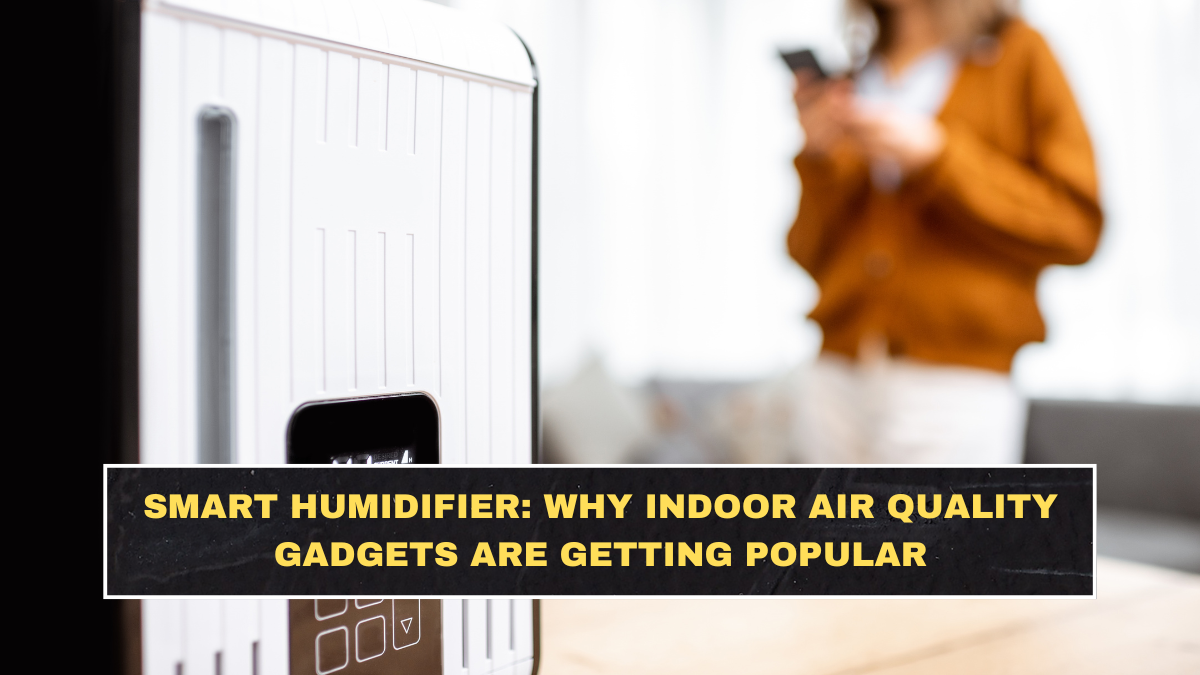
A smart humidifier is a home air-quality device that adds moisture to dry indoor air and can usually be controlled through an app, voice assistant, timer, or automatic humidity sensor. Unlike a basic humidifier, a smart humidifier can monitor room humidity and turn itself on or off to maintain a target moisture level.
This matters because indoor air quality has become a bigger concern for many households. People are paying more attention to dry air, dust, sleep quality, allergies, pollution, air purifiers, and smart-home devices. The broader air-care market is also expanding, with Future Market Insights projecting the global air humidifier market to grow from USD 5.8 billion in 2026 to USD 11.0 billion by 2036.
But here is the first reality check. A smart humidifier is not automatically a health upgrade. It is useful only when your indoor air is actually too dry and when the device is cleaned properly. If your room is already humid, adding more moisture can create mold, dust mite, and breathing problems.
When Does A Smart Humidifier Actually Help?
A smart humidifier can help when indoor air is too dry, especially during winter, in air-conditioned rooms, or in places where heating systems dry the air. Dry air can make skin feel tight, lips crack, throat feel scratchy, and nasal passages feel irritated. Some people also feel more discomfort while sleeping when the air is very dry.
Mayo Clinic says humidifiers can ease problems caused by dry air, including dry sinuses, bloody noses, and cracked lips. It also notes that cool-mist humidifiers may help ease symptoms of a cold or another respiratory condition, though the device must be maintained properly.
Cleveland Clinic similarly says that, when used correctly, a humidifier can help with nosebleeds, allergies, dry skin, and sleep quality. The key phrase is “used correctly.” A humidifier is not a plug-and-forget product. It is a water device, and water devices can become dirty fast.
What Makes A Smart Humidifier Different From A Normal One?
The main difference is control. A normal humidifier may keep running until you manually turn it off. A smart humidifier can use a humidity sensor, app settings, schedules, and automation to avoid over-humidifying the room. Some models also send cleaning reminders, water-level alerts, and filter-change notifications.
That automation matters because many people use humidifiers badly. They run them all night without checking humidity, leave water sitting in the tank, or place them too close to beds and walls. A smart device can reduce some of those mistakes, but it cannot fully protect careless users.
| Feature | Normal Humidifier | Smart Humidifier |
|---|---|---|
| Humidity control | Manual setting or basic dial | Automatic humidity target |
| App control | Usually not available | Remote control through phone |
| Scheduling | Limited or none | Timers and routines available |
| Alerts | Usually manual checking | Water, cleaning, and filter alerts |
| Best use | Simple dry-air relief | Controlled room humidity management |
What Humidity Level Should You Maintain?
Most homes should avoid both very dry and overly humid air. The commonly recommended indoor humidity range is around 30% to 50%. If the air is below this range, dryness symptoms can increase. If humidity goes above this range for too long, mold, dust mites, and other moisture problems can become more likely.
The EPA warns that humidifiers must be used carefully because microorganisms can grow in tanks and be released into the air. It advises emptying the tank, wiping surfaces dry, and refilling portable humidifiers daily to reduce microbial growth.
The EPA also says mold growth should be controlled by managing moisture indoors. Its mold guidance explains that mold can grow when moisture problems are not fixed, which is exactly why running a humidifier blindly in an already damp room is a bad idea.
What Are The Biggest Risks Of Using A Humidifier?
The biggest risk is poor cleaning. A dirty humidifier can spread mold, bacteria, minerals, and other particles into the air. That can irritate breathing, worsen allergies, or create problems for people with asthma and respiratory sensitivity. The device that was supposed to improve comfort can become the thing making the air worse.
Mayo Clinic warns that mist from a dirty humidifier or increased growth of allergens due to high humidity can trigger or worsen asthma and allergy symptoms. It also recommends following cleaning instructions and using distilled or demineralised water to reduce mineral buildup.
The second risk is overuse. If the room feels damp, windows collect condensation, walls smell musty, or furniture feels sticky, humidity may be too high. At that point, the problem is not dry air. The problem is excess moisture, and a humidifier will only make it worse.
Who Should Buy A Smart Humidifier?
A smart humidifier is worth considering for people who live in dry climates, sleep in air-conditioned rooms, face dry skin or irritated nasal passages, or want controlled humidity in a bedroom, nursery, or home office. It is especially useful for people who like smart-home automation and want the device to maintain a target humidity level without constant manual checking.
It can also help families with children if the air is genuinely dry, but safety matters. Mayo Clinic says cool-mist humidifiers are generally preferred for children because hot water or steam from warm-mist devices can cause burns. It also says both warm and cool mist are equally effective by the time moisture reaches the lower airways.
However, people living in humid cities or damp homes may not need one at all. In places like Mumbai, Chennai, Kolkata, coastal Kerala, or already humid rooms, a dehumidifier or better ventilation may make more sense than a humidifier. Buying a gadget without checking actual humidity is just consumer confusion.
What Features Should You Look For?
The most useful feature is a built-in humidistat, which measures room humidity and helps the device maintain a set range. App control is convenient, but humidity accuracy is more important than flashy design. A large tank helps overnight use, but only if you are disciplined about cleaning it.
Look for automatic shutoff, easy cleaning access, removable tank, quiet operation, filter availability, child-safe design, and compatibility with distilled water if possible. Avoid models with complicated tanks or narrow openings because they are harder to clean. A humidifier that is annoying to clean will become dirty, and then it becomes a problem.
Do not overpay only for app control. The basics matter more: accurate humidity control, hygiene design, safe operation, and easy maintenance. A cheap clean humidifier is better than an expensive dirty smart one.
Conclusion?
Smart humidifiers are getting popular because people are paying more attention to indoor air quality, sleep comfort, dry skin, allergies, and smart-home convenience. Used correctly, they can help when indoor air is genuinely too dry and when humidity is kept in a healthy range.
But the hype needs limits. A smart humidifier is not useful in every home, and it can become harmful if it is dirty or overused. Check your room humidity first, clean the device regularly, use fresh water, and avoid turning your home into a damp mold-friendly space. The smart part is not the app; it is knowing when the device is actually needed.
FAQs
What Is A Smart Humidifier?
A smart humidifier is a connected humidifier that adds moisture to indoor air and can be controlled through an app, schedule, voice assistant, or automatic humidity sensor. It helps maintain a target humidity level more easily than a basic model.
Is A Smart Humidifier Good For Health?
It can help when indoor air is too dry, especially for dry skin, irritated sinuses, cracked lips, and sleep comfort. But if it is dirty or used in an already humid room, it can worsen allergies, asthma, mold, and breathing discomfort.
What Humidity Level Is Best Indoors?
A commonly recommended indoor humidity range is about 30% to 50%. Too little humidity can cause dryness, while too much humidity can encourage mold, dust mites, and dampness-related problems.
How Often Should You Clean A Humidifier?
Portable humidifiers should be emptied, wiped dry, and refilled daily when used regularly. They should also be cleaned deeply according to the manufacturer’s instructions to prevent mold, bacteria, and mineral buildup.
Click here to know more