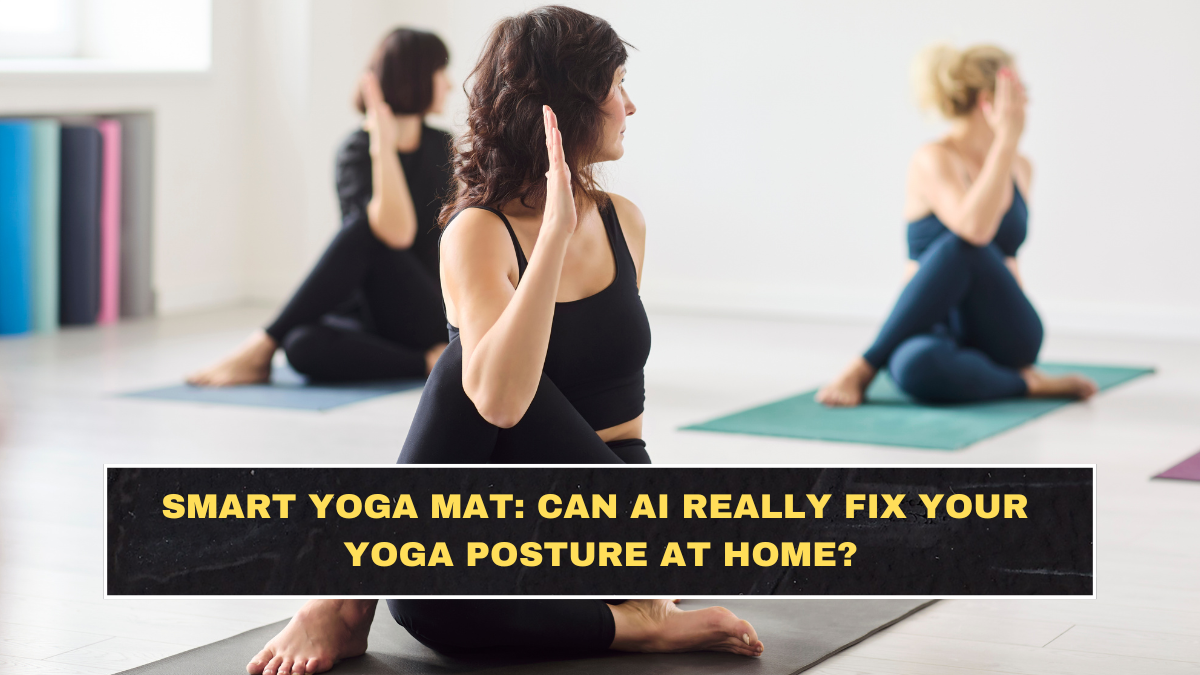
A smart yoga mat is a connected fitness mat that uses sensors, apps, and sometimes AI to track body position, balance, pressure, and posture during yoga practice. Unlike a normal yoga mat, it does not only provide grip and cushioning. It also tries to give feedback when your alignment, weight distribution, or pose position appears incorrect.
Some smart mats use embedded pressure sensors inside the mat. Others combine mat data with computer vision, app guidance, or wearable-style tracking. YogiFi, one of the better-known smart yoga mat brands, says its Gen 3 mat uses intelligent sensor technology for posture detection, real-time feedback, and personalised yoga sessions.
This is why smart yoga mats are becoming popular among home fitness users. People want guided workouts without always attending a studio. But buyers need to be realistic. A smart mat can help with basic feedback, but it cannot fully replace a trained yoga teacher watching your entire body, breathing, pain response, and movement quality.
How Does A Smart Yoga Mat Track Your Posture?
A smart yoga mat usually tracks posture by reading pressure points from your hands, feet, knees, and body contact with the mat. If your weight is too far forward, uneven between both sides, or placed incorrectly for a pose, the mat may alert you through an app, voice cue, light indicator, or progress score.
The Department of Science and Technology described YogiFi as an AI-enabled mat developed by an IIT Mandi-incubated startup. It said the mat has an innovative sensor layer that tracks yoga postures and offers real-time suggestions to help users correct their posture.
| Feature | What It Does | Why It Matters |
|---|---|---|
| Pressure sensors | Detect hand, foot, and body placement | Helps identify uneven weight distribution |
| App-guided classes | Shows routines and instructions | Useful for beginners practicing alone |
| Real-time feedback | Alerts users during poses | Helps correct basic alignment mistakes |
| Balance tracking | Measures stability over time | Useful for progress monitoring |
| Session history | Saves practice data | Helps users stay consistent |
Can AI Really Correct Yoga Posture?
AI can help correct some yoga posture mistakes, but it cannot correct everything. A mat can detect where pressure is placed, whether your balance is uneven, or whether your hand and foot positions are off. That is useful for beginners who struggle with basic alignment in poses like downward dog, warrior pose, plank, or tree pose.
Research on intelligent yoga systems says monitoring, detection, and analysis of yoga postures are important because automatic guidance can help practitioners correct posture without continuous instructor supervision. A 2023 review on yoga and intelligent internet-of-things systems discussed how sensor-based and AI-based systems can support posture detection and correction.
But here is the limitation people ignore: yoga alignment is not only about pressure on a mat. It also involves spine position, shoulder rotation, hip mobility, knee safety, breathing, pain signals, neck position, and individual anatomy. A smart mat can support learning, but it cannot understand your body like a skilled teacher can.
Who Should Buy A Smart Yoga Mat?
A smart yoga mat makes the most sense for beginners, home workout users, tech-friendly fitness people, and anyone who wants structured practice without attending regular classes. It can also help people who struggle with consistency because app-guided sessions and progress tracking make the routine feel more organised.
Yoga Journal’s review of the YogiFi Smart Mat said it offers postural adjustments based on sensors, guided video sequences through its app, and tracking for balance and flexibility over time. The review also noted that whether it is useful depends on a person’s preferences, needs, and budget.
People who already have an experienced yoga teacher may not need one. Advanced practitioners may also find the feedback too basic or limited. If you already understand alignment, breath, mobility, and safe progression, a smart mat may feel more like an expensive tracking gadget than a serious upgrade.
What Are The Benefits Of A Smart Yoga Mat?
The biggest benefit is instant feedback. If you are practicing alone, you may not realise your hands are uneven, your balance is weak, or your weight is shifting incorrectly. A smart mat can highlight these issues earlier than a normal mat.
The second benefit is consistency. Many users quit home workouts because they do not know what to do next. A smart mat linked with an app can provide routines, guided sessions, progress history, and reminders. That can make yoga feel less random and more structured.
The third benefit is confidence for beginners. Many people avoid yoga classes because they feel embarrassed or unsure. A smart mat can give them a private way to start. That matters because the first barrier in fitness is often not ability; it is discomfort and hesitation.
What Are The Problems With Smart Yoga Mats?
The first problem is price. A normal good-quality yoga mat is much cheaper. A smart mat can cost several times more, and some products may also require app subscriptions after a free trial. Lifewire’s review of the YogiFi Gen 3 praised real-time pose correction and guided sessions, but also noted drawbacks such as price, a proprietary charging cable, and subscription considerations.
The second problem is accuracy. A mat can detect pressure and placement, but it may not catch upper-body errors clearly. For example, it may not know if your back is rounded dangerously, your neck is strained, or your shoulder is internally rotated. That matters because some yoga injuries come from subtle alignment problems that pressure sensors alone may miss.
The third problem is dependence. If users focus too much on app scores, they may ignore body awareness. Yoga is not supposed to become only a numbers game. A smart mat should support mindfulness and safe movement, not turn every pose into a performance test.
Are Smart Yoga Mats Safe For Beginners?
Smart yoga mats can be safe for beginners if used sensibly. They can guide hand and foot placement, suggest corrections, and provide structured routines. For people who are completely new to yoga, that is better than copying random advanced poses from social media without understanding form.
However, beginners should not push through pain just because an app says the pose is correct. Pain, dizziness, joint discomfort, numbness, or sharp pulling are warning signs. No app knows your full injury history, flexibility limits, or medical condition.
People with back pain, knee problems, shoulder injuries, pregnancy, high blood pressure, vertigo, or major health conditions should get professional guidance before relying on a smart mat. The mat may be smart, but it is not a doctor or physiotherapist.
Conclusion?
A smart yoga mat can be useful for posture feedback, guided home practice, balance tracking, and beginner confidence. It brings structure to at-home yoga and can help users notice basic alignment problems that they might otherwise miss.
But it is not a miracle teacher. AI can correct some posture errors, not every movement risk. A smart mat is worth considering if you practice at home regularly and like app-based coaching. If you already attend good classes or only do yoga casually, a normal high-quality mat may be the smarter purchase.
FAQs
What Is A Smart Yoga Mat?
A smart yoga mat is a connected yoga mat with sensors and app support that can track posture, pressure, balance, and practice progress. Some models also give real-time feedback during yoga sessions.
Can A Smart Yoga Mat Fix My Posture?
It can help fix basic posture and alignment issues, especially hand and foot placement or uneven weight distribution. However, it cannot fully replace a trained yoga instructor who can observe your whole body and movement quality.
Is A Smart Yoga Mat Good For Beginners?
Yes, it can be useful for beginners who practice at home and want guided feedback. It can make yoga less confusing, but beginners should still avoid pushing through pain or attempting advanced poses too early.
Is A Smart Yoga Mat Worth Buying?
It is worth buying if you practice yoga regularly at home, enjoy fitness tech, and want feedback without attending classes. It may not be worth it if you already have a teacher, practice casually, or do not want app subscriptions.