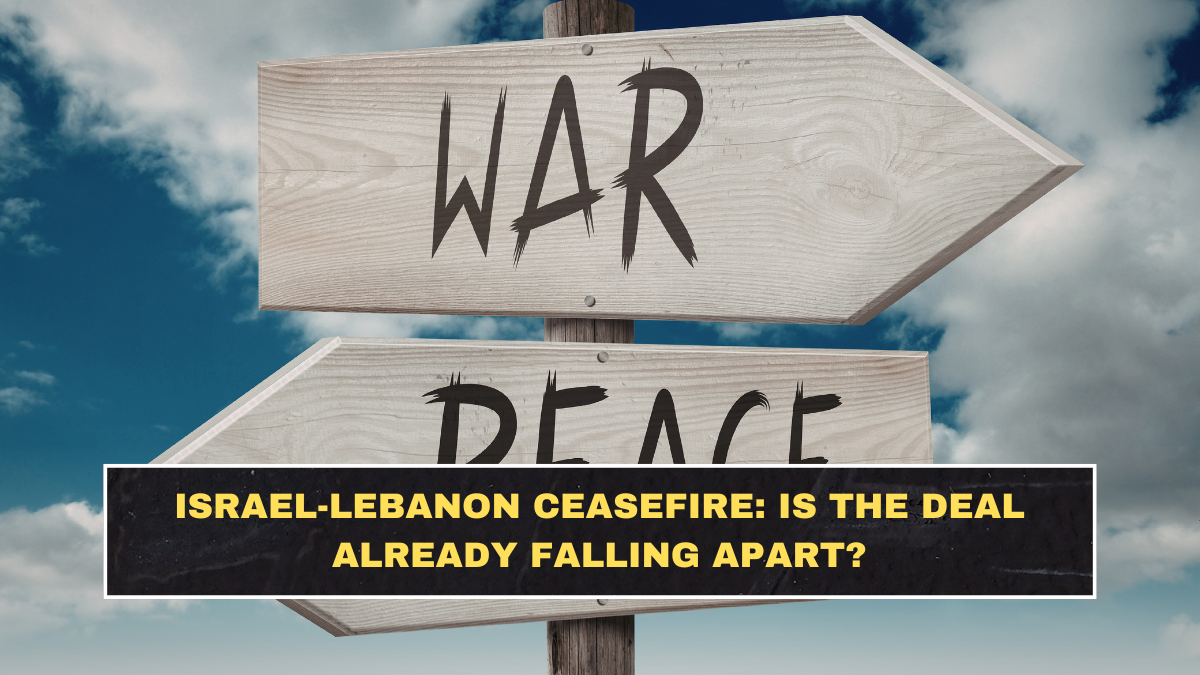
The Israel-Lebanon ceasefire is under pressure because fighting has not fully stopped on the ground. The deal may exist diplomatically, but southern Lebanon is still seeing Israeli strikes, Hezbollah attacks, evacuation warnings and civilian casualties. Reuters reported that Israeli strikes on April 28 killed five people in southern Lebanon, including three rescue workers, while two Lebanese soldiers were wounded.
That is why many people are asking whether this is really a ceasefire or just a slower version of war. A ceasefire is supposed to reduce violence, protect civilians and create space for diplomacy. But when rescue workers are killed, villages are warned to evacuate, and both sides continue accusing each other of violations, the deal starts looking more like a temporary pause that is already breaking apart.
What Is Happening On The Ground In Southern Lebanon?
Southern Lebanon remains trapped in a dangerous gray zone. Israel says it is targeting Hezbollah positions, weapons and infrastructure. Hezbollah says Israel is violating the ceasefire and continuing attacks inside Lebanese territory. The Guardian reported that Hezbollah launched drone attacks on Israeli soldiers in southern Lebanon on April 28, following an earlier strike that killed one Israeli soldier and injured six.
Israel has responded with airstrikes and evacuation warnings. Al Jazeera reported that Israel issued forced evacuation orders for parts of southern Lebanon in an escalation, while Hezbollah rejected Israeli claims that it was undermining the ceasefire. This means civilians are again being pushed into fear, uncertainty and displacement, even though a ceasefire is officially supposed to be in place.
| Ceasefire Pressure Point | What It Means For Civilians? |
|---|---|
| Israeli airstrikes | Homes, roads and rescue teams remain at risk |
| Hezbollah drones and rockets | Israel says its soldiers and border areas remain threatened |
| Evacuation warnings | Families are forced to flee again or remain in fear |
| Rescue worker deaths | Emergency response becomes more dangerous |
| Weak Lebanese control | Beirut struggles to control Hezbollah’s military actions |
Why Are Evacuation Warnings Creating So Much Fear?
Evacuation warnings create fear because they signal that strikes are likely coming. The Israeli military warned residents in multiple southern Lebanese villages to leave before attacks on what it described as Hezbollah-linked sites. ABC reported that the ceasefire appeared to be shattered as Israel demanded residents evacuate villages north of the Litani River, saying Hezbollah targets were present there.
For civilians, this is not an abstract security message. It means families must decide quickly whether to leave homes, farms, shops and elderly relatives behind. Some may not have transport. Some may not know where to go. Others may fear that leaving once means never returning. That is why evacuation warnings, even when framed as civilian protection, can become a form of psychological pressure.
Why Is The Litani River Important In This Conflict?
The Litani River matters because it has long been tied to security arrangements in southern Lebanon. Israel wants Hezbollah pushed away from its northern border and often points to areas south of the Litani as a critical military zone. Hezbollah, meanwhile, has deep roots in southern Lebanon and views Israeli operations there as occupation or aggression.
This is why Israeli warnings north of the Litani are so alarming. If strikes and evacuation orders expand beyond the traditional border zone, the conflict risks widening. Civilians may see this as proof that the ceasefire is not protecting them, while Israel may argue that Hezbollah is using civilian areas to prepare attacks. Both narratives feed escalation.
Why Does Israel Say It Still Needs To Strike Hezbollah?
Israel says it still needs to strike Hezbollah because the group remains armed and capable of attacking Israeli soldiers and northern communities. The Wall Street Journal reported that the Israeli military said it had dismantled a Hezbollah tunnel network in southern Lebanon, including tunnels with weapon caches and launch positions.
From Israel’s view, a ceasefire cannot mean allowing Hezbollah to rebuild along the border. Israeli leaders argue that military action is necessary if Hezbollah uses the pause to reposition weapons, drones or fighters. But the problem is obvious: once Israel keeps striking, Hezbollah can claim the ceasefire is meaningless and justify its own attacks. That cycle is exactly how ceasefires collapse.
Why Is Hezbollah Still A Major Problem For Lebanon?
Hezbollah remains a major problem for Lebanon because it is not simply a political party. It is an armed movement with its own military power, regional alliances and decision-making structure. The Lebanese government does not fully control Hezbollah’s actions, which means Beirut can be blamed for a war it may not be able to stop.
This creates a brutal situation for ordinary Lebanese people. They suffer from Israeli strikes, economic collapse and displacement, while having limited say over Hezbollah’s military choices. At the same time, many Hezbollah supporters see the group as resistance against Israel. That split makes any ceasefire fragile because Lebanon does not have one single security voice.
What Are The Humanitarian Risks If The Ceasefire Fails?
The humanitarian risks are severe. Reuters reported that recent Israeli strikes in Lebanon killed rescuers who were responding to an earlier strike, a pattern that Lebanese officials condemned strongly. When emergency workers become casualties, ordinary civilians become even more exposed because rescue operations slow down or become too dangerous.
The wider danger is renewed displacement. Families who already fled earlier fighting may be forced to move again. Schools, clinics and local businesses may stay closed. Farmers may lose access to land. Children may return to living under bombardment and uncertainty. A ceasefire failure does not only restart fighting; it restarts the slow destruction of normal life.
Can The Ceasefire Still Survive?
The ceasefire can survive only if both sides limit retaliation and outside mediators apply real pressure. Trump reportedly extended the Lebanon ceasefire by three weeks, but UN human rights officials warned that recent Israeli attacks and Hezbollah rocket fire may amount to serious violations of international humanitarian law. That means the agreement is still alive diplomatically but badly damaged operationally.
The realistic danger is not one dramatic announcement ending the ceasefire. It is death by repeated violations. One drone attack leads to one airstrike. One airstrike leads to evacuation warnings. One warning leads to more anger and retaliation. If that pattern continues, the ceasefire will remain on paper while the war returns in practice.
What Is The Bottom Line?
The Israel-Lebanon ceasefire is not dead yet, but it is clearly in trouble. Israeli strikes, Hezbollah drone attacks, evacuation warnings and civilian casualties show that the deal is not creating real safety on the ground. Diplomats may still call it a ceasefire, but civilians in southern Lebanon are living with something much closer to continued war.
The blunt reality is that a ceasefire without enforcement is just a weak promise. Israel wants Hezbollah pushed back. Hezbollah wants to preserve its armed position. Lebanon’s government lacks full control. Civilians are stuck in between. Unless that basic power problem is addressed, the ceasefire will keep cracking.
FAQs
Is The Israel-Lebanon Ceasefire Still Active?
Yes, it is still officially active, but it is under heavy strain because Israeli strikes, Hezbollah attacks and evacuation warnings have continued despite the agreement.
What Happened In Southern Lebanon Recently?
Israeli strikes killed five people, including three rescue workers, in southern Lebanon on April 28, while Hezbollah also launched drone attacks against Israeli soldiers.
Why Is Israel Issuing Evacuation Warnings In Lebanon?
Israel says it is warning civilians before striking Hezbollah-linked sites. Critics argue the warnings show the ceasefire is failing and force Lebanese civilians into fear and displacement.
Why Is Hezbollah Still Fighting During The Ceasefire?
Hezbollah claims Israel is violating the ceasefire, while Israel says Hezbollah continues to threaten its forces and border communities with drones, rockets and military infrastructure.
Could The Ceasefire Collapse Completely?
Yes. If repeated strikes and retaliations continue, the ceasefire may survive only on paper while active conflict resumes across southern Lebanon.