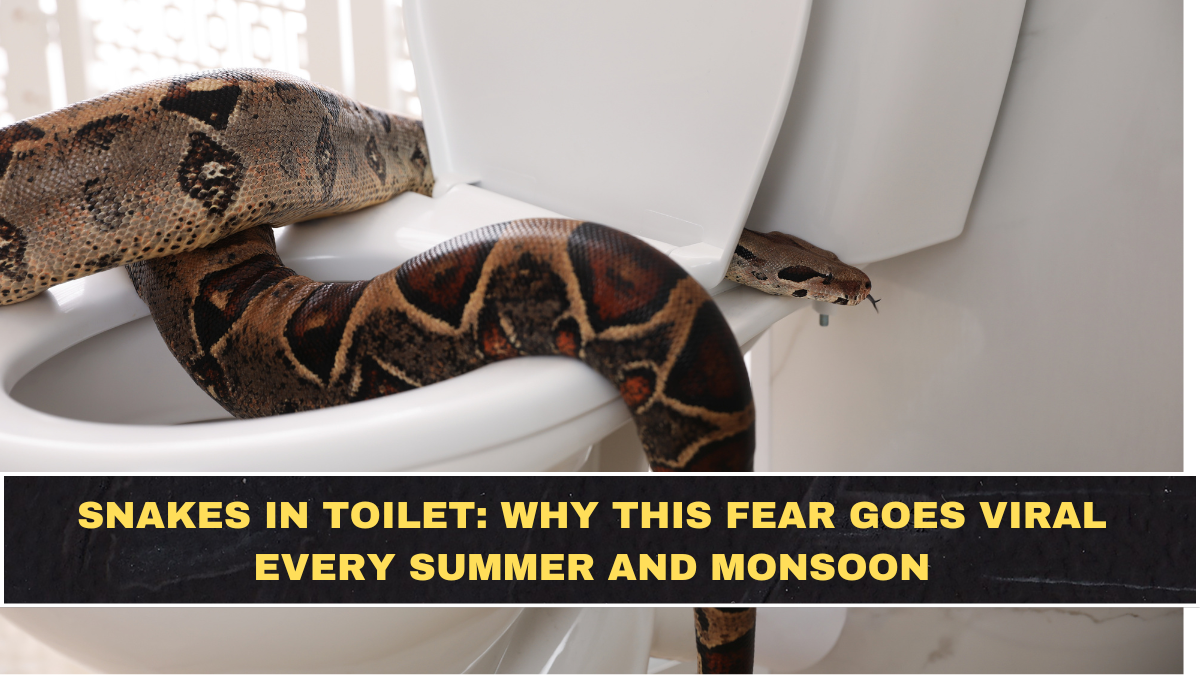
Snakes in toilet stories go viral because they hit two emotions at once: fear and curiosity. A bathroom is supposed to feel private and safe, so the idea of a snake appearing there instantly shocks people. That is why even rare incidents spread quickly on social media during summer and monsoon months.
But here is the truth people ignore: snakes are not “targeting” toilets. In most cases, they accidentally enter connected drainage spaces, follow prey like rats or frogs, or look for cool and damp shelter. Reports explaining urban plumbing note that toilet bowls are usually the final point of a drainage network, not the snake’s chosen destination.
Can Snakes Really Come Through Toilets?
Yes, it can happen, but it is rare. Modern toilets have water traps that block gases and make animal movement difficult, but under unusual conditions, a snake already inside a drainage line may move through pipes and appear in the bowl. This is more likely when drainage systems are old, damaged, open, or connected to outdoor paths.
Heavy rain and flooding can also push snakes out of their normal hiding places. During monsoon, burrows, fields, gardens and drainage routes may get disturbed, forcing snakes to move toward drier or safer spaces. This does not mean every toilet is at risk, but it does mean homes near open drains, fields, ponds or rodent activity should be more careful.
| Reason | Why It Happens |
|---|---|
| Rodents nearby | Snakes follow rats, mice and frogs as prey |
| Open drains | Broken or uncovered drains create entry routes |
| Monsoon flooding | Water pushes snakes from burrows and fields |
| Cool bathrooms | Damp corners may attract snakes seeking shelter |
| Gaps in plumbing | Pipe holes and wall cracks allow movement |
Why Do Bathrooms Attract Snakes?
Bathrooms can attract snakes indirectly because they are often cool, moist and connected to drain lines. In hot weather, such places can become temporary shelter for reptiles trying to regulate body temperature. Kitchens and bathrooms also attract pests if food waste, rodents or insects are present, which then attracts snakes looking for prey.
The real problem is not the toilet seat. The problem is a home that gives snakes three things: entry, hiding space and food. If you have broken drain covers, gaps behind pipes, open vents, cluttered storage corners and rodent movement, you are basically making your house easier for snakes to enter.
What Should You Do If You See One?
If you see a snake in the bathroom or toilet, do not try to grab, hit, burn, flush or kill it. That is how people turn a scary situation into a dangerous one. CDC advises people not to touch or handle snakes, and Indian public safety guidance also says people should support trained snake rescue instead of killing snakes.
Close the bathroom door calmly, keep children and pets away, and call a local snake rescuer, forest department contact or emergency helpline. Do not crowd around the snake for photos. Most bites happen when people panic, provoke the snake, or try to act brave without knowing whether it is venomous.
How Can You Stop This?
The best strategy is prevention, not panic. Snake-proofing a home is mostly about blocking entry points and removing food sources. If rats are moving around your house, fix that first because rodent control is one of the strongest ways to reduce snake attraction.
Do these checks before monsoon and peak summer:
- Install tight drain covers in bathrooms, balconies and utility areas.
- Seal gaps around pipes, toilets, sinks, windows and wall openings.
- Keep bathrooms dry and avoid damp corners behind buckets or commodes.
- Control rats and mice by cleaning food waste and sealing bins.
- Add mesh to vents, bathroom windows and open drainage points.
- Clear bushes, wood piles and debris near the house boundary.
What If Someone Gets Bitten?
A snakebite is a medical emergency, not a home-remedy experiment. Keep the person calm and still, remove tight jewellery or clothing near the bite, and take them to the nearest hospital quickly. District health guidance says people should not apply tourniquets, cut the wound, suck venom, apply ice, or give alcohol or unnecessary medication after a bite.
Do not waste time trying to catch the snake for identification. If it is safe, remember its colour, size and pattern, but the priority is medical care. Antivenom decisions should be made by doctors, not neighbours, WhatsApp groups or YouTube videos.
Conclusion: What Is The Real Lesson?
Snakes in toilet stories are scary, but most of the fear comes from imagination and viral exaggeration. The risk is real but rare, and it usually points to bigger problems like open drains, rodents, flooding, poor sealing and weak home maintenance. Panic will not protect your home, but proper prevention will.
The blunt truth is simple: if your house has rats, broken drains and open gaps, you are inviting wildlife trouble. Clean the surroundings, seal entry points, use drain covers and call professionals if a snake appears. Fear gets clicks, but basic safety prevents the real danger.
FAQs?
Can Snakes Really Come Out Of Toilets?
Yes, snakes can appear in toilets, but it is rare. They usually do not choose toilets intentionally; they may accidentally move through drainage or plumbing routes. Old pipes, open drains, flooding and rodent activity can increase the chances.
Are Snakes More Common In Toilets During Monsoon?
The risk can rise during monsoon because rain and flooding disturb snake habitats. Burrows, fields and drains may fill with water, pushing snakes toward buildings or drier spaces. Homes near open drains, fields or rodent-prone areas should be extra careful.
What Should I Do If I See A Snake In My Bathroom?
Do not touch, hit, flush, or try to remove it yourself. Close the room, keep children and pets away, and call a trained snake rescuer or local wildlife authority. Trying to handle the snake is the fastest way to get bitten.
How Can I Prevent Snakes From Entering My Toilet?
Use tight drain covers, seal pipe gaps, install mesh on vents and windows, and keep the bathroom dry. Also control rats and mice because snakes often follow prey. A clean, sealed and rodent-free home is far less attractive to snakes.