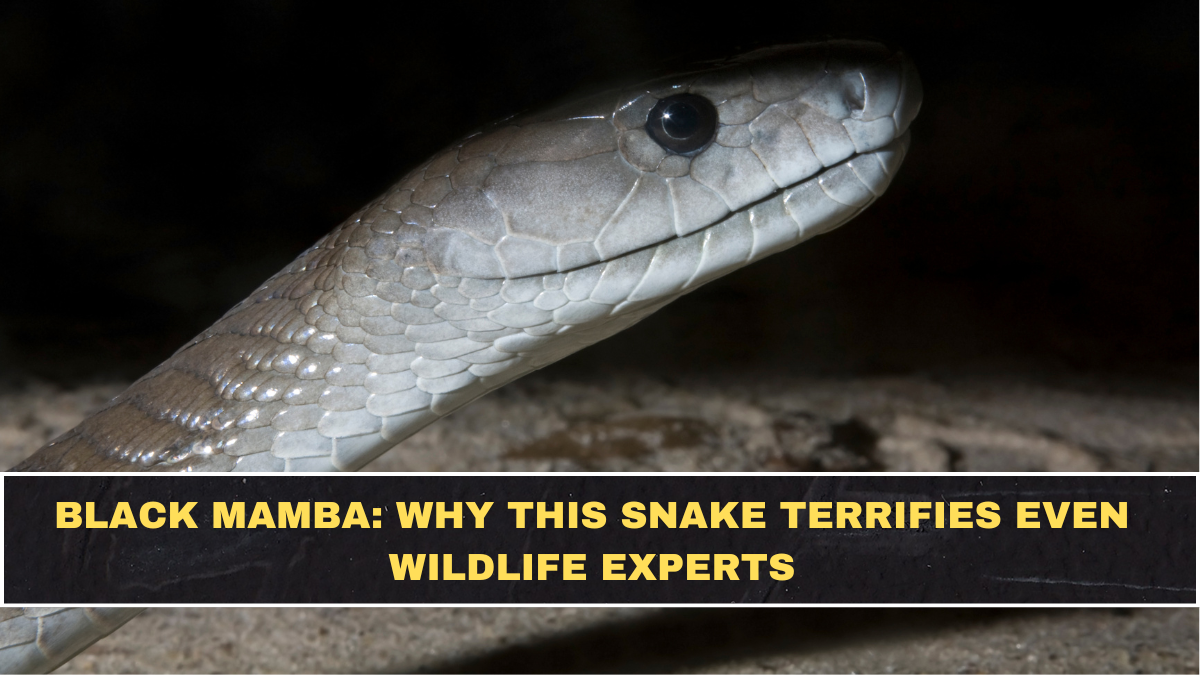
The black mamba is feared because it combines three dangerous traits: speed, size and highly toxic venom. Native to parts of sub-Saharan Africa, it is often described as one of Africa’s most dangerous snakes because a serious bite can become life-threatening quickly without urgent medical treatment. Britannica describes the black mamba as a large, quick and extremely venomous snake found in sub-Saharan Africa.
The name is also misleading because the snake is not actually black from outside. Its body is usually grey, olive, brownish or khaki, while the “black” part comes from the dark inside of its mouth, which it displays when threatened. That open-mouth warning is one of the reasons people find it so terrifying in photos and videos.
What Makes Its Venom So Dangerous?
Black mamba venom is mainly neurotoxic, which means it attacks the nervous system and can affect breathing. The African Snakebite Institute says the venom can cause breathing difficulty within about half an hour, and antivenom may be effective but often required in large quantities. That is why a black mamba bite should never be treated as a wait-and-watch situation.
| Feature | Why It Is Dangerous |
|---|---|
| Venom Type | Mainly neurotoxic and can affect breathing |
| Speed | Can move very fast for short distances |
| Size | Africa’s longest venomous snake |
| Defence Display | Raises body, opens black mouth and may strike |
| Treatment Need | Urgent hospital care and antivenom may be needed |
Is It Really The Fastest Snake?
The black mamba is extremely fast, but online claims often exaggerate it like a horror movie monster. National Geographic has reported that black mambas can move up to around 12.5 miles per hour, or about 20 km/h, which makes them among the fastest snakes in the world. However, speed is usually used to escape danger, not to chase humans for long distances.
This is where people fool themselves with viral content. A black mamba is dangerous, yes, but it is not a supernatural hunter chasing people across villages. Most snake encounters become dangerous when humans get too close, block the snake’s escape route, or try to kill or capture it without skill.
Does The Black Mamba Attack Humans?
The black mamba has a terrifying reputation, but it does not waste energy attacking humans for no reason. National Geographic notes that black mambas are nervous and highly aggressive when threatened, which means the real danger rises when the snake feels cornered. In such a situation, it may raise its body, show its black mouth and strike quickly.
The smart rule is simple: do not test wildlife. People often create danger by trying to take videos, throw stones, or act brave near venomous snakes. That behaviour is not courage; it is stupidity. If a black mamba or any unknown snake is seen, distance and professional rescue are the only sensible options.
Where Does The Black Mamba Live?
The black mamba lives mainly in sub-Saharan Africa and is found in habitats such as savannahs, woodlands, rocky areas and sometimes tree spaces. It is active during the day and may use termite mounds, rock crevices or hollow trees as hiding places. Its ability to move both on the ground and in trees makes it more adaptable than many people realise.
This is also why human-snake encounters can rise when people expand into wildlife habitats. Farms, settlements, roads and deforestation can push humans and snakes closer. The snake is not invading human life out of revenge; in many cases, humans are expanding into the snake’s natural range.
What Should You Do After A Bite?
A black mamba bite is a medical emergency. The victim should be taken to a hospital immediately because breathing support and antivenom may be required. The African Snakebite Institute explains that snakebite deaths in the short term are often linked to venom effects on breathing, which makes quick access to ventilation and hospital care critical.
Important safety steps include:
- Keep the victim calm and limit movement as much as possible.
- Do not cut the wound, suck venom, apply ice, or use alcohol.
- Do not waste time trying to catch or kill the snake.
- Call emergency help and reach a hospital quickly.
- Share the snake description only if it is safe to observe from distance.
Conclusion?
The black mamba terrifies people because it has the full package: speed, size, strong venom and a dramatic defensive display. But the bigger truth is that fear becomes dangerous when people replace facts with myths. The snake is deadly, but it is not a movie villain hunting humans for fun.
The real lesson is respect, distance and fast medical response. If people stop provoking snakes, protect natural habitats and learn proper bite response, many tragedies can be avoided. The black mamba deserves caution, not foolish panic or fake bravery.
FAQs?
Is The Black Mamba The Most Dangerous Snake In The World?
The black mamba is one of the most dangerous snakes, especially because of its fast-acting neurotoxic venom and serious bite risk. However, “most dangerous” depends on venom strength, human contact, treatment access and fatality rates. It is definitely among the most feared snakes in Africa.
Why Is It Called A Black Mamba?
It is called a black mamba because the inside of its mouth is dark black, not because its outer body is black. The snake may show this black mouth when threatened as a warning display. Its outer colour is usually grey, olive, brownish or khaki.
Can A Human Survive A Black Mamba Bite?
Yes, survival is possible with fast hospital treatment, breathing support and proper antivenom. Without medical care, a serious bite can be fatal. The biggest mistake is delaying treatment or trying home remedies after a bite.
Does The Black Mamba Chase People?
The black mamba does not normally chase people for fun or hunting. It usually tries to escape, but it can become defensive if cornered or threatened. Most dangerous encounters happen when people get too close, block escape routes or try to handle the snake.