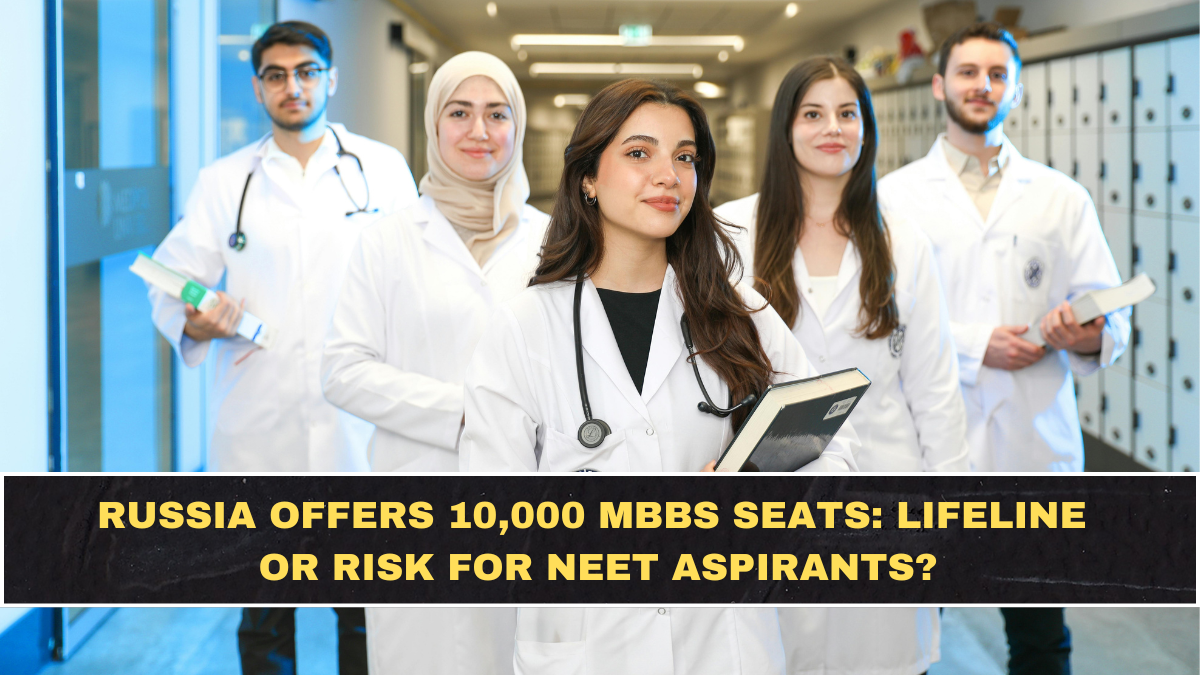
Russia’s 10,000 MBBS seat offer for Indian students has created fresh excitement among NEET aspirants who could not secure a government medical seat in India. The All India Russian Education Fair 2026–27 is offering spot-admission opportunities through participating Russian universities, with reports saying NEET-qualified students can apply and annual fees may start around ₹3.5 lakh. That sounds like a lifeline for middle-class families, but treating it as an easy shortcut would be a serious mistake.
The headline is attractive because Indian medical education is brutally competitive and private MBBS fees are often unaffordable. But MBBS abroad is not just about getting admission; it is about whether the degree will help the student actually become a licensed doctor later. Families should judge Russia MBBS through NMC rules, university quality, internship structure, language barriers, safety, clinical exposure and the final licensing pathway in India.
What Is Russia Offering Indian Students?
The Russian Education Fair is reportedly offering around 10,000 MBBS seats for Indian students, with eight Russian universities participating in the Chennai event and further events planned in cities such as Madurai, Trichy, Salem and Coimbatore. Reports say students who cleared NEET with at least 50% marks, or 40% for reserved categories, are eligible to apply, and exams like IELTS or CET are not required. More than 200 students may also receive full scholarships through the fair route.
| Key Point | What Indian Students Should Know |
|---|---|
| Seats Offered | Around 10,000 MBBS seats |
| Eligibility | NEET-qualified students |
| Reported Minimum Marks | 50%, or 40% for reserved categories |
| Extra Exams | IELTS/CET reportedly not required |
| Fee Claim | Around ₹3.5 lakh per year starting range |
| Scholarship Buzz | 200+ full scholarships possible |
| Biggest Check | NMC compliance before admission |
Why Does This Look Like A Lifeline?
For many NEET aspirants, Russia looks attractive because it offers a medical pathway at a cost far below many Indian private colleges. Families who cannot afford heavy donation-style fees naturally look abroad when the child still wants to become a doctor. This is where Russia’s lower tuition, direct admission model and long history of attracting Indian medical students become strong selling points.
But families must be brutally practical here. Cheap admission is useful only if the student can complete the degree, handle the environment, clear licensing exams and practise legally. A low-fee seat that leads to confusion later is not a bargain; it is a trap with a polished brochure.
What Does NMC Require For Foreign MBBS?
The National Medical Commission’s Foreign Medical Graduate Licentiate Regulations require foreign medical graduates to complete a course of at least 54 months, followed by a minimum 12-month internship in the same foreign medical institution. The degree must be taught in English, and the graduate should be eligible to register and practise in the country where the degree is awarded. These rules are not optional, and ignoring them can destroy a student’s future plan.
Students must check these points before paying fees:
- Is the MBBS course at least 54 months long?
- Is the internship properly included and accepted?
- Is the medium of instruction actually English?
- Is the university recognised in Russia?
- Can graduates register to practise in Russia?
- Does the course align with NMC’s current rules?
What Are The Biggest Risks?
The biggest risk is blindly trusting agents. Many students and parents listen to admission consultants more than official rules, and that is where bad decisions begin. If the course structure, internship or medium of instruction does not match NMC requirements, returning to India and getting licensed can become difficult. The student may complete years abroad and still face licensing trouble.
There are also real-life adjustment risks. Students may face Russian language barriers during hospital exposure, extreme weather, cultural differences, food issues, documentation pressure and geopolitical uncertainty. Times of India also reported earlier that Russia accounted for a large share of exploitation and discrimination complaints filed by Indian students abroad in 2025, which makes student welfare a serious factor, not a minor footnote.
Who Should Seriously Consider It?
Russian MBBS may suit students who are disciplined, academically serious and emotionally ready to live abroad for several years. It can also work for families that have compared costs properly and understand the full licensing journey after graduation. The right student should start preparing for Indian licensing requirements from the first year, not after returning home.
This option is not suitable for students looking for an easy medical degree. Medicine is difficult everywhere, and studying abroad adds extra pressure through language, culture and licensing exams. If a student is weak in science basics, careless with studies or dependent only on coaching spoon-feeding, going abroad will not magically fix the problem.
Conclusion: Should NEET Aspirants Choose Russia MBBS?
Russia’s 10,000 MBBS seat offer can be a genuine opportunity for Indian students who missed out on Indian medical seats but still have the discipline and planning to complete a foreign medical pathway. The lower fees, NEET-based entry and scholarship options make it attractive, especially for families priced out of Indian private medical colleges. For the right student, it can be a practical route into medicine.
But families should not fall for the headline alone. Before choosing Russia MBBS, verify the university, course duration, internship, English-medium teaching, NMC compliance, student safety, living cost and future licensing requirements. A foreign MBBS can build a career, but a careless admission can waste years and money.
FAQs
Is NEET Required For MBBS In Russia?
Yes, NEET qualification is required for Indian students who want to study MBBS abroad and later return to India for medical licensing. Reports around the Russian Education Fair say NEET-qualified students with the required marks can apply for the offered seats. Students should still verify exact eligibility from official university and NMC-linked sources before admission.
How Many MBBS Seats Is Russia Offering Indian Students?
Russia is offering around 10,000 MBBS seats for Indian students through the All India Russian Education Fair 2026–27. The fair includes multiple Russian universities and is being held across selected Tamil Nadu cities. Reports also mention possible full scholarships for more than 200 students.
Is Russian MBBS Valid In India?
A Russian MBBS degree can be valid in India only if it meets NMC’s foreign medical graduate rules and the student clears the required licensing pathway. NMC rules include minimum course duration, internship, English-medium instruction and eligibility to practise in the country where the degree is awarded. Students should never assume validity without checking the exact university and course.
Is MBBS In Russia A Safe Choice?
It can be safe and useful for the right student, but it is not risk-free. Families must check university reputation, hostel safety, clinical training, language support, student complaints and geopolitical issues before deciding. Choosing only because the fees look low is a weak and risky decision.