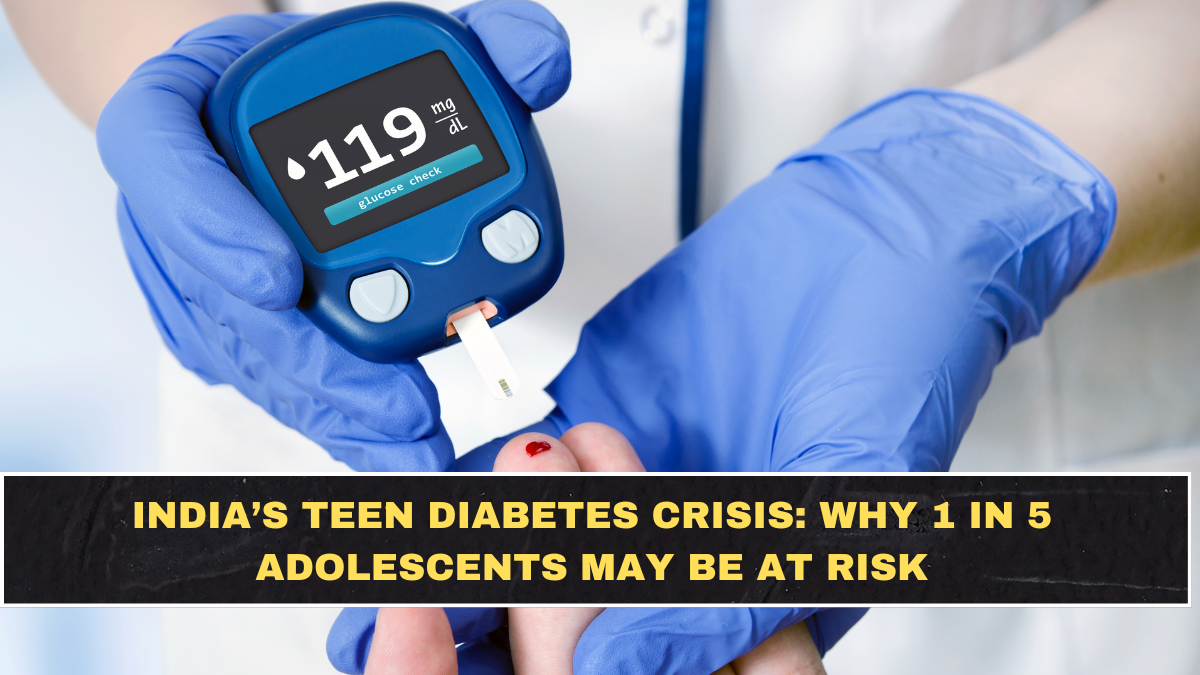
India’s teenage diabetes concern is no longer a small medical warning; it is now becoming a public-health alarm. A recent India Today report highlighted estimates suggesting that among adolescents aged 10–19, 12.3% may be prediabetic and 8.4% may already have type 2 diabetes, creating the viral “1 in 5 teens” concern. But this needs careful reading: diabetes and prediabetes are not the same, and mixing them casually can mislead parents.
The bigger point is still serious. Published research in Diabetes Research and Clinical Practice found national adolescent prevalence of prediabetes at 16.18% and diabetes at 0.56%, while school-age children also showed worrying prediabetes levels. That means India may be facing a large pool of teenagers who are not diabetic yet, but are already moving toward dangerous blood-sugar risk.
What Do The Numbers Really Say?
The scary headline is useful for attention, but the real numbers need honesty. Prediabetes means blood sugar is higher than normal but not yet diabetes, while diabetes means the body is already failing to regulate glucose properly. Parents should not panic, but they also should not dismiss this as “adult disease” anymore.
| Health Signal | Reported/Published Estimate | What It Means |
|---|---|---|
| Prediabetes in adolescents | 16.18% in one national study | Major warning stage before diabetes |
| Diabetes in adolescents | 0.56% in the same study | Lower than viral claims, but still serious |
| Recent media estimate | 12.3% prediabetes, 8.4% type 2 diabetes | Needs cautious interpretation |
| Govt response | Screening from birth to 18 years | Policy-level concern is now visible |
| Main risk group | Inactive, overweight, high-sugar diet teens | Lifestyle risk is rising fast |
The uncomfortable truth is that even the more conservative data is alarming. A teenage prediabetes rate above 16% means lakhs of families may be missing early warning signs. Waiting until a child becomes fully diabetic is bad strategy. The smarter move is screening, lifestyle correction and early medical advice before permanent damage begins.
Why Are Indian Teens Becoming More Vulnerable?
The biggest drivers are not mysterious. Teenagers are sitting longer, sleeping worse, eating more processed food and moving less than earlier generations. Sugary drinks, packaged snacks, late-night screen use, academic pressure and low outdoor activity are creating a perfect metabolic trap for young bodies.
Doctors have repeatedly warned that obesity and inactivity raise insulin resistance, especially when combined with family history. The Lancet has also reported India’s wider metabolic disease burden, with adult diabetes at 11.4% and prediabetes at 15.3%, showing that teenagers are growing up inside a high-risk national environment.
Major warning factors include:
- Frequent sugary drinks and packaged snacks
- Long screen time with little physical activity
- Belly fat or sudden unhealthy weight gain
- Family history of diabetes
- Poor sleep and irregular eating pattern
- Ignoring early symptoms like thirst or fatigue
What Is The Government Doing Now?
The Union Health Ministry has released a national guidance document for diabetes mellitus in children, creating a structured framework for screening, diagnosis, treatment and long-term management. News On AIR reported that this is the first time such a national framework has been released for childhood diabetes care in India.
The government also aims to screen children from birth to 18 years through community and school-based platforms. PIB noted that suspected cases will undergo immediate blood glucose testing, followed by referral to district-level health facilities for confirmation and treatment. This is a major shift because India is no longer treating childhood diabetes as a rare side issue.
What Should Parents Watch For?
Parents should stop assuming that a child must look visibly sick to have blood-sugar problems. Prediabetes can be silent for years, and many teenagers may appear “normal” while insulin resistance is already building. This is exactly why school and community screening matters so much.
Warning signs parents should not ignore:
- Excessive thirst or frequent urination
- Unexplained tiredness or sleepiness
- Sudden weight changes
- Dark patches around the neck or underarms
- Slow-healing wounds or repeated infections
- Strong cravings, overeating and belly-fat gain
The blunt advice is simple: do not self-diagnose, and do not use random home remedies as treatment. If a teenager has symptoms, obesity, family history or repeated fatigue, parents should speak to a qualified doctor and get proper blood tests done. Early correction is easier than lifelong disease management.
Conclusion: Is This Crisis Still Reversible?
India’s teen diabetes crisis is serious, but it is not hopeless. The strongest evidence points to a large prediabetes burden among adolescents, while confirmed diabetes numbers vary across estimates. Either way, the direction is worrying enough for the government to launch national screening and structured childhood diabetes care.
The harsh truth is that parents cannot outsource this problem fully to schools, doctors or the government. If home food, sleep, movement and screen habits stay broken, screening alone will not save teenagers. India needs early testing, but it also needs families to stop normalising junk food, inactivity and “study-only” childhoods.
FAQs
Is 1 In 5 Indian Teens Really Diabetic?
No, that wording is too loose. Some media reports combine diabetes and prediabetes risk, but published estimates show adolescent prediabetes is much higher than confirmed diabetes. Prediabetes is a warning stage, not the same as diabetes.
What Is Prediabetes In Teenagers?
Prediabetes means blood sugar levels are higher than normal but not high enough to be diagnosed as diabetes. It is dangerous because it increases the chance of future type 2 diabetes, especially if weight, diet and activity levels do not improve.
Can Teen Diabetes Be Prevented?
Type 2 diabetes risk can often be reduced through healthier food, regular activity, weight control, better sleep and early screening. Type 1 diabetes is different and cannot be prevented in the same lifestyle-based way, so diagnosis by a doctor is important.
What New Step Has India Taken For Child Diabetes?
India has released a national guidance framework for childhood diabetes and plans wider screening of children from birth to 18 years through schools, Anganwadi centres and community health platforms. Suspected cases will be referred for blood testing and treatment.