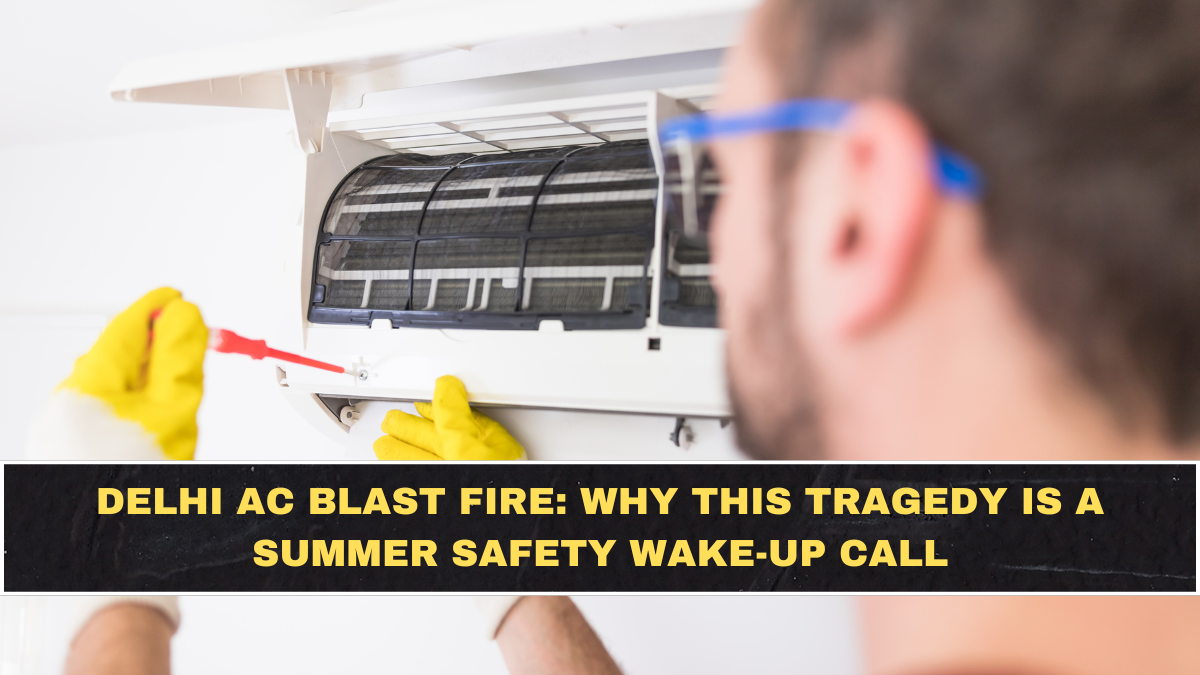
A deadly fire broke out at a residential complex in East Delhi’s Shahdara on Sunday morning, May 3, 2026, killing at least nine people. Initial reports said a suspected air-conditioner blast may have triggered the blaze, though the exact cause still needs final confirmation from investigators. The Indian Express reported that the fire took place in Vivek Vihar, Shahdara, and that early reports pointed to an AC-related trigger.
NDTV also reported that the cause of the fire was not yet officially known, but a resident claimed that an AC blast may have started the blaze. That distinction matters. Readers should not treat “suspected AC blast” as a final forensic finding until authorities confirm the exact cause. Still, the tragedy has put summer AC safety back in focus because Delhi is already seeing a sharp rise in fire-related emergencies.
Why Did This Fire Become So Deadly?
The fire became deadly not only because of the suspected electrical or AC-related trigger, but also because escape routes were reportedly blocked or difficult to access. Economic Times reported that iron grills on windows and a locked terrace removed possible escape routes, trapping residents as smoke and flames spread through the upper floors. That is the brutal lesson here: a fire does not need much time to become fatal when people cannot escape.
Reports also said firefighters faced difficulty reaching trapped residents because of structural barriers. This is where many homes make a dangerous mistake. Families install grills, locks and enclosed balconies for theft protection, but they do not think about emergency escape. Security that traps you during a fire is not safety; it is a hidden death risk.
What Are The Key Facts From The Delhi Fire?
| Data Point | Reported Detail |
|---|---|
| Incident location | Vivek Vihar, Shahdara, East Delhi |
| Incident date | May 3, 2026 |
| Reported deaths | At least 9 |
| Suspected trigger | AC blast or electrical fault, pending confirmation |
| Major safety issue | Iron grills and locked terrace reportedly blocked escape |
| Emergency concern | Smoke and flames trapped residents on upper floors |
| Wider Delhi pattern | 7,801 fire calls till April 27, 2026 |
| April fire calls | 2,375 fire-related cases till April 27 |
The wider fire data makes the tragedy even more worrying. Hindustan Times, citing official data, reported that Delhi Fire Services attended 7,801 fire calls till April 27, 2026, which was 1,290 more than the same period last year. April alone saw 2,375 fire-related cases till April 27, showing how fast fire risk rises as summer pressure builds.
Why Do ACs Catch Fire In Summer?
AC fires usually happen because of overheating, short circuits, poor wiring, overloaded circuits, bad maintenance or faulty protection devices. The Indian Express explained that continuously running electrical appliances in summer can overheat, especially when outside temperatures are high. It also noted that short-circuiting can generate enough heat to melt wires and start a fire.
The Delhi government’s Department of Fire Services has stated that about 60% of fires are electrical in origin, caused by short circuits, overheating, overloading or use of non-standard appliances. This is the uncomfortable part people ignore: most home fire risks are not mysterious. They are built slowly through cheap wiring, overloaded plugs, neglected AC servicing and unsafe electrical habits.
What Warning Signs Should AC Users Not Ignore?
Warning signs include unusual noise from the AC unit, frequent switching on and off, inconsistent cooling, burning smell, smoke, sparks, tripping MCBs or overheating around wiring and sockets. Indian Express cited common warning symptoms such as unusual sounds, frequent cycling, poor cooling and burning smells or smoke. These signs should not be treated as “normal summer load.”
If an AC is making strange sounds or giving a burning smell, switch it off and call a trained technician. Do not keep running it because “guests are coming” or “it is too hot.” That is exactly the kind of careless thinking that turns a repair problem into a life-threatening fire.
What Should Families Check Before Using ACs Heavily?
Families should check AC servicing, wiring load, MCB condition, stabiliser quality and outdoor-unit ventilation before peak summer use. If the locality has frequent voltage fluctuations, a stabiliser can help protect appliances by supplying steadier current, as Indian Express noted in its AC safety explainer. But a stabiliser is not a substitute for bad wiring or fake electrical parts.
People should also stop using extension boards for heavy appliances like ACs. A powerful AC needs proper wiring and circuit protection. If the same circuit is running an AC, refrigerator, geyser, microwave and multiple chargers, the household is inviting overload. The cheaper shortcut is not worth the risk.
Why Are Delhi Fire Incidents Rising In Summer?
Delhi fire incidents rise in summer because ACs, coolers and other electrical appliances run longer, putting extra load on wiring, transformers and circuits. Hindustan Times reported that DFS officials linked rising fire risks to summer conditions, saying higher temperatures increase electrical load, heat wiring and put transformers under stress. The report also said DFS was attending around 120 fire calls a day in April, compared with 70–80 calls in preceding months.
Delhi Fire Service’s official statistical page also shows the scale of the city’s long-term fire burden. It recorded 31,575 calls in 2023–24, with 3,232 injured and 1,303 deaths listed in its comparative figures. That official data makes one thing clear: fire safety in Delhi is not a rare concern. It is a recurring public safety issue.
What Is The Conclusion?
The Delhi AC blast fire is a warning that summer safety cannot be taken casually. At least nine people died in the Shahdara fire, and early reports suggest a suspected AC blast or electrical issue may have triggered the blaze. But the bigger danger was not only the possible trigger; it was the reported lack of safe escape routes because of grills and locked access points.
The clean takeaway is simple: service your AC, check wiring, do not overload circuits, use proper safety devices and never block escape routes with permanent grills or locked terraces. A home that looks secure but cannot be escaped during a fire is not actually safe. Delhi’s rising fire-call numbers show that this is not fearmongering; it is a real summer risk.
FAQs
What Caused The Delhi AC Blast Fire?
The exact cause has not been officially confirmed yet. Initial reports suggest a suspected AC blast or electrical fault may have triggered the fire at the Vivek Vihar residential building in Shahdara, but investigators need to confirm the final cause.
How Many People Died In The Delhi Shahdara Fire?
At least nine people were reported dead in the fire at the residential building in East Delhi’s Shahdara area. Reports also said the fire spread quickly through the building and trapped residents inside.
What Are The Main AC Fire Warning Signs?
Main warning signs include burning smell, smoke, unusual noise, frequent on-off cycling, weak cooling, sparks, overheating wires and repeated MCB tripping. If any of these signs appear, switch off the AC and call a qualified technician instead of continuing to use it.
Click here to know more