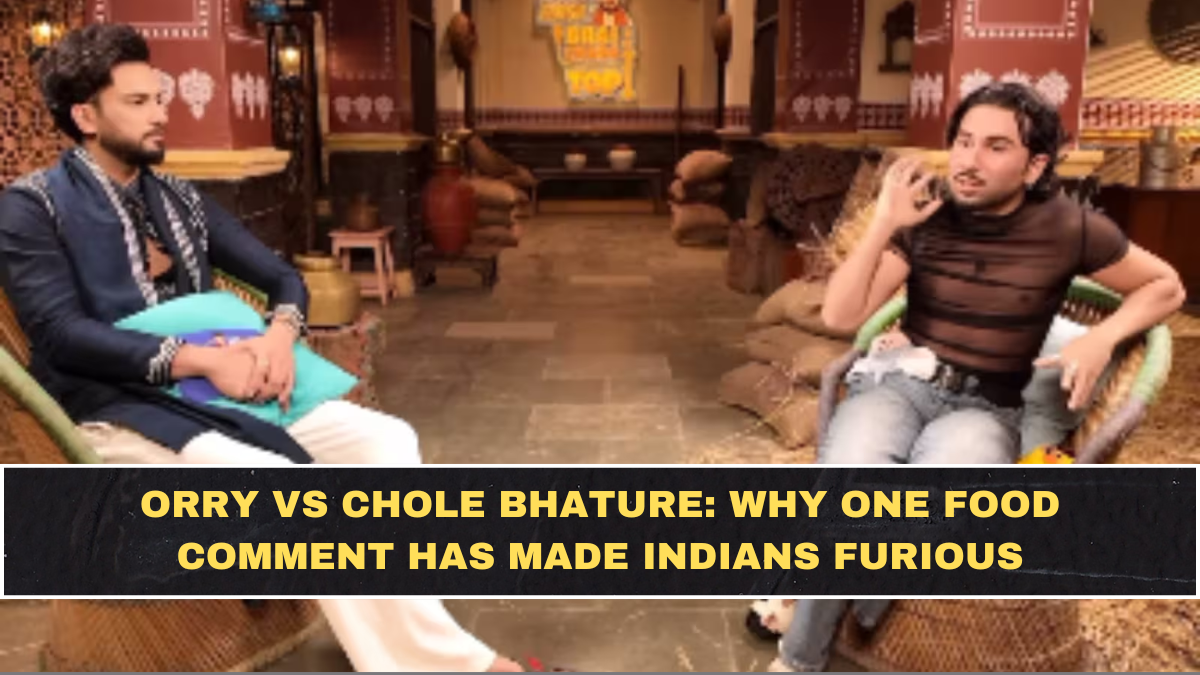
Orry is trending again after saying he hates chole bhature during a casual conversation with YouTuber Elvish Yadav. What should have been a small personal food preference quickly turned into a full social media debate because chole bhature is not just another dish for many Indians. It is comfort food, street food, Delhi-NCR identity, North Indian pride and weekend emotion on one plate.
Times of India reported that Orry shocked Elvish Yadav by saying he could not stand chole bhature, and the comment quickly spread online as users reacted with jokes, anger and disbelief. Another report said Orry even made the remark more dramatic by saying the name of chole bhature makes his ears bleed, which gave social media exactly the kind of exaggerated soundbite it loves.
What Did Orry Actually Say About Chole Bhature?
In the viral clip, Orry said he hates chole bhature and described it as the one thing he does not eat. The strong wording is what made the comment explode. People may accept someone saying “I do not like it,” but saying “I hate it” about a beloved Indian dish is almost designed to trigger reactions.
Elvish Yadav’s shocked response also helped the clip travel faster. The combination was perfect for virality: one controversial celebrity-style personality, one popular YouTuber, one iconic Indian dish and one dramatic food opinion. This was not a serious national issue, but social media treated it like a cultural emergency because food identity in India is emotional.
| Viral Element | Why It Worked Online |
|---|---|
| Person involved | Orry already attracts attention for unusual statements |
| Second personality | Elvish Yadav added mass social media reach |
| Food involved | Chole bhature is deeply loved in North India |
| Trigger word | “Hate” sounded stronger than normal dislike |
| Reaction format | Easy for memes, reels and comments |
| Emotional angle | People connect food with identity and nostalgia |
| Viral reason | Low-stakes drama that everyone can react to |
Why Are Indians So Emotional About Chole Bhature?
Chole bhature is not just food for many Indians. It is tied to Sunday breakfasts, Delhi street stalls, college canteens, office cravings, family outings and post-party hunger. A plate of spicy chole with fluffy bhature feels indulgent, affordable and familiar. That emotional familiarity is why Orry’s dislike sounded almost offensive to fans of the dish.
Food in India is never only about taste. It is regional pride, family memory, class identity and cultural belonging. People defend biryani, dosa, momos, poha, vada pav, litti chokha and chole bhature as if they are defending their hometown. That may sound dramatic, but it explains why a single food opinion can become a viral debate within hours.
Is Orry Wrong For Disliking Chole Bhature?
No, Orry is not wrong for disliking chole bhature. Everyone has personal food preferences, and no dish is universally loved. The problem is not the preference. The problem is the way it was expressed. When a public personality uses dramatic words for a culturally loved dish, backlash is predictable.
The internet also needs to grow up here. Disliking a food item is not a crime. People pretending that one celebrity opinion has insulted the entire country are overreacting. But Orry also knows how social media works. If you say something extreme about a beloved Indian food, you cannot act surprised when people turn it into a viral joke.
Why Did This Become A Food Culture War?
This became a food culture war because Indians use food to express belonging. Chole bhature is especially associated with Delhi, Punjab and North Indian food culture, so the comment felt personal to people who see the dish as part of their identity. The debate was less about digestion and more about respect.
There is also a class angle. Orry is seen as an elite social media figure surrounded by celebrity circles, while chole bhature is seen as a mass-loved street food. That contrast made people react harder. Many users likely heard the comment not as “I dislike this dish,” but as “I look down on this food.” That may not be what he meant, but online perception often matters more than intention.
Why Do Celebrity Food Opinions Go Viral So Fast?
Celebrity food opinions go viral because they are easy to understand and easy to argue with. A political issue may need background knowledge, but everyone has an opinion on food. When a famous or semi-famous person says something strange about a common dish, millions of people can instantly join the conversation.
This is why food controversies are perfect social media content. They are emotional but not too serious, divisive but not complicated, and highly meme-friendly. A serious economic issue may struggle for attention, but one line about hating chole bhature can trend because it gives people a simple emotional hook. That is how online attention works, whether we like it or not.
Did The Backlash Help Orry More Than Hurt Him?
Honestly, yes. Orry’s public brand survives on being talked about. A food controversy like this is almost risk-free attention. It keeps him trending without creating the kind of damage that comes from a legal, political or moral scandal. People may mock him, but they are still amplifying him.
This is the part audiences usually miss. Outrage often rewards the person being criticised. Every angry comment, repost, reaction video and meme increases visibility. If people truly find a comment irrelevant, ignoring it is more powerful than reacting. But social media users rarely choose silence when food pride is involved.
What Does This Say About Indian Internet Culture?
This controversy says the Indian internet loves low-stakes drama that feels personal. People may ignore serious food inflation data, farmer distress or nutrition problems, but they will fight passionately over whether chole bhature is overrated. That sounds funny, but it also exposes our attention habits.
Still, not every viral debate has to be meaningful. Sometimes the internet just wants a harmless argument. The problem begins when playful food debate turns into abusive trolling. Jokes are fine. Threats, hate and personal attacks over a food preference are just stupidity wearing cultural pride as a mask.
Should Brands And Creators Use This Trend?
Food brands, meme pages and creators can use this trend smartly, but they should not overdo it. A chole bhature restaurant can post a funny reply. A food blogger can make a comparison video. A meme page can joke about Delhi people defending their breakfast. That is fine.
But forcing the trend into every brand post will look desperate. The best trend-jacking works when the brand has a natural connection to food, Delhi culture, street food, humour or celebrity commentary. If a random finance app starts posting about chole bhature, it will look like lazy marketing. Not every trend needs your brand’s opinion.
Conclusion?
Orry’s chole bhature comment went viral because it touched one of India’s most emotional subjects: food identity. His dislike may be personal, but the dramatic wording made fans of the dish react strongly. With Elvish Yadav in the conversation, the clip had enough reach to become a full-blown internet debate.
The blunt truth is that nobody needs to love chole bhature. But if a public personality loudly says he hates one of India’s most loved comfort foods, the internet will obviously respond. This was not a real crisis. It was a classic Indian food war: emotional, funny, exaggerated and perfect for memes.
FAQs
Why Is Orry Trending With Chole Bhature?
Orry is trending because he said he hates chole bhature during a conversation with Elvish Yadav. The comment went viral because chole bhature is a beloved Indian street food, especially in North India, and many users reacted with shock, jokes and anger.
What Did Orry Say About Chole Bhature?
Orry said he hates chole bhature and described it as one food he does not eat. Reports also said he made the reaction more dramatic by saying the name of the dish makes his ears bleed, which made the clip even more meme-worthy.
Why Did Indians React So Strongly?
Indians reacted strongly because food is closely linked with culture, nostalgia and regional pride. Chole bhature is not just a dish for many people; it represents comfort food, Delhi-style street food and North Indian food emotion.
Is Orry Wrong For Not Liking Chole Bhature?
No, Orry is not wrong for having a personal food preference. But because he expressed it dramatically about a highly loved Indian dish, backlash and memes were predictable. The internet turned a food opinion into a cultural debate.