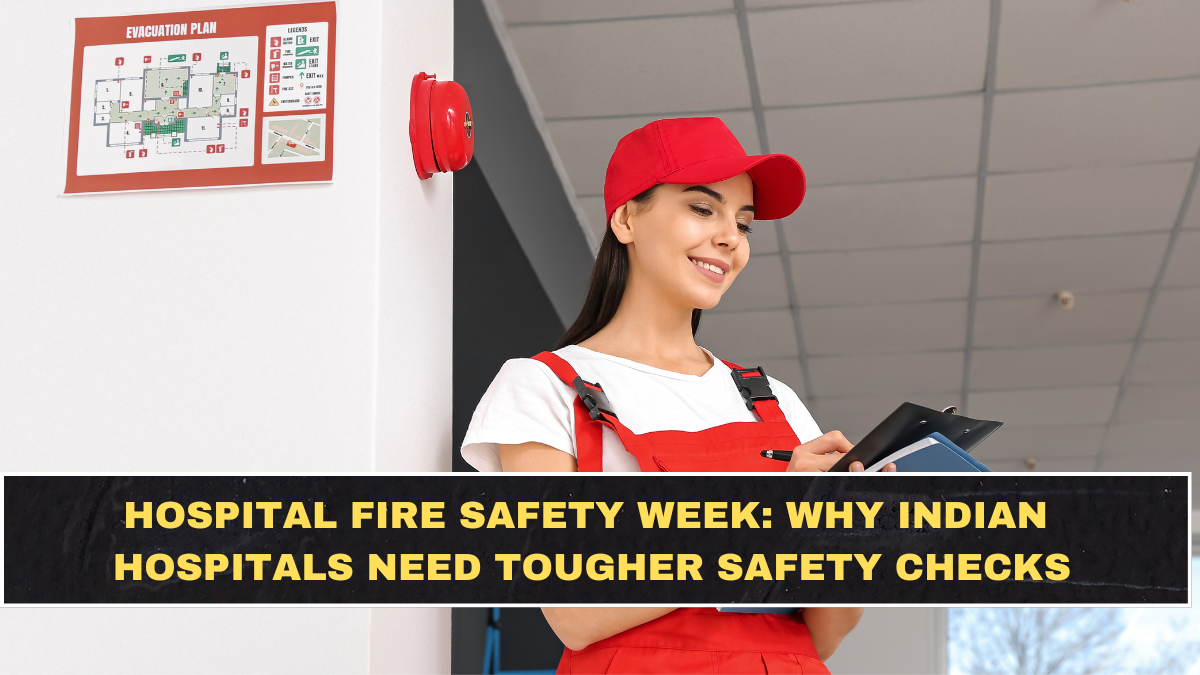
India’s hospitals are supposed to be places where lives are saved, but recent fire incidents have exposed a brutal truth: many healthcare buildings are not emergency-ready. The Union Health Ministry launched a nationwide Fire Safety Week from May 4 to May 10, 2026, to strengthen fire prevention, preparedness and response systems across healthcare facilities. The initiative focused on “Fire Safety in Health Facilities” and included a nationwide pledge led by Union Health Secretary Punya Salila Srivastava.
This campaign matters because hospitals are not like normal buildings. ICUs, neonatal units, operation theatres and oxygen-supported wards have patients who cannot escape quickly during a fire. A small electrical fault, oxygen leak or blocked exit can become a mass-casualty disaster if staff are not trained and safety systems fail at the wrong moment.

Why Now?
The timing is not accidental. The Health Ministry has asked states to improve preparedness during the peak summer season, when heatwaves and fire risks rise together. Hospitals use heavy electrical loads, air-conditioning, medical gases and critical machines, which makes fire-safety planning more urgent during extreme heat months.
India has already seen what happens when safety exists only on paper. After the October 2025 SMS Hospital fire in Jaipur, which killed eight people, Rajasthan issued stricter rules for government hospitals. Reports said the hospital had a valid Fire NOC until May 2027, yet alarms and sprinklers allegedly failed during the blaze, proving that certificates alone cannot save patients.
What Are The New Checks?
| Safety Area | What Hospitals Must Focus On | Why It Matters |
|---|---|---|
| Fire audits | Regular inspection of systems | Finds hidden risks before disaster |
| Evacuation plans | Clear patient-shifting routes | Helps move ICU and bed-ridden patients |
| Fire NOC | Valid and renewed certification | Confirms baseline legal compliance |
| Alarms and detectors | Smoke, heat and control panels | Gives early warning before smoke spreads |
| Emergency lights | Backup lighting in ICUs | Helps evacuation during power cuts |
| Staff drills | Training nurses, guards and doctors | Turns panic into organised response |
The new push is not only about buying extinguishers. It is about making hospitals prove that equipment works, exits are usable, staff know their roles and audits are not fake paperwork. NDTV reported that the Fire Safety Week is meant to boost hospital preparedness, prevent deadly incidents and strengthen emergency response systems across the healthcare sector.
Why Do ICUs Face Bigger Risk?
ICUs are among the most dangerous zones during a hospital fire because patients are often unconscious, ventilated or attached to life-support devices. Moving them is slow, technical and risky. A normal person can run down a staircase, but an ICU patient may need oxygen, monitoring and a trained team just to move a few metres safely.
This is why Rajasthan’s post-SMS Hospital norms demanded battery-operated emergency lights in ICUs, ABC-type fire extinguishers, hose reels or high-pressure mist systems near ICUs, fire alarm panels and smoke or heat detectors in critical zones. The rules also called for monthly audits using the Health Ministry’s fire and electrical safety checklist.
What Must Hospitals Fix?
- Blocked exits: Emergency routes must stay open, visible and usable at all times.
- Fake compliance: Fire NOCs should not become one-time paperwork without real system checks.
- Weak staff training: Nurses, guards and ward staff need repeated evacuation drills.
- Electrical overload: Old wiring, overloaded sockets and poor maintenance must be treated as major risks.
- Oxygen-zone safety: Oxygen-rich areas need stricter controls because fire can spread faster there.
The biggest weakness in many hospitals is not lack of rules; it is lack of enforcement. Administrators often wake up only after a tragedy, issue circulars and then slowly return to old habits. That attitude is dangerous because hospital fires do not give second chances to newborns, ICU patients or elderly people trapped inside wards.
Can Audits Prevent Deaths?
Audits can prevent deaths only if they are honest. A serious fire audit checks whether extinguishers are charged, detectors work, alarms are audible, sprinklers activate, exit doors open, staff know evacuation duties and electrical systems are safe. A fake audit only ticks boxes and creates a false sense of security.
The Health Ministry’s 2026 nationwide Fire Safety Week should become more than a symbolic campaign. If every hospital submits reports but does not fix defects, nothing changes. The real test is whether states publicly track compliance, punish negligence and force hospitals to correct unsafe infrastructure before another fire exposes the failure.
What Should Patients Notice?
Patients and families cannot audit a hospital fully, but they can still observe warning signs. If exits are blocked, staircases are full of junk, oxygen cylinders are stored carelessly, electrical panels look exposed, or staff appear clueless during emergency announcements, those are serious red flags. Families should not ignore these signs in big hospitals just because the building looks modern.
The uncomfortable truth is that hospital safety is usually invisible until disaster hits. People compare doctors, rooms and treatment cost, but rarely ask about fire exits, emergency drills or evacuation plans. That mindset needs to change because in a fire, the best doctor cannot help if smoke, panic and locked exits take over the building.
What Is The Final Conclusion?
Hospital Fire Safety Week is important because it puts public attention back on a problem India repeatedly notices too late. The Health Ministry’s May 4–10 campaign, new national guidelines and state-level audit focus are necessary steps, especially after deadly incidents such as the SMS Hospital fire in Jaipur. But campaigns are not enough unless hospitals fix real defects.
The blunt truth is simple: a hospital without working alarms, clear exits, trained staff and honest audits is not fully safe, no matter how big or famous it is. India does not need another tragedy to learn the same lesson again. Fire safety must become a daily healthcare responsibility, not a one-week awareness activity.
Frequently Asked Questions
What is Hospital Fire Safety Week in India?
Hospital Fire Safety Week is a nationwide initiative launched by the Union Health Ministry from May 4 to May 10, 2026. Its aim is to strengthen fire prevention, preparedness and emergency response systems in healthcare facilities. The campaign includes awareness, pledges, audits and new safety guidelines for hospitals.
Why are hospital fires so dangerous?
Hospital fires are dangerous because many patients cannot escape on their own. ICU patients, newborns, elderly patients and people on oxygen support need trained staff and special evacuation support. Smoke, power failure and panic can make even a small fire deadly if safety systems fail.
What should hospitals check during fire audits?
Hospitals should check fire alarms, smoke detectors, extinguishers, sprinklers, emergency lighting, electrical wiring, oxygen areas, evacuation routes and staff training. Audits should also confirm that exits are not blocked and evacuation plans are practical for ICU and bed-ridden patients.
Are Fire NOCs enough to keep hospitals safe?
No, a Fire NOC is not enough by itself. The SMS Hospital fire in Jaipur showed that even a hospital with a valid Fire NOC can face disaster if alarms, sprinklers or emergency systems fail. Regular audits, real maintenance and staff drills are more important than paperwork alone.