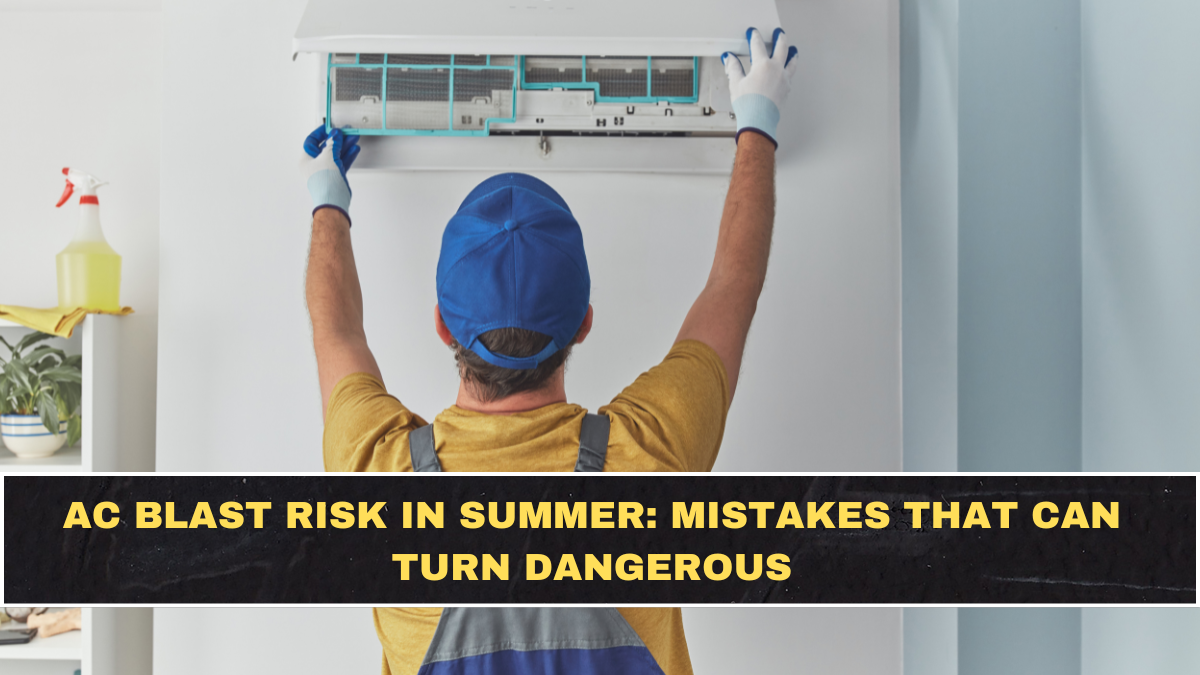
AC blast risk becomes a hot topic every summer because people run air conditioners for longer hours during extreme heat. The real danger is usually not a dramatic “blast” like movies show, but overheating, short-circuiting, faulty wiring, poor servicing, or electrical overload. Recent summer reports have linked AC fires to overuse, weak maintenance and electrical faults, especially when appliances are pushed hard in high temperatures.
The uncomfortable truth is that many AC-related fire risks are avoidable. People spend ₹35,000–₹60,000 on an AC but avoid proper installation, servicing and wiring checks. That shortcut mentality is dangerous because an AC is a high-load electrical appliance, not a normal fan or phone charger.
What Causes AC Fires?
Most AC fire incidents begin with electrical stress. Loose wiring, low-quality plugs, overloaded sockets, damaged cables, dirty filters and poor ventilation can make the unit heat up beyond safe limits. Short-circuiting can produce enough heat to melt wires and ignite nearby material if the current flow becomes abnormal.
Another common mistake is using extension cords or weak power strips for heavy appliances. Electrical Safety Foundation International warns that extension cords should not be overloaded or used as permanent wiring, while NFPA also warns that covered or overloaded cords can become fire hazards. ACs should ideally run on a proper dedicated electrical point installed by a qualified technician.
| Risk Factor | Why It Becomes Dangerous |
|---|---|
| Dirty filters | Reduces airflow and increases overheating risk |
| Faulty wiring | Can trigger sparks, short circuits or fire |
| Overloaded socket | High current draw can heat wires and plugs |
| Poor installation | Creates leakage, vibration and electrical stress |
| Continuous overuse | Compressor and wiring stay under heavy load |
| No servicing | Small faults remain hidden until failure |
What Warning Signs Matter?
ACs usually give warning signs before a serious fault. Burning smell, repeated MCB tripping, strange noise, unusual vibration, water leakage near wiring, warm plugs, flickering lights, or smoke should never be ignored. If the AC trips power again and again, stop restarting it like a fool and call a technician.
A common blind spot is thinking, “It is still cooling, so it is fine.” That is weak logic. Cooling performance does not prove electrical safety. An AC may still cool while wiring, capacitor, compressor or insulation is under stress, and that is exactly how people miss early danger signals.
What Mistakes Should You Stop?
The biggest mistake is running an AC for long hours without servicing. Filters get clogged, coils collect dust, drainage gets blocked and electrical parts wear down. Regular maintenance is not a luxury; it is basic safety. Recent summer safety reports have specifically advised cleaning filters, checking wiring and avoiding prolonged overloading during extreme heat.
Stop these risky habits immediately:
- Using extension boards or cheap multi-plugs for AC power
- Ignoring burning smell, smoke, sparks, or frequent tripping
- Keeping curtains, paper, wood, or flammable items near the unit
- Running old ACs continuously without servicing or inspection
- Installing ACs through untrained local workers to save money
- Blocking outdoor unit airflow with walls, covers, plants, or clutter
How Can You Use AC Safely?
Set the temperature around 24°C–26°C instead of forcing the AC to run at very low temperatures all night. This reduces compressor load, saves electricity and lowers stress on the system. Reports have also suggested cleaning filters regularly, using timers or sleep mode and keeping rooms sealed and shaded for safer and more efficient cooling.
Get the wiring checked before peak summer, especially if the AC is old or the house has older electrical fittings. Use a proper MCB, correct wire thickness, good earthing and professional installation. If voltage fluctuation is common in your area, ask a certified technician whether voltage protection is needed for your AC model.
What Should You Do During Smoke Or Fire?
If you smell burning or see smoke, switch off the AC immediately from the main power source if it is safe to do so. Do not throw water on an electrical fire because that can create shock risk. Move people away, call emergency services and use a suitable fire extinguisher only if you know how to use it safely.
Do not keep restarting the AC after a trip or spark. That is how a small fault becomes a dangerous incident. The correct move is boring but safe: shut it down, disconnect power and get a proper inspection before using it again.
Conclusion?
AC blast risk in summer is real, but most cases are not mysterious. They usually come from neglect, bad wiring, overloaded sockets, poor servicing and careless use. The AC itself is not the villain; careless ownership is the real problem.
The blunt truth is simple: if you ignore maintenance and electrical safety, you are gambling with your home. A yearly service, proper wiring check, clean filters and safe usage habits cost far less than fire damage. Summer comfort should not come at the price of basic safety.
FAQs?
Can An AC Really Blast In Summer?
Yes, serious AC fire or blast-like incidents can happen, but they are usually linked to electrical faults, overheating, poor maintenance, or pressure-related component failure. Most cases are preventable if the AC is installed correctly, serviced regularly and used with proper wiring. The word “blast” is often used loosely, but the safety risk is still serious.
Is It Safe To Run AC All Night?
It can be safe if the AC is properly installed, serviced and connected to a safe electrical point. However, running an old or poorly maintained AC for long hours increases stress on the compressor and wiring. Using sleep mode, timer settings and moderate temperature can reduce unnecessary load.
Should AC Be Plugged Into An Extension Board?
No, an AC should not be run through a weak extension board or cheap multi-plug. ACs draw high power, and overloaded cords can heat up or become fire hazards. A dedicated wall point with proper wiring and protection is the safer option.
What Is The First Sign Of AC Fire Risk?
Burning smell, smoke, sparks, frequent MCB tripping, hot plug points, unusual noise or vibration are major warning signs. If any of these appear, switch off the AC and call a technician. Restarting it repeatedly without inspection is careless and dangerous.