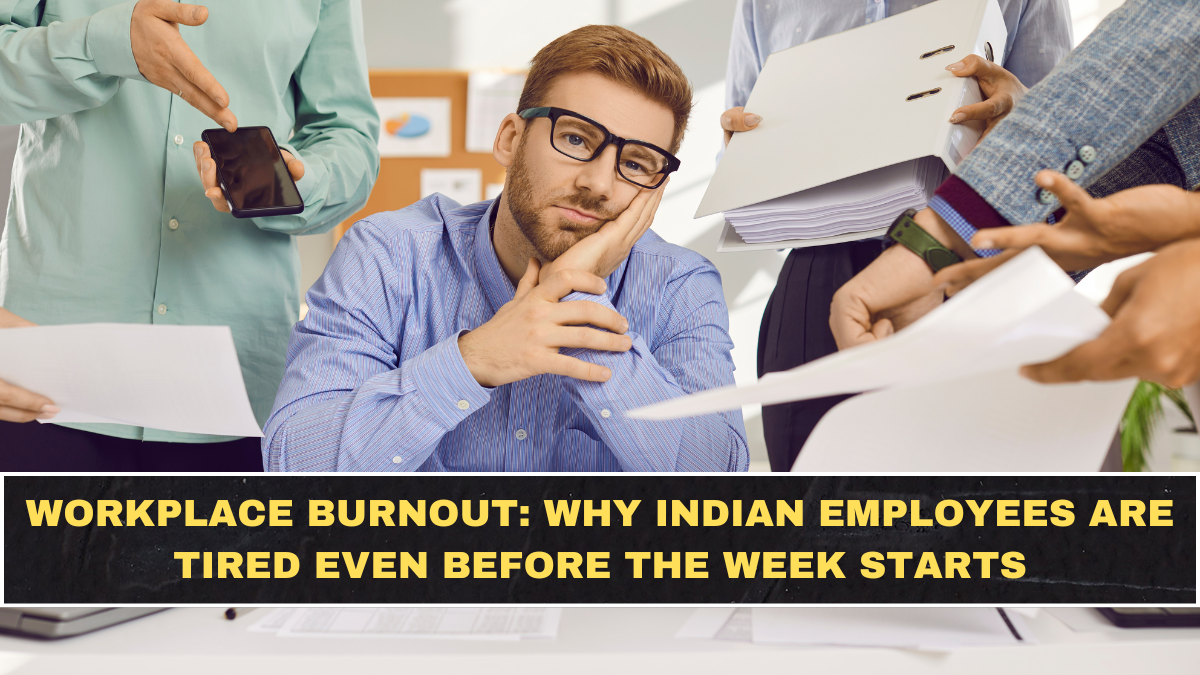
Workplace burnout is no longer a private complaint whispered after office hours. It has become one of the biggest mental-health concerns for Indian employees, especially in high-pressure sectors like IT, startups, BFSI, sales, customer support and corporate operations. The World Health Organization describes burnout as an occupational phenomenon caused by chronic workplace stress that has not been successfully managed.
The scary part is that many employees now feel tired before the week even starts. Sunday evening anxiety, Monday dread, constant notifications, unrealistic deadlines and fear of job loss are turning normal work pressure into long-term exhaustion. Calling this “weakness” is lazy thinking. But employees also need to be honest: ignoring signs for months and pretending everything is fine is not strength either.

What Does Burnout Actually Mean?
Burnout is not just feeling tired after a busy day. WHO defines it through three major signs: energy depletion or exhaustion, increased mental distance or cynicism toward work, and reduced professional effectiveness. It is specifically linked to the work context and should not be casually applied to every life problem.
That distinction matters because people misuse the word burnout for everything. Real workplace burnout builds slowly when stress stays unmanaged for too long. You may still attend meetings, reply to emails and hit targets, but internally you start feeling numb, irritated and detached from work that once felt manageable.
| Burnout Sign | What It Looks Like At Work |
|---|---|
| Exhaustion | Feeling drained even after sleep or weekends |
| Cynicism | Becoming negative, detached or irritated |
| Low efficiency | Taking longer to finish basic tasks |
| Anxiety | Dreading meetings, messages or deadlines |
| Physical symptoms | Headaches, poor sleep, stomach issues |
| Presenteeism | Showing up but functioning poorly |
Why Is India Facing A Burnout Problem?
India’s workplace culture often rewards overwork and calls it dedication. Long hours, unclear boundaries, manager pressure, low staffing, traffic-heavy commutes and after-hours messages have made burnout feel normal. That is the real problem: many offices do not treat burnout as a warning sign until performance drops or resignations begin.
A workplace burnout review notes that survey reports have indicated around 59% of Indian employees experience work-related burnout, making it a major concern in Indian work settings. Recent reporting from Bengaluru also highlighted “presenteeism,” where professionals keep showing up despite anxiety, depression or burnout because they fear judgment or job insecurity.
Why Are Mondays Feeling So Heavy?
Monday feels heavy because the brain knows the pattern will repeat. If every week brings overloaded calendars, poor sleep, toxic communication and no recovery, the body starts reacting before work even begins. That is why Sunday night stress has become common among urban professionals.
The bigger issue is recovery debt. People work late, scroll late, sleep badly and then wonder why they wake up tired. That is not a mystery. If your weekend is only used to recover from five days of damage, your job is not just demanding; it is slowly eating your life structure.
What Are The Warning Signs?
Employees should not wait for a breakdown before taking burnout seriously. Early signs are often subtle but repeated. You may start avoiding calls, delaying simple tasks, feeling angry at small requests or losing interest in work that once felt normal.
Warning signs include:
- Constant tiredness even after rest
- Sleep problems or Sunday-night anxiety
- Irritation toward colleagues or customers
- Drop in focus, memory or decision-making
- Feeling trapped despite good salary
- Frequent headaches, body pain or stomach issues
- Emotional numbness or loss of motivation
What Should Companies Fix First?
Companies need to stop treating burnout as an employee personality problem. If multiple people in the same team are exhausted, the issue is not individual weakness; it is workload design, leadership behaviour or broken staffing. Free webinars and unused wellness apps are not enough if managers still glorify midnight replies.
Real fixes include realistic workloads, trained managers, clear boundaries, mental-health leave without interrogation and confidential counselling support. A healthy workplace does not mean zero pressure. It means pressure is planned, temporary and recoverable, not constant chaos disguised as ambition.
What Should Employees Do Personally?
Employees also need to stop romanticising suffering. If a job is damaging sleep, health and relationships for months, pretending it is “growth” is self-deception. Yes, career pressure is real, but destroying your health to look committed is a bad trade unless the payoff is truly worth it.
Start with basics: set communication boundaries where possible, document workload, speak to your manager early, use leave properly and get professional help if anxiety, sleep issues or hopelessness continue. If your workplace punishes every boundary, then the problem may not be your resilience. It may be the job itself.
Conclusion?
Workplace burnout is becoming a mainstream problem because Indian work culture often confuses exhaustion with ambition. Employees are tired before the week starts because stress is not ending; it is rolling from one week into the next. That is not sustainable for workers or companies.
The honest answer is uncomfortable for both sides. Companies must fix workload, management and support systems, while employees must stop ignoring warning signs until the body forces a shutdown. Burnout is not a badge of honour. It is a signal that something in the way work is being done needs to change.
FAQs?
What Is Workplace Burnout?
Workplace burnout is a condition linked to chronic work stress that has not been successfully managed. WHO describes it through exhaustion, mental distance or cynicism toward work, and reduced professional effectiveness.
Why Are Indian Employees Facing Burnout?
Indian employees face burnout because of long hours, unrealistic targets, job insecurity, commute stress, poor boundaries and pressure-heavy workplace cultures. Reports and studies have pointed to high burnout levels among Indian employees, especially in demanding sectors.
What Are The Early Signs Of Burnout?
Early signs include constant tiredness, poor sleep, irritability, loss of motivation, Sunday-night anxiety, reduced focus and feeling emotionally detached from work. Physical symptoms like headaches or stomach issues may also appear.
How Can Companies Reduce Burnout?
Companies can reduce burnout by setting realistic workloads, training managers, respecting after-hours boundaries, offering confidential mental-health support and creating leave policies that employees can use without fear or shame.