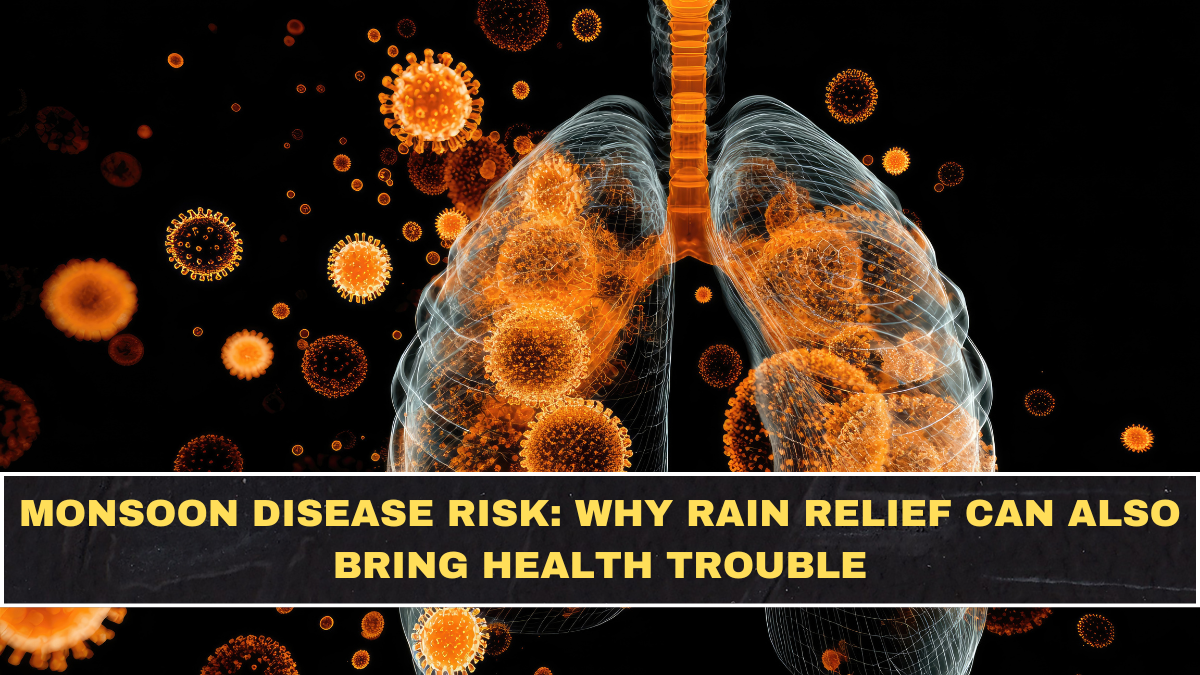
Monsoon brings relief from heat, but it also creates perfect conditions for infections. Stagnant water, humidity, contaminated drinking water, flooding, poor drainage and unsafe food can quickly increase the risk of dengue, malaria, diarrhoea, typhoid, jaundice, leptospirosis and fungal infections. The rain may cool the weather, but it also exposes the weak spots in sanitation and public health systems.
Recent reports from Palakkad after summer rains showed a rise in communicable diseases, including dengue-like symptoms, jaundice and 131 diarrhoea cases, with health officials advising people to drink only boiled water and remove stagnant water. That is the warning people need to take seriously: disease risk does not wait for full monsoon; even early rains can trigger outbreaks.
Which Diseases Rise During Monsoon?
The biggest monsoon health threats usually fall into two categories: mosquito-borne diseases and water-borne diseases. Mosquito-borne diseases increase when rainwater collects in containers, tyres, coolers, drains and construction sites. Water-borne diseases rise when drinking water gets contaminated due to flooding, leakage, sewage mixing or poor hygiene.
A 2025 review on monsoon-linked infectious disease dynamics notes that monsoon conditions can increase waterborne, vector-borne and even airborne infections, with cholera, dengue, malaria, leptospirosis and hepatitis E becoming major concerns in weak-infrastructure settings.
| Disease Type | Common Examples | Main Trigger |
|---|---|---|
| Mosquito-borne | Dengue, malaria, chikungunya | Stagnant water and mosquito breeding |
| Water-borne | Diarrhoea, cholera, typhoid, hepatitis A/E | Contaminated water or food |
| Flood-related | Leptospirosis, skin infections | Dirty floodwater exposure |
| Fungal infections | Foot infections, skin rashes | Damp clothes, wet shoes, humidity |
| Respiratory infections | Cough, cold, flu-like illness | Crowding and weather change |
Why Do Dengue And Malaria Spike?
Dengue and malaria rise during and after rains because mosquitoes breed in stagnant water. Dengue is commonly linked with Aedes mosquitoes, which can breed even in small collections of clean water around homes. Malaria spreads through Anopheles mosquitoes, and risk increases when waterlogging and poor drainage create breeding zones.
This is where people behave carelessly. They clean the front room but ignore coolers, flower pots, roof corners, tyres, buckets and water tanks. Mosquito control is not a government-only job. If your house is breeding mosquitoes, you are part of the outbreak chain.
Why Are Water-Borne Diseases Dangerous?
Water-borne diseases become dangerous because symptoms can start mildly and worsen quickly, especially in children and elderly people. Loose motions, vomiting, fever, stomach pain and weakness may look routine at first, but dehydration can become serious if fluids are not replaced. Contaminated water can also spread typhoid, jaundice, cholera and hepatitis.
The CDC travel guidance for India advises drinking only potable water and limiting exposure to freshwater, especially after heavy rainfall or flooding, because diseases like leptospirosis can spread through contaminated water. This matters for locals too, not just travellers.
What Precautions Actually Work?
The strongest protection comes from boring habits done consistently. Drink safe water, eat freshly cooked food, remove stagnant water, use mosquito protection and avoid walking through dirty floodwater unless absolutely necessary. People want dramatic solutions, but most monsoon infections spread because basic hygiene is ignored.
Useful precautions include:
- Drink boiled, filtered or properly treated water
- Avoid cut fruits, stale food and unhygienic street food during heavy rains
- Empty coolers, pots, trays, tyres and buckets every week
- Use mosquito nets, repellents and window screens
- Wear covered footwear in flooded or muddy areas
- Wash hands before eating and after using the toilet
- Keep children away from puddles and stagnant water
When Should You See A Doctor?
Do not self-medicate every fever during monsoon. Dengue, malaria, typhoid, leptospirosis and viral fever can look similar in the beginning, so guessing the disease at home is risky. Fever with severe headache, body pain, rash, vomiting, persistent diarrhoea, yellow eyes, breathing trouble, reduced urination or extreme weakness needs medical attention.
The dangerous mistake is taking painkillers randomly, especially during suspected dengue. Some medicines can increase bleeding risk, so fever treatment should be guided by a doctor. If symptoms worsen after two or three days, stop acting tough and get tested.
Who Needs Extra Care?
Children, elderly people, pregnant women, outdoor workers, people with diabetes, kidney disease, liver disease or weak immunity need extra protection. These groups can dehydrate faster, develop complications earlier and recover slower from infections. For them, “normal fever” should not be dismissed casually.
Families should also keep ORS, clean drinking water, basic thermometer, mosquito protection and emergency doctor contacts ready. Preparedness does not mean panic. It means not running around helplessly after someone falls sick.
Conclusion?
Monsoon disease risk is real because rain creates breeding grounds for mosquitoes and increases the chance of contaminated water and food. Dengue, malaria, diarrhoea, typhoid, jaundice, leptospirosis and fungal infections can rise quickly when hygiene and drainage fail.
The solution is not complicated, but it needs discipline. Remove stagnant water, drink safe water, eat fresh food, protect against mosquitoes and seek medical help for warning symptoms. Rain brings relief, but careless behaviour can turn that relief into a hospital visit.
FAQs?
Why Do Diseases Increase During Monsoon?
Diseases increase during monsoon because stagnant water supports mosquito breeding, while flooding and poor drainage can contaminate drinking water. High humidity also encourages fungal infections and makes hygiene harder to maintain.
Which Diseases Are Most Common In Monsoon?
Common monsoon diseases include dengue, malaria, chikungunya, diarrhoea, typhoid, cholera, hepatitis A/E, leptospirosis, fungal infections and viral fever. The exact risk depends on local sanitation, rainfall, water quality and mosquito control.
How Can I Prevent Dengue And Malaria During Rainy Season?
Remove stagnant water from coolers, pots, tyres, buckets and rooftops every week. Use mosquito nets, repellents, window screens and full-sleeve clothing, especially during peak mosquito activity.
When Should Monsoon Fever Be Taken Seriously?
Monsoon fever should be taken seriously if it comes with severe headache, rash, vomiting, body pain, bleeding signs, yellow eyes, persistent diarrhoea, breathing difficulty or extreme weakness. Do not guess the illness at home; consult a doctor and get proper tests.