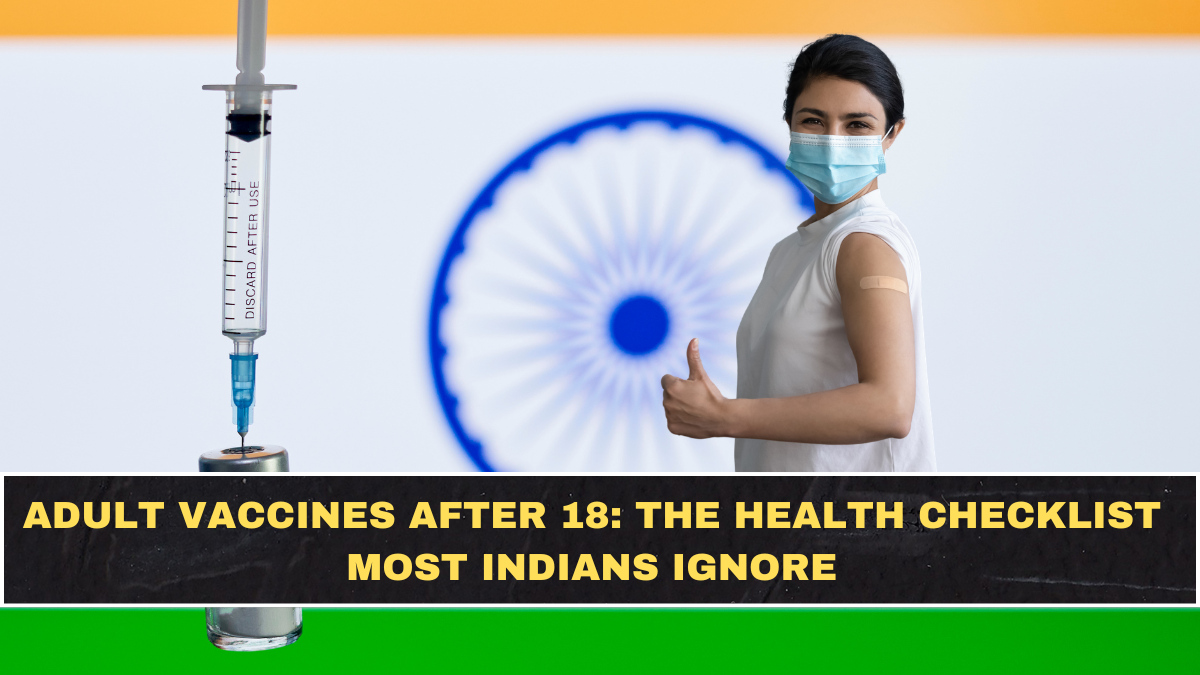
Most people treat vaccination as something that ends with childhood, and that is a careless assumption. Adult vaccination matters because immunity can weaken, some childhood doses may be missed, and adult life brings new risks through travel, pregnancy, work exposure, lifestyle, and chronic diseases. The CDC says staying up to date on vaccines is one of the best ways adults can protect their health.
For Indians, this matters even more because many adults do not have proper childhood vaccine records. People remember school injections vaguely but cannot confirm tetanus, hepatitis, HPV, MMR, chickenpox, or booster status. That gap becomes risky when someone gets injured, plans pregnancy, travels abroad, works in healthcare, or develops diabetes, asthma, heart disease, or low immunity.
Which Vaccines Matter After 18?
| Vaccine | Who Should Discuss It? | Why It Matters? |
|---|---|---|
| Tdap/Td | All adults | Booster protection against tetanus, diphtheria, pertussis |
| Flu shot | Most adults yearly | Reduces risk of severe influenza complications |
| HPV | Young adults, especially before exposure | Helps prevent HPV-related cancers |
| Hepatitis B | Unvaccinated adults and high-risk groups | Protects against liver infection |
| MMR/Chickenpox | Adults without immunity or records | Prevents serious viral infections |
| Pneumococcal | Older adults or high-risk adults | Protects against pneumonia and bloodstream infection |
| Travel vaccines | International travellers | Required or advised for some countries |
The CDC adult schedule lists an annual influenza vaccine for adults, one Tdap dose followed by Td or Tdap booster every 10 years, HPV vaccination depending on age and previous vaccination, and hepatitis B vaccination through age 59, with risk-based decisions after that. These are not random wellness trends; they are structured adult immunization recommendations.
Do not copy this table blindly as a prescription. Your vaccine need depends on age, past vaccination record, pregnancy status, allergies, immune condition, job exposure, travel plans, and existing diseases. The smart move is to take your old records to a physician and build a proper adult vaccine plan instead of guessing from Instagram posts.
Why Is Tetanus Booster Still Important?
Tetanus is not only a childhood issue. Cuts, road accidents, rusted metal injuries, burns, animal bites, and contaminated wounds can still expose adults to risk. CDC’s easy-read adult schedule says Td or Tdap boosters are recommended every 10 years for all adults, while Tdap is also recommended during every pregnancy.
This is one of the most ignored adult vaccines because people remember getting “some injection” after an injury and assume that is enough forever. That is weak thinking. If you do not know your booster status, especially after a wound, you should ask a doctor instead of assuming your childhood protection is still perfect.
Why Are HPV And Hepatitis B Important?
HPV vaccine matters because HPV can lead to several cancers, including cervical, anal, penile, vaginal, and throat cancers. CDC notes that HPV vaccination may require 2 or 3 doses depending on age at first vaccination and condition, with shared decision-making for some adults aged 27–45. This is especially important because HPV prevention works best before exposure.
Hepatitis B is another adult vaccine many people ignore until there is a medical scare. It spreads through blood and body fluids and can damage the liver. CDC guidance lists hepatitis B vaccination for adults through 59 years, with vaccination also considered for older adults based on risk or request.
Who Should Be More Careful?
Some adults need vaccination discussions more urgently than others. That includes healthcare workers, frequent travellers, people with diabetes, kidney disease, liver disease, heart or lung disease, weakened immunity, pregnant women, older adults, and people without reliable childhood vaccine records. For these groups, vaccines are not optional “extra protection”; they can prevent serious complications.
High-priority adults should check:
- Last tetanus/Tdap booster date.
- HPV vaccine status before or during young adulthood.
- Hepatitis B vaccination and antibody status if high-risk.
- Flu shot every year, especially with chronic illness.
- Pneumococcal vaccine need after age or medical risk.
- Travel vaccine requirements before international trips.
The biggest mistake is waiting until a disease outbreak, travel deadline, injury, or pregnancy visit. Adult vaccination works better as planning, not panic. If you wait until the last moment, you may miss multi-dose schedules, required intervals, or country-specific vaccine certificates.
Why Do Adults Skip Vaccines?
Adults skip vaccines because nobody reminds them. Childhood vaccines are tracked by parents, schools, and paediatricians, but adult vaccines depend on personal awareness. Many people also wrongly believe that natural immunity, home remedies, gym health, or “I never fall sick” can replace vaccination. That confidence is not health awareness; it is guesswork.
There is also a social problem. Adults discuss diets, supplements, protein powders, skincare, and fitness apps openly, but rarely discuss vaccination records. That is backwards. Vaccines are one of the most evidence-based preventive tools available, while many trendy health products are mostly marketing with better packaging.
Conclusion: Should Adults Take Vaccines Seriously?
Adult vaccines after 18 should not be ignored because protection does not automatically last forever and adult risks change with age, work, travel, pregnancy, and health conditions. Tdap/Td boosters, flu shots, HPV, hepatitis B, MMR, chickenpox, pneumococcal, and travel vaccines may all matter depending on the person. The exact schedule must be decided with a qualified doctor.
The blunt truth is that many adults are organised about phone insurance but careless about vaccine protection. That is not smart. Pull out your old records, check what you missed, and ask a physician for an adult immunization plan. Prevention is boring until the disease becomes real.
FAQs?
Which vaccines should adults take after 18?
Adults should discuss Tdap/Td booster, flu vaccine, HPV, hepatitis B, MMR, chickenpox, pneumococcal vaccine, and travel vaccines depending on age, health, and past records. CDC’s adult schedule includes annual flu vaccination and Td/Tdap boosters every 10 years. The exact list should be personalised by a doctor.
Is HPV vaccine useful after 18?
Yes, HPV vaccine can still be useful after 18, especially for people who were not vaccinated earlier. CDC lists HPV vaccination for adults based on age, prior doses, and clinical decision-making in some older age groups. It is best discussed early because protection is strongest before exposure.
Do adults need a tetanus booster?
Yes, adults generally need Td or Tdap boosters every 10 years, and Tdap is also recommended during every pregnancy. Adults may also need tetanus-related vaccination after certain wounds depending on their vaccination history. A doctor should decide after checking the injury type and past booster record.
Should healthy adults take flu vaccine every year?
Many adult schedules recommend annual flu vaccination because influenza can cause serious complications, especially in older adults and people with chronic illness. CDC’s easy adult schedule lists flu vaccination every year. Healthy adults should still discuss it with their doctor, especially before flu season or if they live with high-risk family members.