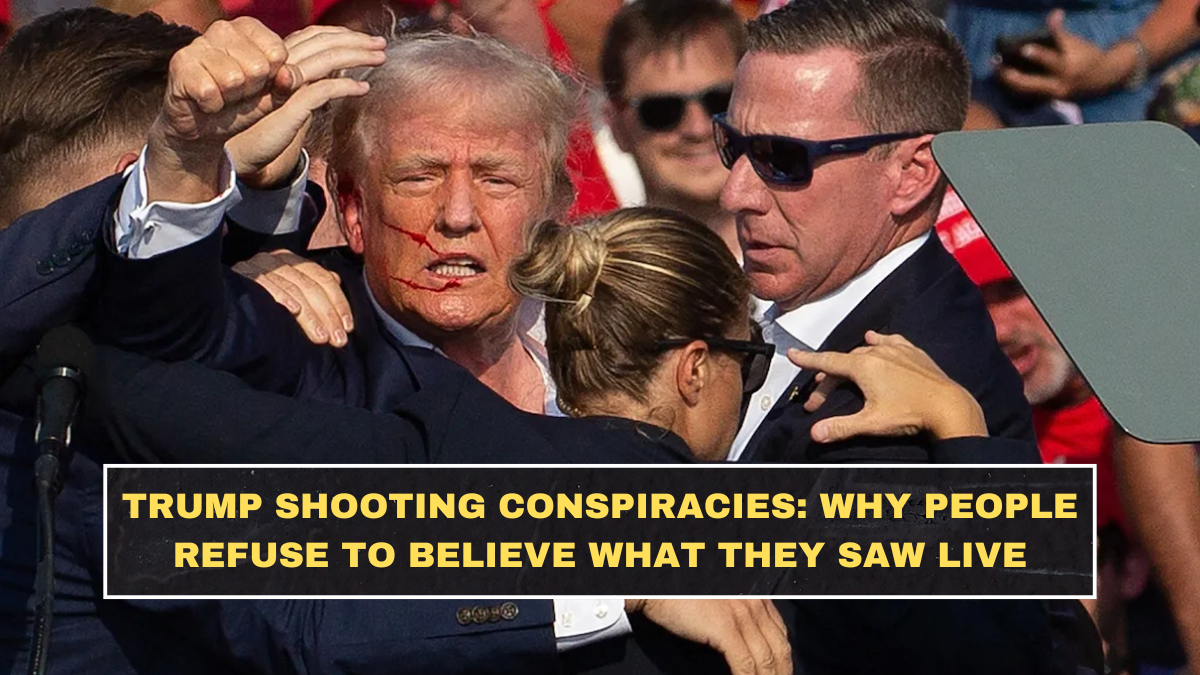
Conspiracy theories spread fast after the White House Correspondents’ Dinner shooting because many people no longer process political violence as an event first. They process it as evidence for whatever they already believe. Within hours, online users claimed the shooting was staged, a false flag, a distraction from the Iran war, or a way to justify Trump’s controversial White House ballroom plan. None of those claims has been supported by credible evidence.
AP reported that conspiracy theories spread across the political spectrum despite real-time coverage from journalists at the event. The shooting was covered immediately, the venue was full of media professionals, and official details emerged quickly. Yet that did not stop people from deciding the story was fake before the facts were fully known. That is the real problem: evidence now competes with identity, anger, and distrust.
What Actually Happened At The Dinner?
Federal authorities say Cole Tomas Allen, a 31-year-old man from Torrance, California, tried to breach security at the Washington Hilton during the White House Correspondents’ Dinner while President Donald Trump was attending. The FBI said Allen had a shotgun and a pistol, charged a security checkpoint, and was arrested after Secret Service agents stopped him. A Secret Service officer was struck in the chest but survived because of a ballistic vest.
Reuters reported that the White House described the incident as the third major assassination attempt against Trump and said the suspect was stopped before reaching the hotel ballroom. The administration also announced a review of presidential security protocols after the incident. Those are the verified basics. Everything beyond that needs evidence, not vibes, political rage, or viral screenshots.
| Viral Claim Type | Why It Spread | What Readers Should Do |
|---|---|---|
| “It was staged” | Fits pre-existing distrust of Trump and government | Ask for evidence, not screenshots |
| “It was a false flag” | Gives people a dramatic hidden explanation | Check official filings and credible reporting |
| “It was to justify the ballroom” | Connects two trending controversies | Separate timing from proof |
| “Media is hiding the truth” | Exploits distrust in institutions | Compare multiple reputable outlets |
| “Foreign actors were involved” | Turns confusion into geopolitical drama | Wait for verified investigative findings |
Why Do People Believe Conspiracies Even When There Is Live Coverage?
Live coverage does not automatically create trust. In fact, for some people, more coverage creates more suspicion. They see camera angles, confused first reports, security movement, missing details, and official caution as signs of a cover-up. That is backwards thinking, but it is common during chaotic events. Early reporting is always incomplete because investigators are still gathering facts.
AP’s report noted that misinformation spread even though reporters were present and covering the shooting in real time. Experts cited mistrust in institutions, information overload, and the psychological appeal of conspiracy theories as reasons people quickly rejected the basic facts. In simple terms, people do not only ask “what happened?” They ask “which version helps my side?”
Why Is Political Violence So Easy To Turn Into Misinformation?
Political violence is easy to distort because it creates fear, shock, and confusion. Those are perfect conditions for misinformation. People want an answer immediately, and conspiracy theories offer a simple villain before evidence is ready. They make chaos feel controlled: someone planned it, someone staged it, someone is lying, someone benefits.
The Washington Post reported that the White House blamed what it called a “left-wing cult of hatred” for the climate around the attack, while the suspect reportedly criticised Trump administration policies in a message to family. That political framing immediately made the story part of a wider blame war. Once politicians and influencers start using an attack to support their preferred narrative, facts get buried under tribal reaction.
Why Do Both Sides Spread Their Own Version?
Both sides spread their own version because conspiracy thinking is not owned by one party. Some anti-Trump users quickly claimed the shooting was staged to help Trump politically. Some pro-Trump users framed it as proof that rhetoric from opponents directly caused violence. Others tried to tie the event to Israel, Iran, the media, or the ballroom controversy without evidence.
That is the ugly truth: people who call out misinformation from the other side often excuse it from their own side. They do not want truth. They want ammunition. That behaviour is exactly why misinformation spreads so well after political violence. Every group thinks it is “asking questions,” but many are really laundering assumptions as investigation.
Why Did The “Staged” Claim Gain Attention?
The “staged” claim gained attention because it is simple, emotional, and familiar. After Trump survived an assassination attempt in Butler, Pennsylvania, in 2024, similar conspiracy theories circulated online. AP reported that the 2026 dinner shooting revived those patterns, with people again claiming the event was fake or politically useful. Familiar false claims spread faster because audiences already know the script.
But “someone benefits” is not proof. Politicians can benefit from real events. Media outlets can benefit from real events. Security agencies can request more funding after real events. None of that proves the event was staged. This is where weak thinkers fool themselves: they confuse motive speculation with evidence.
Why Are Conspiracy Theories Dangerous After An Attack?
Conspiracy theories are dangerous because they can inspire harassment, threats, copycat behaviour, and distrust in legitimate investigations. If people believe the attack was fake, they may target victims, journalists, witnesses, security officers, or random people falsely linked online. If people believe one political group ordered it without evidence, they may justify retaliation.
There is also a democratic cost. When every major event is instantly treated as fake, society loses the ability to respond to reality. Courts, journalists, investigators, and witnesses become irrelevant to people who have already chosen their conclusion. That is not scepticism. That is intellectual laziness dressed up as independence.
How Should Readers Judge Claims About The Shooting?
Readers should use a simple rule: do not believe claims that move faster than evidence. Check whether a claim is supported by court documents, official statements, reputable reporting, named witnesses, or verifiable video. Ignore anonymous posts that rely on emotional language, cropped clips, AI images, or “just asking questions” framing.
The strongest available reporting says Allen has been charged with attempting to assassinate Trump, carried firearms, tried to breach security, and was stopped before reaching the ballroom. Those facts may be expanded as investigators release more information. But until then, unsupported theories are not “alternative research.” They are noise.
What Does This Say About America’s Media Trust Crisis?
This incident shows that America’s media trust crisis is no longer just about whether people like CNN, Fox, AP, or Reuters. It is deeper than that. Many people now reject any information that does not fit their emotional worldview. Even live witnesses and court filings are not enough if the facts feel politically inconvenient.
That is a dangerous place for a country to be. A society can survive disagreement. It cannot function if millions of people treat every major event as fake unless it flatters their side. The dinner shooting did not only expose security vulnerabilities. It exposed how badly public reality itself has fractured.
Conclusion
The Trump dinner shooting became a conspiracy-theory storm because the internet now rewards instant suspicion more than careful evidence. Real-time media coverage, federal charges, security response, and witness reporting did not stop people from claiming the event was staged or manipulated. That should worry everyone, regardless of politics.
The blunt truth is simple: if your first reaction to political violence is to force it into your favourite theory, you are not thinking critically. You are being manipulated by your own bias. The facts should come first. The politics can wait.
FAQs
What conspiracy theories spread after the Trump dinner shooting?
Unsupported claims included allegations that the shooting was staged, used to distract from the Iran war, linked to the White House ballroom controversy, or connected to foreign actors. AP reported that these claims spread quickly despite real-time media coverage and no credible evidence supporting them.
What do authorities say happened at the White House Correspondents’ Dinner?
Authorities say Cole Tomas Allen tried to breach security at the Washington Hilton while armed with a shotgun and pistol. He was stopped before reaching the ballroom, and a Secret Service officer was struck in the chest but survived because of a ballistic vest.
Why do people believe political conspiracy theories so quickly?
People believe them quickly because of mistrust in institutions, political polarisation, emotional shock, information overload, and the desire for simple explanations. Many people also accept claims that support their existing political beliefs.
How can readers avoid misinformation after major attacks?
Readers should wait for verified reporting, court filings, official statements, and credible eyewitness accounts. Avoid viral claims based on cropped clips, anonymous posts, AI images, or claims that ask for trust without evidence.