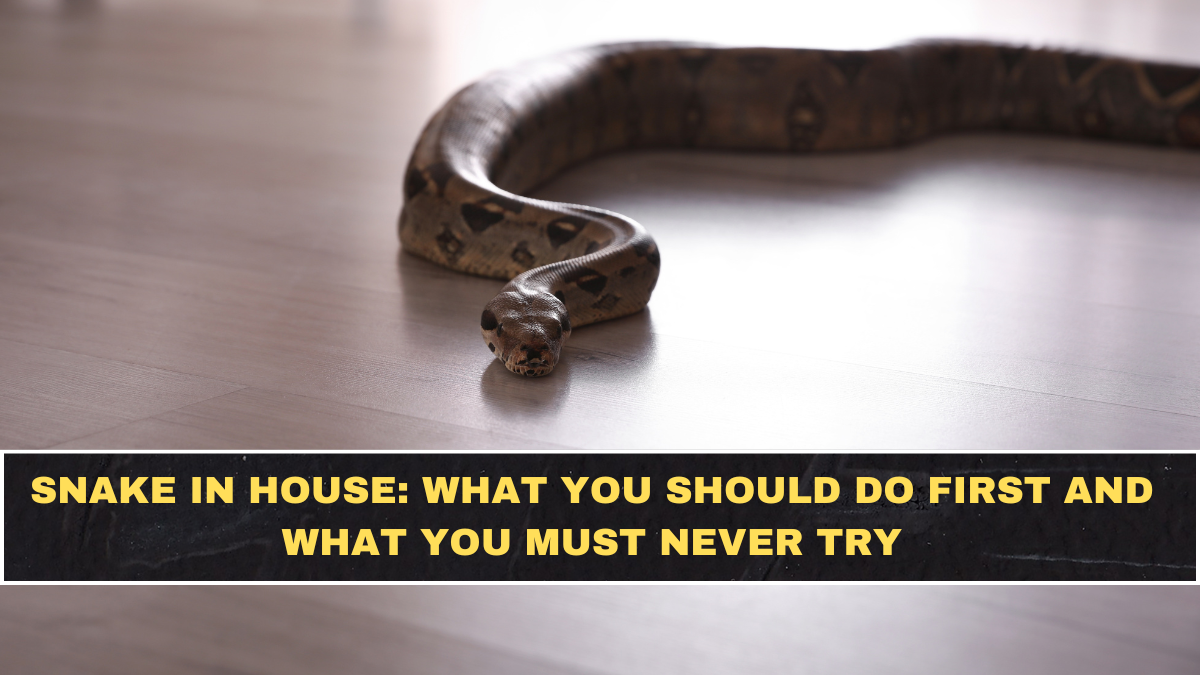
Seeing a snake inside the house can create instant panic, but panic is exactly what makes the situation dangerous. The first step is to move children, elderly people and pets away from the room calmly. Do not shout, throw objects, corner the snake or try to hit it with a stick, because a frightened snake may move unpredictably or bite in self-defence.
Keep a safe distance and watch where the snake goes without blocking its path. Close the room door if possible, place a cloth under the door gap from outside if safe, and call a local trained snake rescuer, forest department contact or emergency helpline. District safety advisories also recommend supporting safe snake rescue practices instead of killing snakes, because many snakes are non-venomous and help control pests.
What Should You Never Do?
The worst mistake is trying to become a hero. Most people do not know snake behaviour, species identification or safe handling. If you try to catch, beat, burn, trap or take a selfie with the snake, you are increasing the risk for everyone in the house. Your job is not to identify the snake; your job is to keep people away and call trained help.
Many snake encounters happen near farms, woodpiles, shoes, rocks, water sources and during monsoon or night-time movement. That is why homes near fields, gardens or open drains need extra caution. Prevention is not glamorous, but it works better than panic after the snake has already entered.
| Situation | Safe Action |
|---|---|
| Snake seen in room | Move people away and close the room if safe |
| Snake under furniture | Do not poke or move furniture aggressively |
| Snake near door | Give it space and avoid blocking escape path |
| Pets are nearby | Lock pets in another room immediately |
| Snakebite happens | Immobilise the person and go to hospital quickly |
| Rescuer is called | Keep watch from a safe distance until help arrives |
How Can You Keep Snakes Away From Home?
Snakes usually enter homes while searching for shelter, rats, frogs or cooler hiding places. If your house has rodents, open drains, garbage piles, broken walls or cluttered storage areas, you are basically inviting the problem. Keeping the house clean and sealing entry points matters more than buying random “snake repellent” products with weak proof.
Basic prevention steps are simple. Keep grass trimmed, remove unused bricks, wood and junk piles, seal wall cracks, cover drains and keep food waste closed so rats do not gather. Shake shoes before wearing them, use a torch at night and avoid walking barefoot in dark outdoor areas. These boring habits reduce risk more than dramatic last-minute reactions.
What If Someone Gets Bitten?
Snakebite is a medical emergency, even if the snake looks small or the bite seems mild. The World Health Organization advises moving away from the snake, removing tight items like rings or anklets from the bitten area, reassuring the victim and seeking medical help quickly. Swelling can increase, so tight jewellery or clothing around the bite area can become harmful.
Keep the person calm and reduce movement of the bitten limb. Do not waste time searching for the snake or trying village treatments. India’s National Action Plan on snakebite says deaths and severe complications can be avoided with timely transport, proper referral and safe antivenom access. That means reaching a hospital is the priority, not experimenting at home.
What Snakebite Myths Can Kill People?
The most dangerous myths are tourniquets, cutting the wound, sucking venom, applying herbs, using ice, giving alcohol or going to a faith healer first. WHO guidance warns that constricting bands and traditional treatments can worsen symptoms, while a recent KGMU-linked report said 70% to 80% of snakebite cases in rural Lucknow and nearby areas received faulty first aid before reaching medical facilities.
Do not tie a tight cloth above the bite. Do not cut the skin. Do not try to suck venom out. Do not apply chilli, herbal paste, mud, chemicals or ice. These actions do not neutralise venom; they waste time and may worsen injury. If someone tells you “this worked in our village,” understand that luck is not medical treatment.
What Should Families Teach Children?
Children should be taught not to touch snakes, not to throw stones and not to put hands inside holes, bushes, woodpiles or dark corners. They should call an adult immediately if they see a snake. Parents also need to stop encouraging snake videos or risky handling as entertainment, because children copy what adults laugh at.
Families living near farms should keep a torch near the bed, avoid sleeping directly on the floor where possible and check bedding, shoes and stored items during monsoon. Outdoor workers should wear shoes or boots and long pants while working in fields or dark areas. These small precautions are boring, but snakebite prevention is mostly about boring discipline done daily.
Conclusion?
If a snake enters your house, do not attack it, chase it or try to catch it. Move people and pets away, isolate the room if safe, keep watch from a distance and call trained rescue help. Most disasters happen because someone panics, shows off or tries a shortcut instead of doing the obvious safe thing.
The blunt truth is simple: your ego is more dangerous than the snake. Stay away, protect your family, call trained help and treat any snakebite as a hospital emergency. Killing the snake, delaying treatment or trying traditional first aid can turn a manageable situation into a tragedy.
FAQs?
What Should I Do If I See A Snake In My House?
Move children, elderly people and pets away first. Do not touch, hit or corner the snake. Close the room if it is safe to do so, watch from a distance and call a trained snake rescuer, forest department contact or local emergency help.
Should I Kill A Snake Found Inside The House?
No, you should not try to kill it. Many snakes are non-venomous and useful for controlling pests, but an untrained person cannot safely handle or identify them. Trying to kill the snake increases bite risk and can make the situation worse.
What Is The First Aid For Snakebite?
Keep the victim calm, reduce movement, remove tight items around the bitten area and take the person to a hospital quickly. Do not use tourniquets, do not cut the wound, do not suck venom and do not apply herbs, ice or chemicals.
How Can I Prevent Snakes From Entering My Home?
Keep the surroundings clean, control rats, seal cracks, cover drains, remove junk piles, trim grass and use a torch at night. Shake shoes before wearing them and avoid walking barefoot in dark outdoor areas, especially during summer and monsoon.