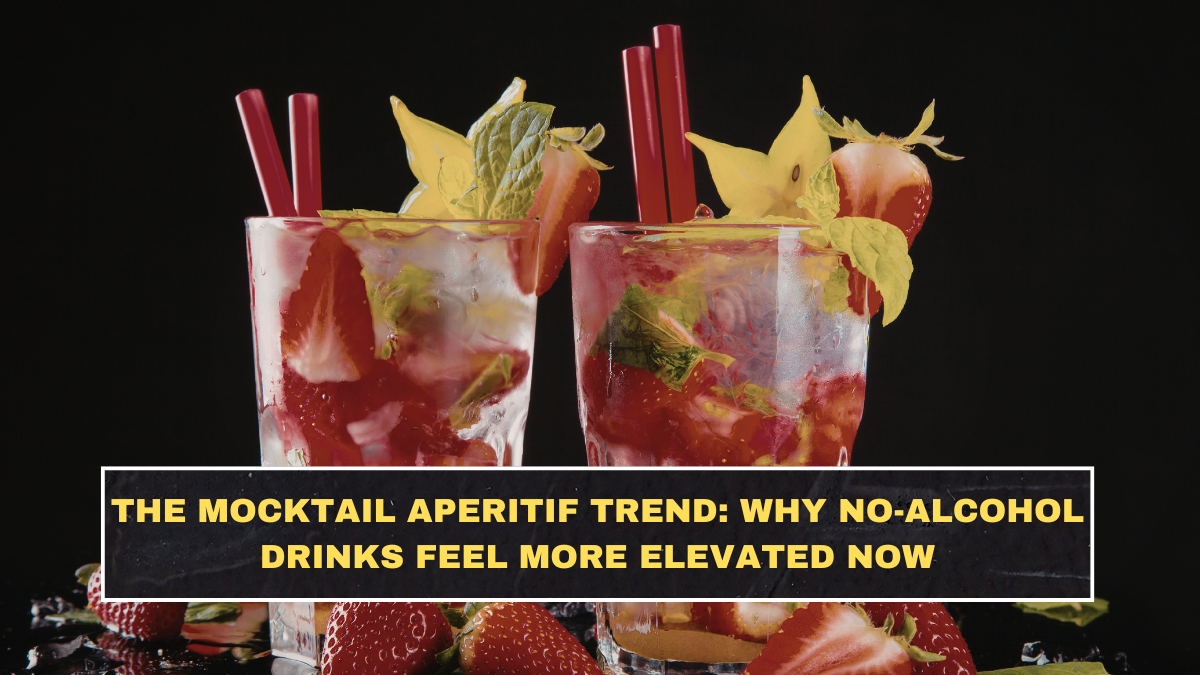
The mocktail aperitif trend is growing because people want drinks that still feel social, adult, and intentional without forcing alcohol into every occasion. The category is no longer just soda with garnish pretending to be sophisticated. In 2026, industry reporting shows no- and low-alcohol drinking is being pulled forward by moderation, health goals, and better product design. NielsenIQ said in January 2026 that the no/low category is still growing, with over half of consumers moderating their alcohol intake, and that nearly 70% of cocktail drinkers also enjoy non-alcoholic versions.
That matters because the real appeal of an aperitif-style mocktail is not “no alcohol.” It is structure. People want bitterness, acidity, botanicals, texture, and occasion cues that make the drink feel like a real part of social life. NielsenIQ’s 2025 non-alcohol report said the alcohol-free category was on track to exceed $1 billion by the end of 2025 and that premium positioning and occasion-based messaging were key to growth.
Why are alcohol-free aperitifs getting more stylish now?
Because boring abstinence does not sell, but elevated moderation does. Consumers are not just asking for fewer alcoholic drinks. They are asking for better replacements. NielsenIQ’s January 2026 soft-drinks analysis says 74% of consumers say they are likely to reduce their alcohol intake, and that moderation, premiumisation, and discovery are reshaping the category.
That shift is changing bar and hosting culture too. A non-alcoholic drink now has to do more than avoid alcohol. It has to feel deliberate enough to stand beside wine, spritzes, and cocktails without looking like a consolation prize. Table Magazine’s March 2026 beverage-trend coverage points to ready-to-drink non-alcoholic cocktails and spirits gaining momentum because people want adult-tasting options that still feel social.
What makes a mocktail feel like an aperitif instead of just a sweet soft drink?
Usually three things: bitterness, restraint, and balance. A real aperitif-style drink is meant to open the appetite and fit conversation, not overwhelm the palate with sugar. That is why the category leans toward bitter citrus, herbs, spice, botanicals, verjus, ferments, and sharper flavor structures rather than dessert-like sweetness. A March 2026 bar-trends article in India described modern zero-proof drinks as increasingly built around tea tannins, verjus, ferments, savory infusions, and botanical distillates rather than simple lime soda substitutes.
This is the part many brands still get wrong. They call something a mocktail aperitif when it is really just fruit syrup with sparkling water and expensive packaging. A good no-alcohol aperitif needs tension in the flavor, not just prettiness in the glass.
Why does this trend fit modern social drinking so well?
Because a lot of people do not want the old all-or-nothing drinking script anymore. NielsenIQ’s 2026 drinks outlook says the no/low category is being driven by moderation behavior, and Business Insider’s 2026 reporting on Gen Z’s “zebra striping” described a growing habit of alternating alcohol with nonalcoholic options to avoid hangovers and keep control of the night.
That creates the perfect space for aperitif-style mocktails. They are not trying to mimic drunkenness. They are trying to preserve mood, ritual, and taste complexity while reducing the downside. That is why the category feels more elevated now: it fits real social behavior instead of moralizing it.
What kinds of no-alcohol aperitif drinks are growing fastest?
The strongest formats seem to be botanical spritzes, bitter citrus drinks, ready-to-drink non-alcoholic cocktails, and spirit alternatives built for mixing. NielsenIQ’s 2026 beverage-alcohol review said non-alcoholic beer, wine, and spirits surpassed $1 billion in sales while becoming a more established part of moderation behavior. Table Magazine’s 2026 trends piece also highlighted canned non-alcoholic cocktails such as Negroni-inspired spritzes, mules, and palomas as category drivers.
Here is the practical breakdown:
| No-alcohol aperitif style | Why it works | Best use case | Main weakness |
|---|---|---|---|
| Bitter citrus spritz | Feels closest to classic aperitif energy | Pre-dinner, warm weather, hosting | Can taste too sharp for sweet-drink fans |
| Botanical spirit alternative with tonic or soda | Adult flavor and ritual | Dinner parties, bars, slower sipping | Some products feel overpriced |
| Ready-to-drink non-alcoholic cocktail | Convenience and consistency | Casual entertaining, events | Quality varies a lot |
| Savory or tea-based zero-proof serve | Complex and food-friendly | Restaurants, cocktail bars | Less mainstream appeal |
| Functional aperitif-style drink | Adds wellness angle to social drinking | Moderation-minded buyers | Can become gimmicky fast |
That table matters because not every mocktail aperitif is solving the same problem. Some are replacing alcohol at dinner. Some are helping people moderate. Some are just premium soft drinks pretending to be more profound than they are.
Are these drinks actually healthier, or just better marketed?
Usually both. Cutting alcohol can obviously reduce alcohol intake, but that does not make every no-alcohol aperitif nutritionally impressive. Some are genuinely lower in sugar and lighter in feel than traditional cocktails. Others are mostly branding, botanicals, and a premium price tag. NielsenIQ’s moderation-focused coverage and Datassential’s 2026 non-alcohol-beverage analysis both point to health, clarity, and control as major demand drivers, but that is about consumer motivation, not automatic product quality.
So the honest answer is simple: these drinks are useful when they offer flavor, ritual, and social flexibility without loading in sugar or fake-functional nonsense. They are less useful when they rely on wellness language to justify mediocre taste and a luxury markup.
Why do they feel more grown-up than older mocktails?
Because older mocktails were often designed like kids’ drinks for adults: sweet, obvious, and trying too hard to be fun. Modern aperitif-style mocktails are built more like cocktail-adjacent drinks. They use bitterness, dryness, herbs, spice, and visual restraint. That matters because adulthood in drinks is not about alcohol alone. It is about complexity and pacing.
NielsenIQ’s 2025 and 2026 reporting repeatedly ties category growth to premium positioning and occasion-based consumption, which is exactly why these drinks now feel more elevated. They are being designed for aperitivo hours, dinners, bars, and hosting moments, not just for people who “cannot drink.”
Where does the mocktail aperitif trend still go wrong?
It fails when brands confuse sophistication with price. Some non-alcoholic aperitifs cost enough to make people ask the obvious question: why am I paying cocktail money for a drink with no alcohol and mediocre flavor? It also fails when bars treat non-alcoholic drinks like token menu fillers instead of giving them proper structure and glassware.
The other weak spot is social pressure. The Financial Times reported earlier that many consumers still feel subtle pressure to drink alcohol in social settings even when they intend to choose no-alcohol options. That means category growth is real, but the social transition is not complete.
Will this trend keep growing?
Probably yes, because it sits inside several larger shifts at once: moderation, premium soft drinks, social drinking without intoxication, and better no-alcohol product design. NielsenIQ’s January 2026 drinks outlook says the no/low category has not peaked and is still growing, while its 2025 report says alcohol-free beverages have moved beyond niche status.
The smarter view is that no-alcohol aperitifs are not replacing all alcoholic drinks. They are expanding the number of occasions where adults want something more interesting than water or cola and less intoxicating than a cocktail. That is a real behavioral shift, not just a trendy menu tweak.
Conclusion
The mocktail aperitif trend is growing because people want no-alcohol drinks that still feel social, bitter, complex, and worth ordering. The category works when it delivers structure, restraint, and occasion value instead of just sugary fake-cocktail energy. The weak version is overpriced flavored water with a nicer bottle. The strong version is a drink that lets people participate fully in the ritual of going out or hosting without needing alcohol to make it feel adult.
FAQs
What is a mocktail aperitif?
A mocktail aperitif is a non-alcoholic drink designed to feel more like an aperitif than a soft drink, usually using bitterness, botanicals, acidity, or dry flavor balance rather than obvious sweetness. This is supported by 2026 reporting on zero-proof drinks built with botanical distillates, verjus, tea tannins, and similar cocktail-style structures.
Why are alcohol-free aperitifs trending in 2026?
Because more consumers are moderating alcohol intake and want better adult-tasting alternatives for social occasions. NielsenIQ says over half of consumers are moderating, and nearly 70% of cocktail drinkers also enjoy non-alcoholic versions.
Are no-alcohol aperitifs healthier than cocktails?
Sometimes, but not automatically. They can reduce alcohol intake and may be lower in sugar or calories, but product quality varies and some rely heavily on premium marketing rather than meaningful nutritional advantage.
What makes a no-alcohol drink feel more grown-up?
Usually bitterness, dryness, botanical complexity, and better structure. Modern aperitif-style mocktails are designed around social ritual and flavor balance, not just sweetness and garnish.