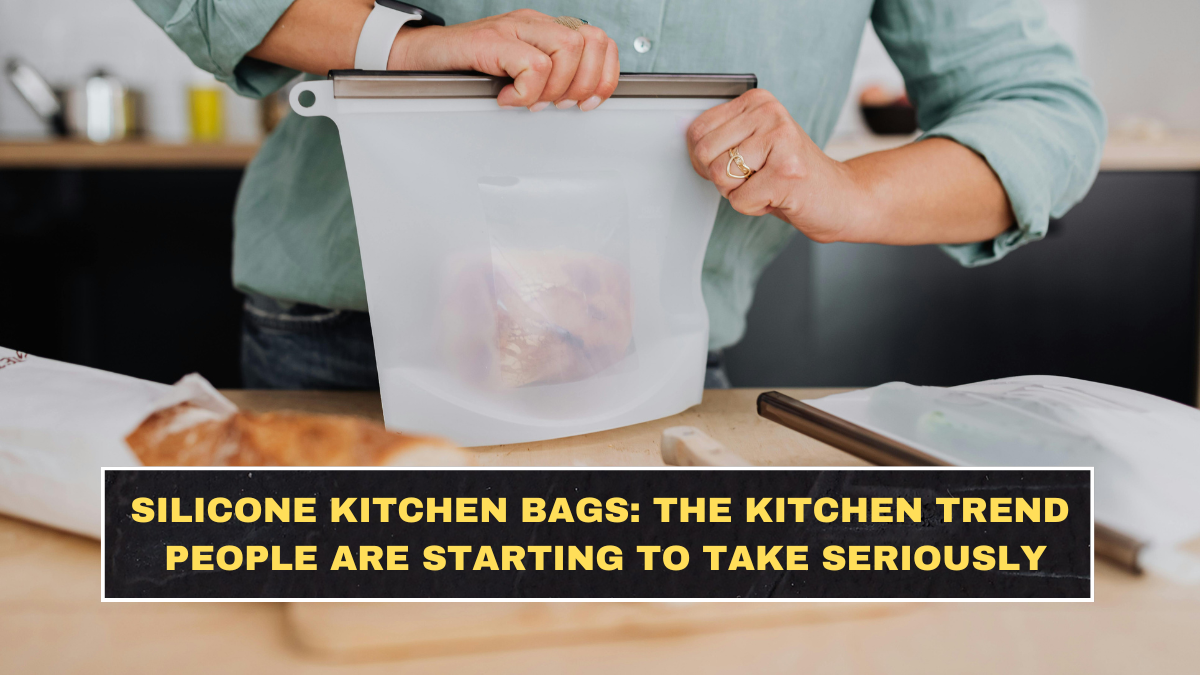
Silicone kitchen bags are trending because they solve a boring but expensive kitchen problem: people keep buying disposable plastic bags, then throwing them away, then buying more. Recent product testing from Consumer Reports and the Wall Street Journal shows reusable silicone storage bags are being taken more seriously as everyday kitchen tools, not just zero-waste accessories. Review coverage now treats them as mainstream options for storing leftovers, freezing ingredients, meal prep, and even reheating in some cases.
The reason this trend is sticking is simple. Silicone bags can often handle freezer use, dishwasher cleaning, and in many cases microwave or oven-safe use depending on the product, which makes them feel more versatile than thin plastic bags. But the category is still easy to oversell. A good silicone bag can be genuinely useful. A bad one can be overpriced, annoying to clean, and not much better than the cheap plastic it is supposed to replace.
What Are Silicone Kitchen Bags and Why Are People Taking Them Seriously?
Silicone kitchen bags are reusable food-storage bags made from food-grade silicone rather than disposable plastic. They are commonly sold as leak-resistant or airtight pouches for snacks, leftovers, freezer prep, liquids, and travel food. Consumer Reports’ December 2025 testing specifically evaluated reusable silicone bags for ease of use and cleaning, while the Wall Street Journal’s April 2026 recommendations highlighted food-grade silicone bags that are dishwasher, freezer, microwave, and in some cases oven safe.
People are taking them more seriously now because they sit in a useful middle ground. Glass containers are great but bulky. Disposable zip bags are convenient but wasteful and flimsy. Silicone bags offer a reusable option that is lighter than glass and often more durable than plastic. That does not make them perfect. It makes them practical enough that the category is no longer just for eco-performance.
What Can Silicone Kitchen Bags Actually Do Well?
Their best uses are leftovers, freezer prep, chopped produce, snacks, sandwiches, marinades, and portioned ingredients. Food & Wine’s 2026 container roundup specifically called reusable silicone bags useful for storing liquids without leaking, freezer use, microwave use, and even sous vide depending on the bag. Consumer Reports’ bag testing also focused on real-world usability, which is exactly where good silicone bags separate themselves from weaker options.
This is the part buyers should think through honestly. Silicone bags are strongest when you want flexibility and repeat use. They are not automatically better for every storage job. If you mostly store large batches of leftovers, stackable containers may still beat bags. If you need lightweight flexible storage for small portions, smoothie ingredients, or frozen soup bases, silicone bags make more sense. The product is useful when the use case is right, not when you force it into every kitchen task.
Are Silicone Kitchen Bags Safe for Food and Heat?
Generally yes, if they are genuinely food-grade and used within the stated temperature limits. Chemical Safety Facts says food-grade silicone is FDA-approved for a range of kitchen products and can be microwave-safe when labeled for that use. Better Homes & Gardens also reported that high-quality food-grade or LFGB-certified silicone is generally considered safe, while cautioning that buyers should avoid cheap unknown products, especially if they smell strongly or degrade over time.
That means the real safety question is not “silicone versus plastic” in the abstract. It is “is this specific bag well made?” Cheap no-name products are where people get sloppy. If a bag is sticky, smells odd, sheds, or lacks clear food-contact claims, that is already a warning sign. Shoppers who buy the cheapest thing possible and then act surprised when the product feels questionable are the problem, not the material.
What Are the Main Downsides?
Cleaning is the biggest downside. Several review sources note that reusable silicone bags can be harder to dry fully than rigid containers, and sealing ridges or corners can trap water. EatingWell’s testing said some silicone bags needed extra effort to dry, and the Wall Street Journal’s review pointed out that some designs retain water after dishwashing and can also stain with pigmented foods like turmeric.
The second downside is price. Silicone bags cost far more upfront than disposable bags, which means they only make financial sense if you use them repeatedly. They also do not solve every storage problem equally well. If your main complaint is cabinet organization for leftovers, stackable containers may serve you better. Silicone bags are not a miracle kitchen system. They are a specific tool with strong and weak spots.
| Use case | Do silicone bags work well? | Why |
|---|---|---|
| Freezer prep | Yes | Flexible and often freezer-safe |
| Lunches and snacks | Yes | Lightweight and reusable |
| Liquids and soups | Often yes | Good seals can prevent leaks |
| Reheating | Sometimes | Only if the specific bag is rated for it |
| Long-term leftovers | Mixed | Containers may stack better |
This is the actual buying logic. People who expect one product to replace every other food-storage format are setting themselves up for disappointment. Silicone bags are useful because they do a few jobs well, not because they dominate every job.
How Should People Use Them Safely for Real Food Storage?
Food safety still matters more than the bag material. USDA says leftovers should be cooled promptly, stored in shallow containers or airtight packaging, and used within about 3 to 4 days in the refrigerator. FoodSafety.gov also recommends putting leftovers in shallow containers and refrigerating promptly for quick cooling. That means silicone bags can be useful for storage, but they do not override the basic rules about cooling and timing.
This is where people get lazy. They buy a “better” storage product and then ignore basic food handling. A premium silicone bag does not make old leftovers safer. It just gives you a sealed container. If the food went into storage too late or sat too long in the fridge, the bag is irrelevant.
Are Silicone Kitchen Bags Actually Worth It?
Yes, if you want reusable flexible storage and will actually use the bags often. Consumer Reports, EatingWell, and the Wall Street Journal all treat better silicone bags as worthwhile kitchen tools when shoppers care about durability, leak resistance, and repeated use. They especially make sense for freezer prep, snacks, sandwiches, portioned meal components, and lighter storage jobs where glass feels too bulky.
No, if you are buying them mainly for virtue signaling or expect them to make your whole kitchen instantly efficient. They are worth it when they replace a lot of disposable bag use or solve a real storage problem. They are not worth it when they become another expensive kitchen category you barely touch because cleaning and drying annoy you. That is the blunt truth most “sustainable kitchen” content avoids.
Conclusion?
Silicone kitchen bags are being taken seriously because they are one of the few reusable kitchen swaps that can actually be practical in everyday life. The good ones are flexible, durable, freezer-friendly, and often safe for dishwasher and reheating use within their design limits. The weak points are also real: they can be pricey, sometimes annoying to dry, and not ideal for every storage job. Buy them because they fit your actual kitchen habits, not because some eco trend told you to feel guilty about plastic. That is how this category becomes useful instead of just expensive.
FAQs
Are silicone kitchen bags really better than disposable plastic bags?
They can be better for repeated use, leak resistance, freezer storage, and reducing repeat purchases of disposable bags, but only if you actually reuse them enough to justify the cost.
Can silicone food bags go in the microwave or freezer?
Many can, but only if the specific product is labeled for that use. Review and safety sources note that food-grade silicone products are often microwave- and freezer-safe, but you still need to check the manufacturer guidance.
What is the biggest downside of silicone kitchen bags?
Cleaning and drying. Multiple tested reviews note that some designs trap water or need extra drying effort compared with rigid containers.
Are silicone kitchen bags enough for food safety on their own?
No. USDA guidance still applies: cool leftovers quickly, store them sealed, and use refrigerated leftovers within about 3 to 4 days.
Click here to know more