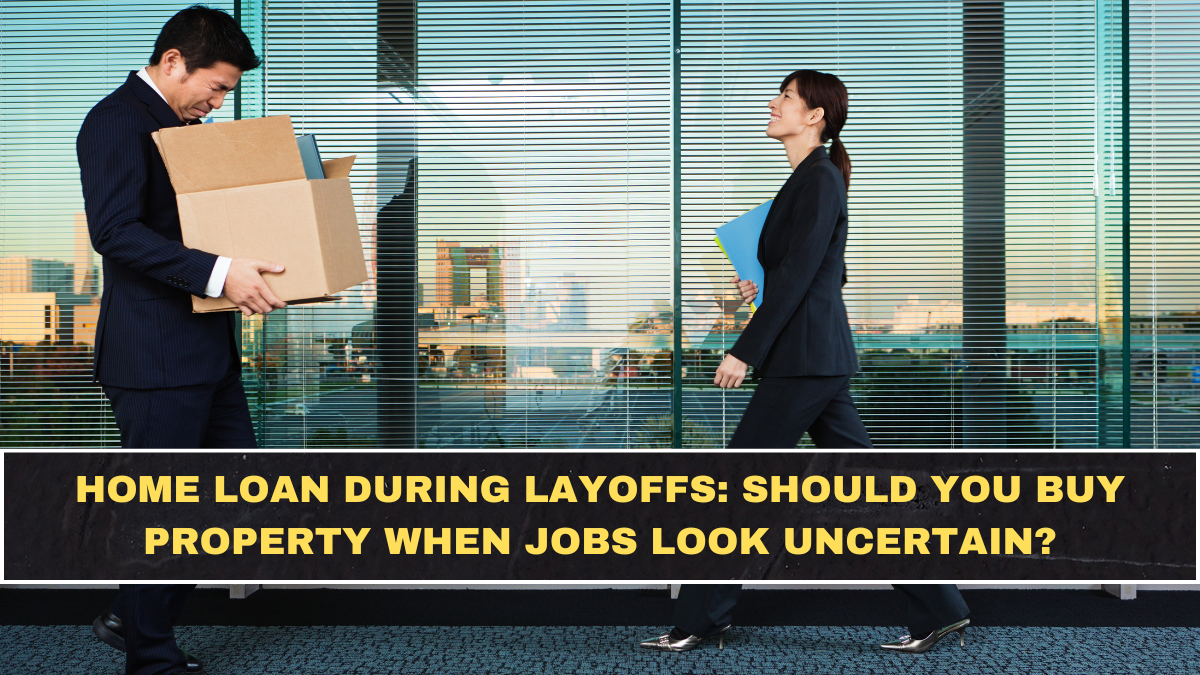
Buying a home during layoff uncertainty is not automatically wrong, but pretending it is always safe is foolish. A recent viral discussion around a dual-income tech couple hesitating to buy a ₹1.7 crore flat has exposed the fear many salaried professionals are carrying silently. The couple could manage the down payment and EMI, but they were worried about getting trapped if one income disappeared during layoffs.
This is exactly the kind of situation where emotional home-buying becomes dangerous. A home loan is not just a monthly EMI; it is a long-term commitment that can stretch for 15–25 years. If your job sector looks unstable, your savings are weak, and your EMI depends on two salaries running perfectly, then the house may not be a dream. It may be a financial time bomb.

Why Are Homebuyers So Nervous Now?
The anxiety is coming from a mix of high property prices, expensive urban living and tech-sector uncertainty. Many professionals can technically qualify for a home loan, but qualification is not the same as comfort. Banks may approve a loan based on income, but they will not suffer your stress if the EMI becomes unmanageable after job loss.
The viral Bengaluru case became relatable because the couple was not financially weak. They were high-earning enough to consider the property, yet still scared of layoffs. That fear is rational. If a single salary cut can disturb your EMI plan, then your loan structure is weaker than you want to admit.
| Question Before Buying | Safe Signal | Risk Signal |
|---|---|---|
| Emergency fund | 9–12 months of EMI and expenses ready | Savings exhausted after down payment |
| Income stability | One income can handle basics temporarily | EMI needs both salaries every month |
| EMI size | Comfortable after investments and expenses | Leaves no breathing room |
| Job sector | Stable or transferable skills | Layoffs, hiring freeze or weak demand |
| City plan | Long-term stay likely | Unsure about job location or migration |
How Much Emergency Fund Is Enough?
For a large home loan, a small emergency fund is not enough. Borrowers should ideally keep 9–12 months of household expenses and EMI payments separately, especially when income risk is high. Ujjivan Small Finance Bank’s personal finance guidance also notes that an extended emergency fund of 9–12 months can be important for home loan borrowers where income flow needs protection.
Do not drain everything into down payment, registration, interiors and furniture. That is how people look rich on possession day and become financially fragile the next month. Your emergency fund should survive the purchase. If buying the house wipes out your safety net, you are not ready for that house.
What EMI Level Is Dangerous?
The dangerous EMI level is the one that looks manageable only when life is perfect. If both partners must keep their current jobs, bonuses, hikes and health intact for the EMI to work, the loan is too aggressive. You need a stress test, not a fantasy spreadsheet.
A practical test is simple: assume one income stops for six months. Can you still pay EMI, groceries, insurance, school fees, medical costs and utilities without taking personal loans or breaking long-term investments? If the answer is no, then the property is controlling you before you even own it.
Should You Buy Or Wait?
You should buy only if the numbers stay healthy even after stress testing. Waiting is not failure. In fact, waiting can be the smartest decision if your sector is unstable, your savings are not ready, or property prices are being driven by fear of missing out. A home should improve stability, not turn every layoff headline into chest pain.
Buying may make sense if you have a strong emergency fund, low existing debt, stable income, adequate insurance and long-term plans to live in that city. Waiting may be better if your job role is vulnerable, you are unsure about location, or the EMI will force you to stop investing, travelling or handling family needs comfortably.
What Should Buyers Check Before Signing?
Homebuyers must stop behaving as if the builder’s sales deadline is more important than their financial safety. A limited-time offer, festive discount or “last few units” pressure should not push you into a 20-year liability. If the deal is truly good, it should still make sense after calm calculation.
Before signing, check these points:
- Keep 9–12 months of EMI and expenses untouched.
- Buy term insurance large enough to cover the loan.
- Avoid taking car loans or personal loans alongside a home loan.
- Check if EMI can be handled temporarily on one income.
- Compare rent versus buy without family pressure.
- Do not depend on future salary hikes to justify today’s EMI.
What If You Already Have A Home Loan?
If you already have a home loan and fear layoffs, act before the crisis. Do not wait until you miss an EMI. Build cash reserves, reduce optional expenses, avoid new debt and speak to your lender early if income disruption actually happens. Economic Times recently advised borrowers to maintain at least 6–12 months of EMIs and inform lenders early during temporary financial difficulty.
Missing EMIs can damage your credit score and create long-term stress. If your job looks risky, cut lifestyle expenses now instead of pretending everything is fine. People who act early usually have more options. People who wait until the bank starts calling have fewer.
Conclusion
Buying a home during layoffs is not wrong, but buying blindly is. The viral ₹1.7 crore flat debate shows that even high-earning professionals are now questioning whether massive EMIs make sense in an unstable job market. That fear is not weakness; it is financial awareness.
The blunt rule is simple: buy the house only if you can survive a bad year after buying it. If one layoff can break your EMI plan, you are not buying security. You are buying anxiety with a balcony.
FAQs
Should I Take A Home Loan During Layoffs?
You should take a home loan during layoff uncertainty only if your emergency fund, income stability and EMI comfort are strong. If your EMI depends fully on both salaries continuing without interruption, the loan may be too risky.
How Much Emergency Fund Should Homebuyers Keep?
Homebuyers should ideally keep 9–12 months of household expenses and EMIs ready before taking a large home loan. This fund should remain separate from down payment, registration, interiors and furniture costs.
Is Renting Better During Job Uncertainty?
Renting can be better if your job, city or income stability is uncertain. Rent gives flexibility, while a home loan creates a fixed monthly burden. Buying is better only when your finances can survive job loss or income slowdown.
What Should I Do If I Lose My Job After Taking A Home Loan?
If you lose your job, cut non-essential expenses immediately, use your emergency fund carefully and contact your lender before missing EMIs. Do not take expensive personal loans to hide the problem because that usually makes the debt situation worse.