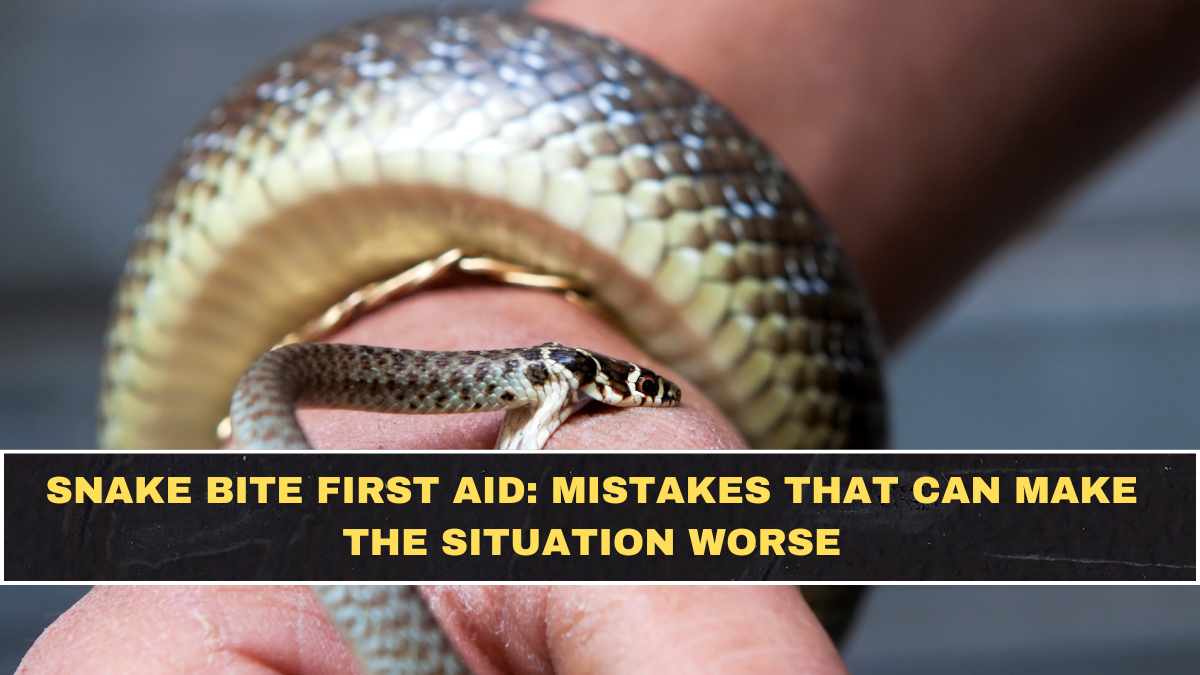
A snake bite should be treated as a medical emergency, even if the bite looks small or the snake was not clearly seen. The first step is to move the person away from the snake, keep them calm, reduce movement and arrange transport to the nearest hospital as quickly as possible. WHO guidance says the goal of first aid is to delay venom spread, prevent harmful interference and get the patient to medical care safely.
The biggest mistake is wasting time on local treatments, cutting, sucking venom, tying tight cloth or visiting a faith healer first. These actions do not neutralise venom and can make the injury worse. India’s National Action Plan for Snakebite Envenoming was launched to improve prevention, treatment and control, showing how serious the public-health burden is.
What Is The Correct First Aid?
Correct snake bite first aid is simple, but people complicate it with myths. Keep the bitten person still, reassure them, remove rings, bangles, anklets, watches or tight clothing near the bite area because swelling may develop, and take the person to hospital quickly. Do not make the victim walk unnecessarily because movement can increase venom spread.
The bitten limb should be kept as still as possible. If available, use a simple splint to reduce movement, but do not tie anything tightly enough to stop blood flow. The National Health Mission guideline says first aid should “do no harm” and focus on arranging transport to a place where the patient can receive medical care.
| Situation | Correct Action |
|---|---|
| Bite just happened | Move away from snake and keep patient calm |
| Swelling starts | Remove rings, bangles, shoes or tight clothing |
| Patient is anxious | Reassure and reduce movement |
| Snake is nearby | Do not catch or kill it; remember appearance if safe |
| Hospital is far | Arrange fast transport and call ahead if possible |
| Symptoms appear | Treat as urgent and reach medical care immediately |
What Should You Never Do?
Do not cut the wound, suck venom, apply herbs, tie a tight tourniquet, use ice, give alcohol, burn the bite, use electric shock or apply chemicals. These methods are not bravery, tradition or “desi treatment”; they are dangerous delays. WHO guidance warns that constricting bands and traditional treatments can cause additional symptoms and worsen the patient’s condition.
A recent KGMU-linked report said 70% to 80% of snakebite cases in rural Lucknow and nearby areas reached medical facilities after faulty first aid such as tight cloth bands, cuts and herbs. That is the harsh truth: many victims are harmed more by wrong first aid before hospital than by smart waiting and fast transport.
Never do these:
- Do not tie a tight cloth or rope above the bite.
- Do not cut the wound with a blade or knife.
- Do not suck venom with the mouth.
- Do not apply herbs, mud, chilli, chemicals or ice.
- Do not give alcohol, caffeine or unnecessary medicines.
- Do not delay hospital care for rituals or local healers.
What Symptoms Should Families Watch For?
Snakebite symptoms can vary depending on the species, bite location and venom amount. Some bites may cause local pain, swelling, bleeding, drooping eyelids, difficulty breathing, vomiting, weakness, dizziness, dark urine or reduced urine output. But waiting for severe symptoms before going to hospital is a bad decision.
Some venomous bites may not look dramatic at first. The patient may seem stable, then worsen later. That is why every suspected snakebite should be medically assessed. The correct mindset is simple: reach hospital early and let trained doctors decide whether antivenom or observation is needed.
Is Antivenom The Only Treatment?
Antivenom is the main specific treatment for venomous snakebite, but it should be given only in a medical setting where doctors can monitor the patient. Do not try to buy or arrange antivenom privately and inject it outside hospital. That is reckless because antivenom can cause allergic reactions and needs proper medical supervision.
The National Health Mission guideline says antivenom therapy should be administered as soon as there is evidence of envenomation. This means doctors assess symptoms and decide treatment. Your job before reaching hospital is not to treat venom; your job is to avoid harmful first aid and reach medical care fast.
Why Are Rural Areas At Higher Risk?
Rural areas face higher snakebite risk because people work in fields, walk barefoot, sleep on floors, store grain, keep livestock and move around in darkness during farming or monsoon seasons. Delayed transport and faith-healer dependency make the situation worse. That is why awareness is as important as antivenom availability.
Karnataka reported 3,939 snakebite incidents and 39 deaths from January to late April 2026, according to a recent report, showing how quickly cases can rise during hotter weather and seasonal changes. The report also noted that awareness gaps remain serious despite better reporting and treatment systems.
Conclusion?
Snake bite first aid is not about doing many things; it is about avoiding the wrong things. Keep the person calm, reduce movement, remove tight items, immobilise the limb gently and reach hospital quickly. Do not cut, suck, tie, burn, ice or apply herbs because these actions can worsen injury and delay real treatment.
The blunt truth is simple: snakebite victims often lose precious time because families try outdated tricks first. A hospital is not the last option; it is the first serious option. Fast transport, calm handling and no harmful first aid can save a life.
FAQs?
What Is The First Thing To Do After A Snake Bite?
Move the person away from the snake, keep them calm, reduce movement and arrange immediate transport to the nearest hospital. Remove tight items like rings, bangles or shoes near the bitten area because swelling may develop.
Should I Tie A Cloth Above A Snake Bite?
No, you should not tie a tight cloth, rope or tourniquet above a snake bite. Tight bands can worsen swelling, damage tissue and create additional complications. Medical sources recommend immobilisation without cutting off blood flow.
Can I Suck Out Snake Venom?
No, sucking venom out does not work and can be dangerous. You should not cut the wound, suck venom, apply herbs, use ice or try electric shock. These harmful methods waste time and may worsen the injury.
When Is Antivenom Needed?
Antivenom may be needed when doctors find evidence of venom effects or envenomation. It should be given only in a hospital or medical setting where trained staff can monitor the patient and manage possible reactions.