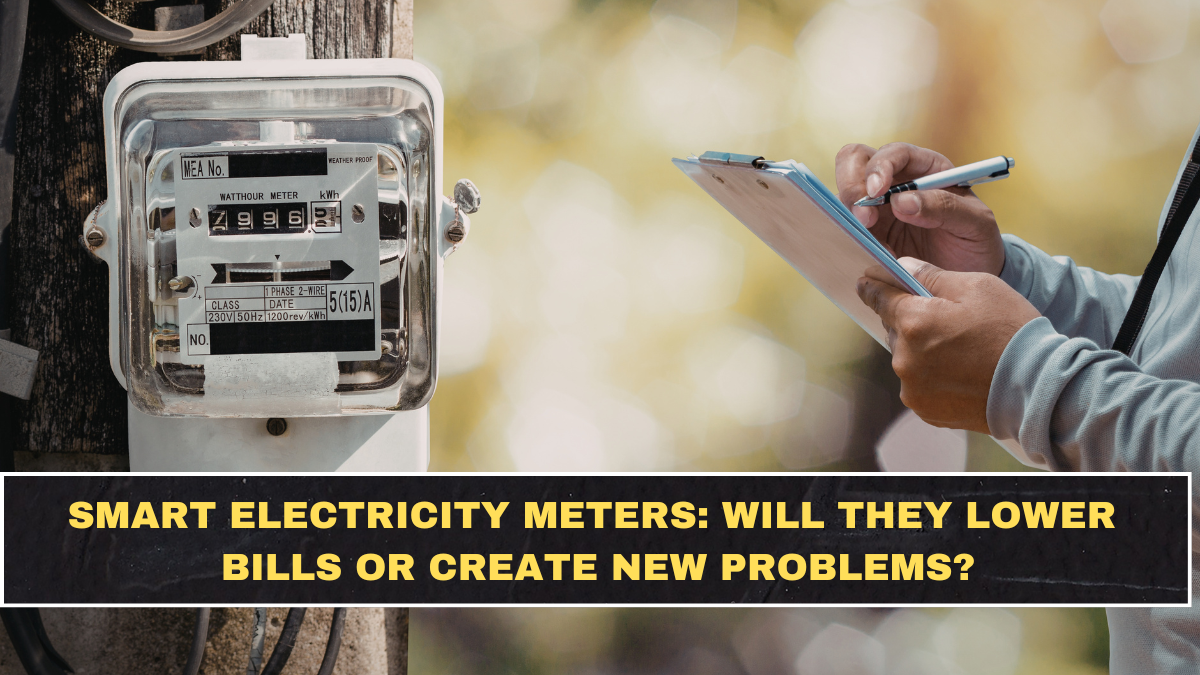
Smart electricity meters are becoming one of India’s most debated power-sector changes because they promise accurate billing, lower disputes and real-time consumption tracking. Under the Revamped Distribution Sector Scheme, smart metering works have been sanctioned for 19.79 crore consumers, 2.11 lakh feeders and 52.53 lakh distribution transformers. The Power Ministry told Parliament that 5.59 crore smart meters had already been installed across schemes including RDSS and State Plan.
The idea looks simple: replace old meters with smart meters that can record usage digitally, reduce manual errors and help power companies track supply better. But the public reaction is not simple at all. Many consumers are asking whether smart meters will actually reduce electricity bills or whether they will create sudden disconnections, recharge stress and confusing billing.
Why Are People Angry?
The biggest anger is not against technology itself. People are angry because prepaid smart meters can feel too harsh when the system is not smooth. If recharge apps fail, balance updates are delayed, or users do not receive alerts properly, electricity can feel like a mobile recharge service instead of an essential household need.
Uttar Pradesh has now become the biggest example of this tension. The state government scrapped the mandatory prepaid mode for smart meters after complaints of technical glitches and arbitrary disconnections. The Economic Times reported that the move affects nearly 83 lakh households, many with 1kW or 2kW loads, and shifts both existing and future smart meters to postpaid billing.
What Changed In UP?
| Issue | Earlier Concern | New Change |
|---|---|---|
| Billing mode | Prepaid recharge before use | Postpaid billing after use |
| Disconnection | Fear of sudden cut after low balance | No disconnection during active monthly cycle |
| Billing cycle | Recharge-based uncertainty | Consumption recorded from 1st to 30th |
| Bill delivery | App/recharge dependency | Bill by SMS or WhatsApp in first 10 days |
| Old dues | Confusion and pressure | Up to 10 instalments allowed |
This table shows why the UP decision is important nationally. It does not reject smart meters completely; it rejects a rigid prepaid system that consumers found difficult. The state has also temporarily suspended new smart-meter installations while technical complaints are addressed, which proves that rollout quality matters as much as the meter itself.
Can Bills Really Go Down?
Smart meters do not magically reduce electricity bills. That is the first myth consumers need to drop. A smart meter can help people track consumption more clearly, avoid estimated bills and identify high-usage appliances, but the actual bill depends on tariff, units consumed, fixed charges and state electricity rules.
The Power Ministry’s Parliament reply says smart meters ensure accurate billing, eliminate manual metering errors, allow consumers to track electricity use, improve collection efficiency for DISCOMs and support automatic energy accounting. That means the technology can reduce wrong billing and improve transparency, but it cannot guarantee lower bills for every household.
What Are The Real Benefits?
- Accurate billing: Manual reading errors can reduce when meters report usage digitally.
- Consumption tracking: Users can monitor electricity use more regularly through apps.
- Better alerts: Balance warnings and emergency credit can help prepaid users avoid sudden cuts.
- DISCOM efficiency: Power companies can improve collection and energy accounting.
- Fewer disputes: Check meters and digital records can help resolve billing doubts.
These benefits are real, but only when the system works properly. The Ministry has said advisories include rebates for prepaid installation, no penalty based only on maximum demand recorded by smart meters, easy instalments for past arrears, check meters for accuracy confidence, mobile apps, advance alerts and emergency credit.
Where Can It Go Wrong?
Smart meters can go wrong when rollout is forced without consumer education. If people do not understand recharge rules, app usage, complaint process, billing calculation or emergency credit, they naturally panic. For low-income homes, even one night of sudden power disconnection can affect children’s study, elderly care, cooking and medical devices.
The Power Ministry itself acknowledged that implementation faced challenges because of inadequate consumer awareness. That admission matters because technology failure is not always inside the device; sometimes the failure is communication. If DISCOMs push smart meters without patient explanation, the reform will look like punishment instead of progress.
What Should Consumers Check?
Consumers should not blindly accept or blindly reject smart meters. They should ask practical questions before and after installation. Check whether the meter is certified, whether the mobile number is linked correctly, how bills will be delivered, what happens if balance runs out, and where complaints can be filed.
The Ministry said consumers can use the internal grievance redressal system of the distribution utility first. If dissatisfied, they can approach the Consumer Grievance Redressal Forum and then the Electricity Ombudsman under the Electricity Rights of Consumers framework. That complaint chain is important because consumers need a legal route, not only social media outrage.
What Is The Final Conclusion?
Smart electricity meters can help India modernise power billing, reduce manual errors and improve electricity tracking. But the UP controversy proves one thing clearly: smart technology becomes unpopular when it feels harsh, confusing or unreliable. A meter may be smart, but the rollout must also be humane.
The blunt truth is simple: smart meters will not automatically lower everyone’s bill, and prepaid mode should not become a punishment for poor households. If India wants this reform to work, DISCOMs must give clear bills, strong grievance support, accurate apps, emergency credit and real consumer education. Without that, smart meters will create more anger than trust.
Frequently Asked Questions
What is a smart electricity meter?
A smart electricity meter is a digital meter that records electricity use and can send usage data without manual meter reading. It can help consumers track consumption and help power companies improve billing accuracy. In India, smart meters are being rolled out under power-sector reforms such as the Revamped Distribution Sector Scheme.
Will smart meters reduce electricity bills?
Smart meters can help reduce wrong billing and make consumption easier to track, but they do not guarantee lower bills. Your bill still depends on units consumed, tariff, fixed charges and state rules. They are useful if consumers use the data to control electricity usage and if DISCOMs provide accurate billing.
Why did Uttar Pradesh shift smart meters to postpaid mode?
Uttar Pradesh shifted smart meters to postpaid mode after complaints about technical glitches, recharge problems and sudden disconnections under the prepaid system. Reports said nearly 83 lakh households were affected by the decision. The new system records monthly consumption and sends bills later, similar to traditional billing.
What should consumers do if a smart meter bill looks wrong?
Consumers should first contact their electricity distribution company through its official grievance system. If the issue is not solved, they can approach the Consumer Grievance Redressal Forum and then the Electricity Ombudsman. They should also keep screenshots, bill copies, recharge records and meter readings as proof.
Click here to know more