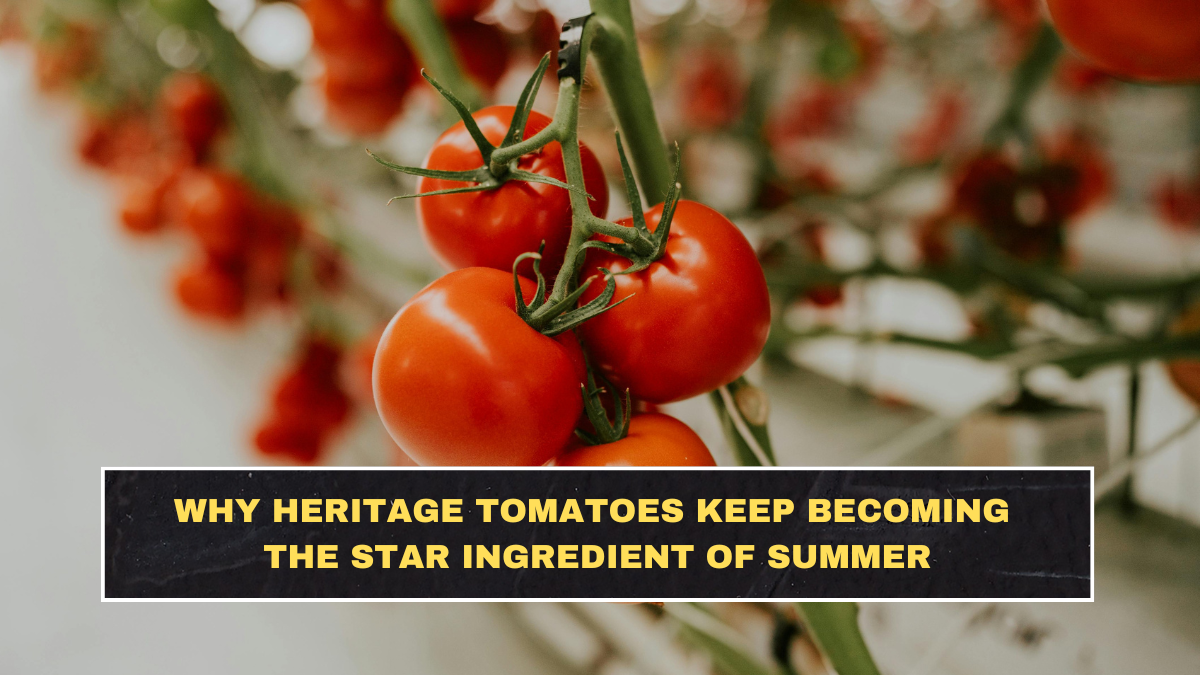
Heritage tomatoes keep becoming the star ingredient of summer because they do three things at once: they look dramatic, they taste better than many standard supermarket tomatoes, and they make simple cooking feel more special. This is not just a food-media fantasy. The wider tomato market is still growing, with one 2026 market report valuing the global tomato market at $175.61 billion in 2026, up from $166.09 billion in 2025, showing how central tomatoes remain to household and food-service demand overall.
But heritage tomatoes sit in a more premium corner of that broader market. Their appeal comes from variety, shape, color, and the idea that they were not bred mainly for shipping and shelf life. One 2026 cooking-focused write-up on heirloom tomatoes makes the point directly: odd-shaped tomatoes can outperform perfect-looking commercial ones because breeding for transport and visual uniformity often pushed flavor aside.
Why do heritage tomatoes feel more special than ordinary tomatoes?
Because they carry visible difference. A standard tomato is often bought for function. A heritage tomato is bought partly for pleasure. The irregular stripes, deep reds, yellows, greens, and purples signal that the fruit is something more distinctive than the standard uniform tomato most people are used to. That visual pull matters more than food purists like to admit.
There is also a premium-produce psychology at work. Research summarized in a 2026 repost of an earlier heirloom-tomato study found that shoppers were often strongly drawn to heirloom tomatoes for their appearance and varietal selection, even when taste did not always perfectly match the hype. That is useful because it shows the craze is driven by both flavor and aesthetics, not flavor alone.
What actually makes heritage tomatoes popular with home cooks?
Home cooks love ingredients that do not need much fixing. Heritage tomatoes are ideal for that. A good one can be sliced with salt, olive oil, and maybe some cheese or herbs, and dinner already feels thoughtful. That is powerful in a time when many people want easier home cooking that still feels premium.
They also work well with the farmers’ market mindset. Heritage tomatoes fit the same buying logic as good peaches, fresh berries, or expensive butter: people will pay more when the ingredient clearly changes the result. That is why these tomatoes keep showing up as the hero ingredient in salads, sandwiches, toast, tarts, galettes, and cold summer plates. The produce looks expressive and does not need complicated technique to feel impressive.
Are heritage tomatoes really better tasting, or is some of it hype?
Both. The better ones really can taste richer, sweeter, more acidic, or more complex than routine commercial tomatoes. But yes, some of the craze is absolutely hype. The research summary in the heirloom-tomato study makes that uncomfortable point clearly: despite paying premium prices and claiming taste matters, many shoppers were also heavily influenced by visual appeal and greater varietal selection.
So the honest answer is that heritage tomatoes are not automatically amazing. A mediocre heirloom is still mediocre. But the category keeps winning because when the tomatoes are good, the payoff is obvious fast. They make even lazy cooking feel elevated, and that is enough to justify the obsession for many buyers.
Why do farmers’ markets and premium produce retail help this trend so much?
Because heritage tomatoes sell best when people can see them in person. This is not a category that depends only on labels. It depends on visual seduction. Strange shapes, bruised-looking shoulders, marbled colors, and variety names all make more sense when the buyer can browse and compare directly.
This also fits a wider fresh-produce environment where value is increasingly shaped by perceived quality, distinctiveness, and shopping experience, not just by volume. Fresh produce reporting in 2026 continues to frame produce value around what feels worth choosing, and heritage tomatoes fit that logic well because they are easier to market as memorable rather than merely useful.
What kinds of heritage tomato uses make the trend strongest?
The strongest uses are the simplest ones. Here is the practical breakdown:
| Use | Why heritage tomatoes work well | Best result | Main risk |
|---|---|---|---|
| Tomato salad | Flavor and appearance do most of the work | Looks premium with little effort | Bad tomatoes get exposed instantly |
| Sandwiches and toast | Thick slices add real character | Easy upgrade to everyday meals | Too juicy if handled badly |
| Caprese-style dishes | Color and texture feel more luxurious | Strong visual payoff | Needs good supporting ingredients |
| Roasting and tarts | Sweetness and acidity deepen well | Strong summer comfort food | Some delicate varieties collapse fast |
| Farmers’ market platters | Variety becomes part of the appeal | Great for hosting and grazing | More expensive than standard tomatoes |
That table explains why the trend stays alive. Heritage tomatoes are versatile, but their biggest strength is how easily they turn simple food into something people remember.
Why does this trend keep returning every summer instead of fading away?
Because it is tied to seasonality, and seasonality gives food trends a built-in reset. A produce trend that depends on summer abundance does not wear out the same way a year-round packaged trend does. Heritage tomatoes come back when people are ready for them, and then disappear before overexposure fully kills the excitement.
There is also a broader garden and produce angle here. The Guardian’s late-2025 reporting on 2026 garden trends said tomatoes saw a 14% sales surge in 2025 and that interest was expected to continue, showing that tomato enthusiasm is still strong not only in eating but also in growing.
Is this trend only about home cooks in wealthy markets?
No, though premium retail culture certainly amplifies it. Tomato innovation and value-added tomato demand are showing up in other ways too. In India, for example, The Times of India reported in January 2026 on the release of the country’s first domestically developed biofortified cherry tomato varieties, framing them as part of a shift toward more value-driven tomato production and consumption. That is not the same as heirloom culture, but it shows the broader tomato category is moving beyond pure volume toward more differentiated and premiumized demand.
So the heritage tomato craze is part of a larger story: consumers increasingly want produce that feels more distinctive, flavorful, and worth paying attention to.
What is the biggest mistake people make with heritage tomatoes?
They overcomplicate them. If a tomato is genuinely good, it does not need much. Heavy cooking, too many competing ingredients, or refrigeration that kills texture can all waste what made the tomato worth buying in the first place.
The second mistake is buying purely by appearance. The prettiest tomato is not always the best one. Since even research on heirloom buying behavior suggests visual appeal strongly drives interest, buyers need to be a little less romantic and a little more practical.
Conclusion
Heritage tomatoes keep becoming the star ingredient of summer because they deliver something rare in modern food shopping: obvious difference. They look better, often taste better, and make simple home cooking feel more premium without much effort. Yes, part of the craze is visual and emotional. But that does not make it fake. It just means heritage tomatoes succeed the way many great food trends do: by combining real quality with desire. When they are good, they do not need a complicated recipe. They just need a plate.
FAQs
What are heritage tomatoes?
Heritage tomatoes, often discussed alongside heirloom tomatoes, are older or more distinctive varieties valued for their flavor, appearance, and variety rather than for uniformity and shipping efficiency. This explanation is supported by current reporting noting that flavor was often sacrificed in more commercial breeding.
Why are heritage tomatoes so popular in summer?
Because they peak in warm-weather produce culture, look visually striking, and work well in simple dishes where their flavor and texture can stand out. Their seasonal return helps keep demand feeling fresh.
Are heritage tomatoes always better than regular tomatoes?
No. Some are excellent and some are overrated. Research summarized in a 2026 repost shows shoppers are influenced heavily by appearance and variety, not only taste.
Why do farmers’ markets help heritage tomatoes sell so well?
Because buyers can see the variety, color, and irregular shapes in person, which is a major part of the appeal. These tomatoes benefit from visual selection much more than standard commodity produce.