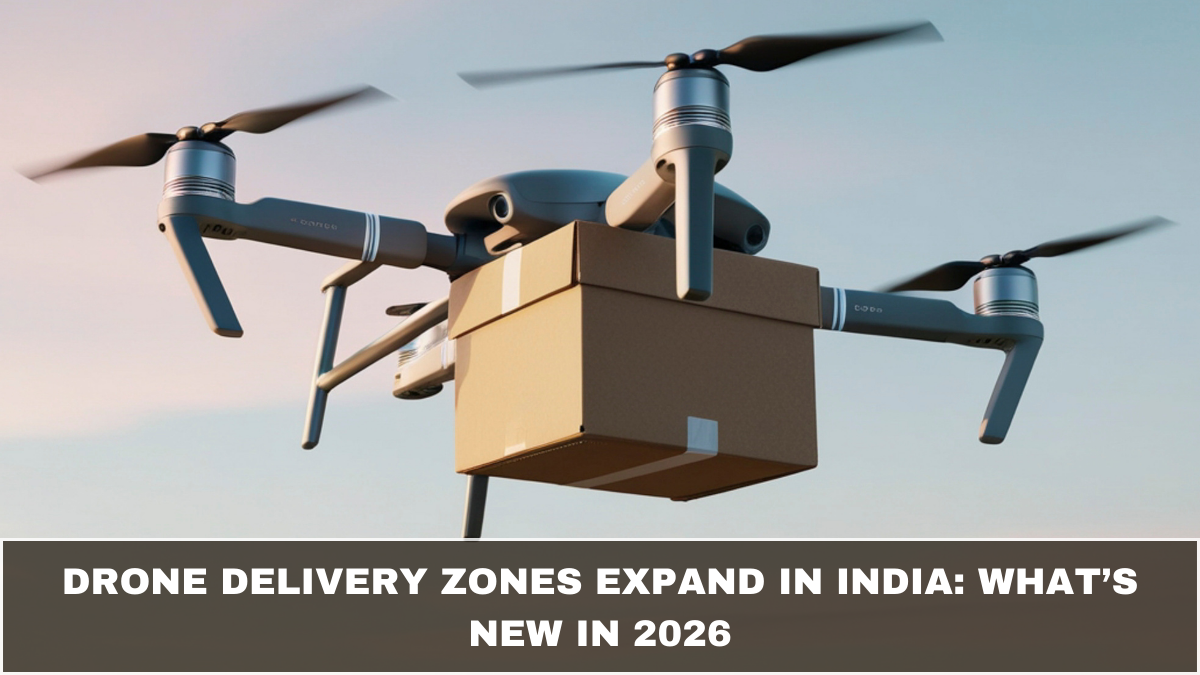
Drone delivery in India is moving from experimental trials to real-world expansion in 2026, as both private companies and government initiatives push forward. The technology promises faster deliveries, reduced congestion in urban areas, and improved logistics for remote and hard-to-reach regions. With growing e-commerce demands and infrastructural upgrades, drones are no longer confined to pilot projects but are becoming a practical tool for businesses and consumers alike.
The expansion of drone delivery zones in India reflects a broader push for integrating technology into logistics infrastructure. Key cities, industrial hubs, and rural supply routes are being prioritized, while policymakers are streamlining regulations to accommodate this high-tech delivery method.
Why Drone Delivery Is Expanding in India
Several factors are driving this trend:
-
E-commerce Growth: Platforms need faster and more efficient delivery systems.
-
Government Support: Policies under the Drone Rules 2021 and subsequent updates encourage commercial drone operations.
-
Infrastructure Challenges: Drones help bypass traffic congestion and reach areas with poor road connectivity.
-
Technological Advancements: Lightweight drones, better batteries, and AI-assisted navigation improve feasibility.
-
Environmental Benefits: Drones can reduce carbon emissions compared to traditional delivery vehicles.
This combination of demand, policy support, and tech innovation is fueling the expansion of drone delivery zones across India in 2026.
Key Cities and Regions Included in 2026 Expansion
The expansion is focused on both metropolitan and strategically important cities. Major zones now include:
-
Mumbai & Pune: High e-commerce demand and dense urban delivery challenges.
-
Delhi NCR & Gurugram: Logistics-heavy regions with advanced drone testing facilities.
-
Bengaluru & Hyderabad: Technology hubs with drone startups and corporate pilots.
-
Tier-2 Cities: Jaipur, Kochi, and Lucknow for first-mile and last-mile delivery.
-
Remote and Rural Areas: Northeastern states, hilly regions, and islands for medical, essential, and urgent supplies.
The expansion emphasizes urban efficiency, rural connectivity, and integrating drones into critical supply chains like healthcare, e-commerce, and agricultural delivery.
How Drone Logistics Are Changing Operations
Businesses adopting drone delivery are seeing operational shifts:
-
Faster Deliveries: Small parcels, medicines, and essentials reach customers in hours instead of days.
-
Reduced Dependency on Roads: Drones bypass congested streets, lowering delivery time.
-
Cost Optimization: Although initial investment is high, drones reduce labor and fuel costs over time.
-
Inventory Management: AI integration allows better route planning, fleet tracking, and delivery prediction.
-
Emergency Response: Drones are increasingly used for medical kits, vaccines, and disaster relief supplies.
Several e-commerce giants, healthcare providers, and logistics startups have announced partnerships to scale operations with drones, further accelerating adoption across India.
Government Regulations and Policy Updates
India’s regulatory environment is a major factor in drone delivery expansion:
-
Drone Rules 2021 Updates: Eased permissions for beyond visual line of sight (BVLOS) operations in select zones.
-
No-Permission, No-Takeoff (NPNT) Compliance: Mandatory for all commercial drones to ensure safety and accountability.
-
Dedicated Drone Corridors: Identified in industrial zones for seamless, safe operations.
-
Insurance and Safety Guidelines: Liability coverage for drone operations now mandated for commercial deployment.
-
Integration with Digital India Initiatives: Tracking, licensing, and fleet management integrated with government portals.
These regulations are designed to ensure safe, standardized, and scalable drone operations across Indian airspace.
Benefits for Consumers and Businesses
Drone delivery brings tangible benefits for both end-users and businesses:
-
Consumers: Faster delivery of medicines, groceries, electronics, and essential goods.
-
Businesses: Optimized logistics, access to remote markets, and reduced delivery failures.
-
Healthcare Sector: Drones deliver vaccines, emergency kits, and critical supplies in remote regions.
-
Agriculture: Seeds, fertilizers, and produce can be moved efficiently, helping rural livelihoods.
-
E-commerce & Retail: Supports same-day and instant delivery models, improving customer satisfaction.
As drone technology becomes more reliable, consumer expectations will evolve, and businesses will adapt delivery models to leverage these aerial advantages.
Challenges in Drone Delivery Expansion
Despite the excitement, challenges remain:
-
Safety and Privacy: Ensuring drones don’t compromise personal security or property.
-
Weather Limitations: Heavy rain, winds, and extreme temperatures can affect performance.
-
Battery Life & Payload Restrictions: Current drones can carry limited weight over short distances.
-
Airspace Management: Coordination with aviation authorities and other drones in congested airspace.
-
Cost of Scaling: Investment in drones, software, and trained operators remains high.
Addressing these challenges will be crucial for sustaining drone delivery growth in India over the next few years.
The Future of Drone Delivery in India
Experts predict that by 2026-2027, drones will become a standard part of logistics in India. Innovations such as AI-driven navigation, solar-powered drones, and drone swarm technology will further expand coverage. Urban centers may witness drone delivery hubs integrated with warehouses, while rural areas benefit from improved access to essential goods.
The trend also signals the rise of India as a drone innovation hub, combining manufacturing, software development, and regulatory foresight to lead in global aerial logistics.
Conclusion
The expansion of drone delivery zones in India in 2026 represents a significant milestone for technology-driven logistics. With the backing of government policies, advanced technology, and growing market demand, drones are poised to redefine delivery norms. Consumers, businesses, and rural communities stand to gain from faster, safer, and more efficient transport solutions. While challenges remain, the trend shows India embracing innovation and integrating drones into everyday life, setting the stage for a tech-enabled logistics future.
FAQs
Which cities in India are included in the 2026 drone delivery expansion?
Major metropolitan areas like Mumbai, Delhi NCR, Bengaluru, Hyderabad, and select tier-2 cities are included, along with rural and remote regions.
Are drones safe for delivery in urban areas?
Yes, with BVLOS permissions, NPNT compliance, and safety guidelines, commercial drones operate safely under regulatory oversight.
What can be delivered by drones in India?
Medicines, groceries, small parcels, essential goods, and agricultural products are the primary items.
How does drone delivery benefit rural India?
It improves access to critical supplies, emergency medical kits, and logistical efficiency in remote and hilly regions.
What are the main challenges for drone delivery expansion?
Challenges include weather limitations, payload capacity, airspace management, privacy concerns, and scaling costs.