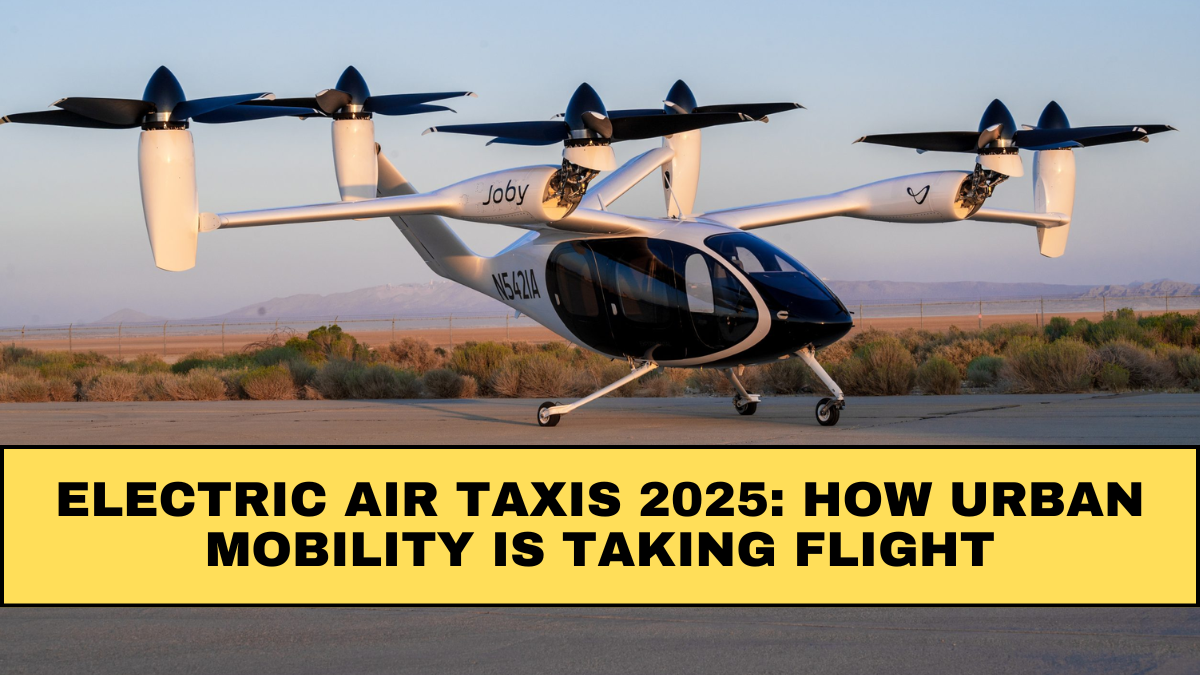
Electric Air Taxis 2025 are poised to revolutionize urban transportation, combining cutting-edge EV technology with advanced aviation systems. These flying vehicles promise to reduce city congestion, shorten commute times, and offer a sustainable alternative to traditional road travel. As urban populations grow, innovative mobility solutions like air taxis are becoming essential to maintain efficiency and reduce pollution.
Several startups and established aviation companies are now testing electric vertical take-off and landing (eVTOL) aircraft in major cities worldwide. With quieter operation, zero-emission propulsion, and autonomous navigation systems, these vehicles are attracting interest from governments, urban planners, and private operators. They could redefine how residents move within and between cities, offering faster, more flexible, and environmentally friendly travel options.
The Rise of Electric Air Taxis
Transforming Urban Mobility
Electric air taxis aim to relieve traffic congestion by shifting short-distance travel to the skies. Routes that take an hour by car can be completed in minutes, dramatically improving productivity and convenience for commuters.
Sustainability and Eco-Friendly Transport
Unlike conventional aircraft or vehicles, electric air taxis produce minimal emissions. By relying on EV technology, these taxis contribute to cleaner air and reduced greenhouse gas output, aligning with global climate goals.
Technology and Safety Features
Modern air taxis feature autonomous navigation, collision avoidance, and real-time monitoring systems. AI-powered flight controls ensure safety even in densely populated urban environments, while battery technology improvements increase reliability and range.
Integration With Urban Infrastructure
Cities are planning specialized skyports and vertiports for electric air taxis. These hubs enable efficient take-offs, landings, and passenger boarding, ensuring seamless integration with existing public transport networks.
Cost and Accessibility
Initially, air taxis may cater to premium travelers. However, as production scales and technology matures, operating costs are expected to decrease, making this mode of transport more accessible to the broader public.
Benefits of Electric Air Taxis
Reduced Commute Times
By bypassing congested roads, electric air taxis can significantly cut travel times for short and medium-distance commutes, enhancing urban productivity.
Less Traffic Congestion
Shifting a portion of urban traffic to the air reduces road congestion, resulting in smoother transit for cars, buses, and freight vehicles.
Lower Environmental Impact
Electric propulsion reduces carbon emissions and noise pollution compared to conventional helicopters and cars, supporting city sustainability initiatives.
Enhanced Connectivity
Air taxis can link suburban areas with city centers, airports, and business hubs, providing faster access and bridging mobility gaps in urban regions.
Job Creation and Economic Growth
The development, manufacturing, and operation of electric air taxis create jobs in aviation, engineering, and urban infrastructure sectors. The emerging industry also attracts private investment, boosting the economy.
Challenges Ahead
Despite their promise, electric air taxis face several hurdles. Regulatory approvals, air traffic management, and public acceptance remain critical issues. Battery limitations and flight range also pose challenges for widespread adoption. Additionally, ensuring safety in complex urban airspaces requires rigorous testing and advanced AI systems.
Conclusion
Electric Air Taxis 2025 are set to redefine urban mobility by offering faster, cleaner, and more efficient travel options. With their combination of EV technology, autonomous navigation, and eco-friendly design, these flying taxis promise to reduce traffic congestion, cut commute times, and support sustainable city development. While challenges remain, the growing interest from governments, startups, and investors indicates a promising future for urban air mobility.
FAQs
What are electric air taxis?
They are eVTOL aircraft designed to transport passengers within cities using electric propulsion.
How do electric air taxis help reduce traffic?
By moving short-distance travel to the skies, they reduce road congestion and travel time.
Are air taxis environmentally friendly?
Yes, they use electric propulsion, producing minimal emissions and lower noise levels.
When will electric air taxis become widely available?
Pilot projects are ongoing, with wider adoption expected in the mid to late 2020s as technology and regulations evolve.
Are electric air taxis safe?
Modern designs include autonomous navigation, collision avoidance, and real-time monitoring to ensure passenger safety.