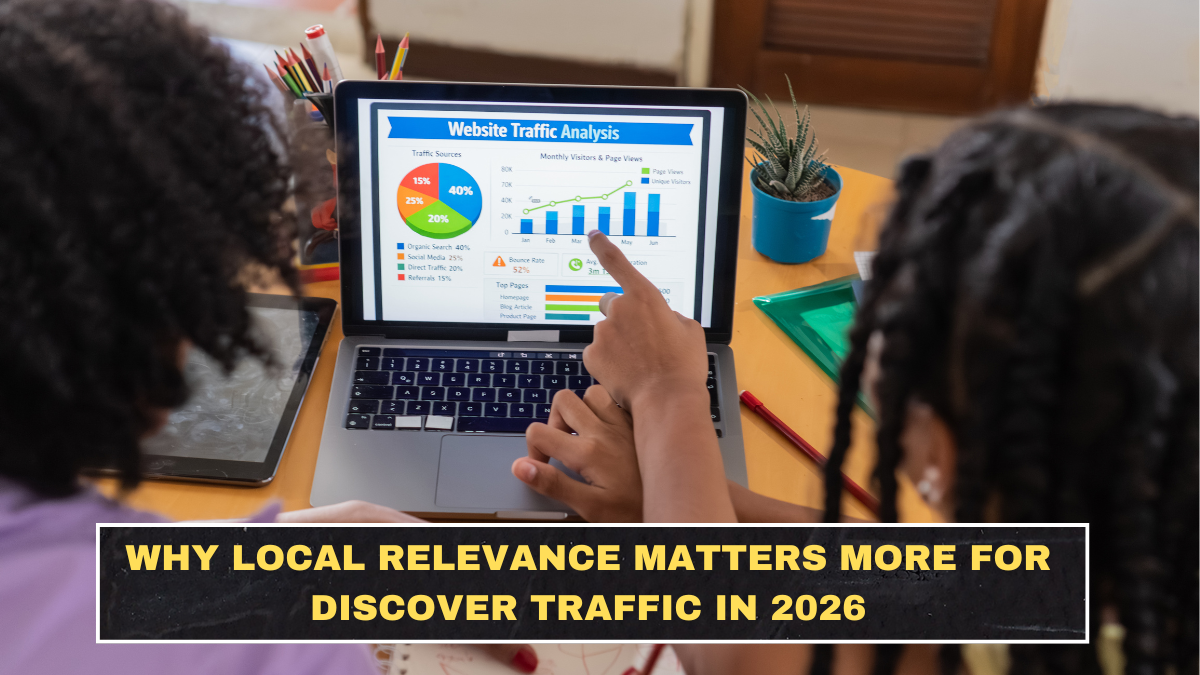
A lot of publishers still treat Discover like a broad viral feed where any catchy article can win. That is outdated. In its February 2026 Discover core update, Google explicitly said it would show users more locally relevant content, reduce sensational and clickbait content, and surface more original, timely, in-depth content from sites with expertise in their area. That is a direct change in how Discover chooses what to show, not a vague industry rumor.
For Indian publishers, this matters because the old lazy strategy was to imitate whatever was working in bigger English-language markets and hope it traveled. That may still work sometimes, but Google has clearly signaled that regional fit now matters more. It is not just asking whether your article is interesting. It is asking whether it is relevant to the user’s country, current interests, and likely context.

What “Local Relevance” Actually Means
Many publishers misunderstand local relevance as simply adding a city name to a headline. That is amateur thinking. Local relevance is broader. It includes whether the story reflects the user’s country or region, whether the examples make sense in that context, whether the publisher has topical familiarity, and whether the article feels grounded in something happening around that audience. Google’s update language about locally relevant content and topic expertise makes that pretty clear.
This also connects to Discover’s broader documentation. Google says Discover works best with content that is timely for current interests, tells a story well, or offers unique insights. That means the article needs more than a generic subject. It needs a sharper reason to matter now, for this audience, in this context. So a broad “future of EVs” article is weaker than “what Delhi’s EV policy change could mean for buyers.” The second one has geography, relevance, and immediate user value.
Why This Is Especially Important for Indian Publishers
India is not one audience. That is the blind spot many publishers keep ignoring. A user in Delhi, Jaipur, Kochi, or Nagpur may all use Discover, but what feels relevant to each of them can vary a lot based on language habits, local policy, climate, travel patterns, festivals, sports culture, and spending priorities. Google’s move toward stronger local relevance gives Indian publishers a real opportunity, but only if they stop writing like they are addressing some abstract “internet audience.”
This is also where smaller publishers can compete better. A huge general site can cover everything broadly, but a focused Indian publisher can often explain state policy, local consumer changes, tier-2 sports culture, or city-specific mobility shifts with more credibility and better examples. Google’s update also emphasized expertise, originality, and timeliness. That combination favors publishers who actually understand a beat instead of just summarizing it.
Table: What Local-Relevance Publishing Looks Like in Practice
| Weak Discover approach | Stronger local-relevance approach | Why the stronger version fits 2026 better |
|---|---|---|
| Broad global topic with no India angle | India-focused explainer with city or state context | Matches Google’s stronger local relevance signals |
| Generic “what is” article | “Why this matters now” article for Indian readers | Better for timely interest and user context |
| Sensational headline | Clear curiosity-led headline without exaggeration | Google says it is reducing sensational content |
| Stock image or weak thumbnail | Large, relevant, high-quality image tied to the story | Discover recommends compelling large images |
| Random coverage across many subjects | Focused coverage in a few strong beats | Supports expertise and originality signals |
What Publishers Should Change Right Now
The first fix is editorial, not technical. Pick stories where Indian or regional context is naturally strong. These could include local policy changes, travel rules, city mobility, fan culture, regional consumer trends, state-level digital regulation, or practical changes in how people shop and work. These beats are stronger because they combine curiosity with immediate relevance. That is exactly the kind of content Discover now appears to prefer more aggressively.
The second fix is packaging. Google’s Discover documentation recommends compelling, high-quality images, especially large images at least 1200 pixels wide, because large images are more likely to generate visits. So if your article is locally relevant but the thumbnail is weak, generic, or too small, you are still wasting opportunity. Many publishers obsess over the title and ignore the visual, which is stupid because Discover is a feed product and the image often carries half the click decision.
The third fix is topic discipline. If your site covers everything badly, Google has less reason to see expertise. The 2026 update’s language around original and in-depth content from sites with expertise is a warning against random publishing. You do not build Discover resilience by spraying articles across twenty disconnected subjects. You build it by becoming noticeably better in a few areas where your audience already trusts your interpretation.
What This Means for Traffic Strategy in India
The uncomfortable truth is that some publishers may lose Discover traffic if they were relying on generic, internationally aimed, low-context content. But the same shift creates upside for Indian publishers who can own specific beats with local clarity. In other words, this is not just a Discover update. It is a filter against lazy content strategy.
The smarter play now is to publish articles that feel geographically aware, timely, visually strong, and genuinely useful. That does not mean every article must mention a city. It means the content should feel like it belongs to a real audience, not to a content farm.
Conclusion
Local relevance matters more for Discover traffic in 2026 because Google has said so directly and because the rest of its Discover guidance supports the same direction. Discover is moving toward content that is more locally relevant, less sensational, more original, and more timely. For Indian publishers, that is not bad news unless your strategy depends on generic copy.
The real opportunity is obvious. Stop chasing broad, replaceable articles and start building stronger local angles, sharper context, and better packaging around the beats your audience actually cares about. That is how Discover traffic becomes more durable instead of random.
FAQs
Did Google really say local relevance matters more in Discover now?
Yes. In its February 2026 Discover core update, Google said it would show users more locally relevant content, reduce sensational content, and surface more original and timely material from sites with expertise.
Does local relevance only mean writing about local news?
No. It can also mean explaining national or global topics through a clear Indian, state-level, or city-level context that feels more useful to the reader. That fits Google’s Discover guidance on timely, story-led, insight-driven content.
What is the easiest Discover fix publishers still ignore?
Better visual packaging. Google recommends large, compelling, high-quality images for Discover, and many publishers still use weak or generic thumbnails.
Can smaller Indian publishers benefit from this shift?
Yes. If they have stronger topic familiarity, local context, and originality in focused beats, this update can work in their favor more than broad, generic publishing models.