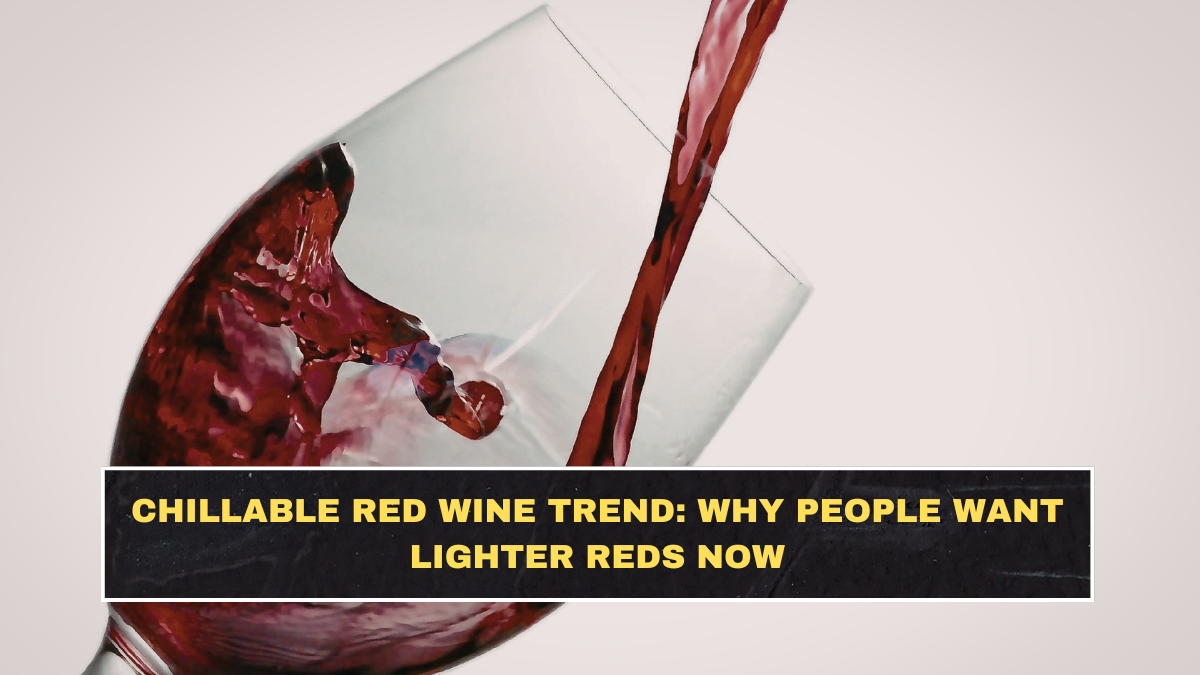
Chillable reds are gaining attention because a lot of drinkers are tired of heavy, warm, tannic red wines that feel like work, especially in hotter weather or casual settings. Current 2026 wine coverage says chillable reds are moving mainstream, with lighter, fresher, lower-tannin styles fitting the way many people actually want to drink now rather than how old wine rules told them to drink. Fine Dining Lovers said flatly that in 2026 “chillable reds go mainstream,” while Bar & Restaurant’s 2026 trend report says lighter, fresher wines, including chilled reds, fit the approachable, food-friendly direction of current wine drinking.
This trend keeps coming back because it solves two problems at once. It makes red wine feel more refreshing, and it makes red wine easier to pair with the casual, mixed-style meals people actually eat. The Guardian’s January 2026 report on Bordeaux’s revived lighter “claret” style tied the shift directly to changing consumer preferences for fresher, lower-alcohol, less tannic reds, especially among younger drinkers. That is the real story here: people are not rejecting red wine completely. They are rejecting the more punishing versions of it.
What is a chillable red wine?
A chillable red is usually a lighter-bodied, higher-acid, lower-tannin red that tastes better with a slight chill than at traditional warm room temperature. Big Hammer Wines’ March 2026 buying-desk trend report defines a chillable red as a light-bodied, high-acid red served around 55–60°F, and names styles such as Gamay, Frappato, and Zweigelt as examples. The Times’ guidance on chilled reds says the best candidates are lighter-bodied, less tannic, and more acidic wines, which is why not every red qualifies.
That matters because many people misunderstand the trend and think it means putting any random red in the fridge until it turns dull and harsh. That is not the point. A chillable red is not ice-cold Cabernet abuse. It is a style choice built around freshness, fruit, and drinkability. Bar & Restaurant’s 2026 trend coverage says chilled reds are succeeding because they pair well with food and fit the way people want to drink now.
Why are lighter reds getting more popular now?
Because drinking habits are changing faster than wine snobbery is. Fine Dining Lovers says 2026 wine trends are moving toward wines that feel vibrant, easy, and less formal, and explicitly frames chillable reds as part of that mainstream shift. The Guardian’s Bordeaux report also links the rise of lighter reds to declining demand for big, powerful reds and growing interest in accessible, fruit-forward, lower-alcohol alternatives.
Climate and food habits are part of this too. Warmer weather, more casual entertaining, and more globally mixed food styles all make heavier reds less attractive in many situations. The Bar & Restaurant 2026 report says guests are gravitating toward lighter, fresher wines and wine programs that feel more approachable, while Food & Wine’s recent sweet-reds coverage notes a broader cultural movement toward drinkability and taste over rigid old-school wine rules.
Which wines fit the chillable red trend best?
The strongest examples are usually bright, juicy reds with moderate alcohol and less aggressive tannin. Current 2026 and recent supporting coverage repeatedly points to Gamay, Pinot Noir, Frappato, Zweigelt, Cabernet Franc from the Loire, and lighter heritage styles like claret or clairet-type reds as strong candidates. Big Hammer Wines names Gamay, Frappato, and Zweigelt directly, while The Times highlights Beaujolais Gamay, Loire Cabernet Franc, and certain Pinot Noir styles as ideal chilled reds.
Here is the practical breakdown:
| Wine style | Why it works chilled | Best use case | Main risk |
|---|---|---|---|
| Gamay | Bright fruit, low tannin, lively acidity | Summer meals, casual entertaining | Can seem too simple for people expecting “serious” reds |
| Frappato | Light, juicy, aromatic | Warm-weather dinners, aperitif-style drinking | Harder to find in some markets |
| Pinot Noir | Elegant and versatile in lighter styles | Outdoor dinners, mixed menus | Fuller or oaky versions can disappoint chilled |
| Zweigelt | Fresh, peppery, easy-drinking | Barbecues, weeknight meals | Some versions can feel thin |
| Cabernet Franc (lighter Loire styles) | Herbaceous freshness and food-friendliness | Charcuterie, grilled vegetables, lunch wines | Can taste too green if poorly made |
Those styles keep appearing because they are easier to serve casually and they do not punish the drinker for relaxing. That is why the trend has more staying power than many wine fads. It is useful.
Why does chilling make these reds more appealing?
Because a slight chill sharpens the freshness, controls the alcohol feel, and makes the wine seem more energetic. The Times explains that lighter reds taste fruitier and crisper when cooled, rather than heavy and overly alcoholic. Big Hammer Wines similarly frames chillable reds as wines designed to feel bright and lively when served below typical room temperature.
This is also why the trend works especially well for casual entertaining. A red that feels refreshing can cross over into situations where people would normally default to rosé, chilled white, or beer. Fine Dining Lovers says the rise of chillable reds reflects a broader rejection of warm, tannic, overly serious red-wine rituals.
Is this just a summer gimmick, or a real shift in wine taste?
It looks like a real shift, not just a summer gimmick. Fine Dining Lovers calls chillable reds a defining 2026 wine trend, and The Guardian’s reporting on Bordeaux’s official move toward a revived lighter claret style suggests producers are adapting structurally to this taste change, not just marketing around it. When traditional regions change production rules and positioning to match demand for fresher, chillable styles, that is more than seasonal hype.
It also fits the broader beverage direction of lighter, easier, more flexible drinking. Food & Wine’s sweet-reds piece, although focused on a different category, reinforces the same bigger behavior: consumers now care more about drinkability and pleasure than about obeying inherited wine hierarchies. Chillable reds fit that mood perfectly.
Who is this trend best for?
It is best for drinkers who like red wine but do not want every bottle to feel dense, oaky, or dinner-table serious. It also suits people who entertain casually, drink in warmer climates, or want a wine that can handle mixed foods without dominating them. The Guardian notes younger consumers are especially drawn to lighter, fresher, lower-alcohol reds, which makes sense because those styles fit more relaxed and flexible drinking habits.
It is less ideal for people who only enjoy powerful, age-worthy, structured reds. Those drinkers may find chillable reds too light or too playful. But that is exactly why the category matters: it gives red wine a more casual entry point instead of forcing everyone into the same heavy style.
What mistakes do people make with chillable reds?
The biggest mistake is chilling the wrong wine. A full-bodied, highly tannic red can taste harder, drier, and less expressive when served cold. The Times explicitly warns that not all reds are suitable for chilling and says the lighter, less tannic, higher-acid styles are the right ones to choose.
The second mistake is overchilling. Chillable reds are supposed to be lightly chilled, not treated like beer. Big Hammer Wines points to around 55–60°F, and LinkedIn trend commentary from 2026 similarly frames the right serving range around 15–16°C, not ice-cold treatment.
Conclusion
The chillable red wine trend is growing because it matches how people actually want to drink now: lighter, easier, fresher, and less formal. This is not about breaking wine rules just for attention. It is about red wine becoming more useful in real life. Current 2026 reporting shows the shift is broad enough that producers, restaurants, and trend watchers are all responding to it. People want reds that feel alive when slightly chilled, pair well with casual food, and do not demand a lecture before the first sip. That is why lighter reds keep winning.
FAQs
What is a chillable red wine?
A chillable red is usually a light-bodied, higher-acid, lower-tannin red that tastes better when served slightly cool rather than at warm room temperature. Examples often include Gamay, Frappato, and Zweigelt.
Why are chillable reds trendy in 2026?
Because wine drinkers are shifting toward fresher, lower-alcohol, less tannic styles that feel more approachable and work better for casual and warm-weather drinking.
Can you chill any red wine?
No. Lighter, less tannic, higher-acid reds are the best fit. Full-bodied, heavily tannic reds usually do not improve when chilled.
What temperature should chillable reds be served at?
Generally around 55–60°F, or roughly 13–16°C. The goal is a light chill, not refrigerator-cold wine.