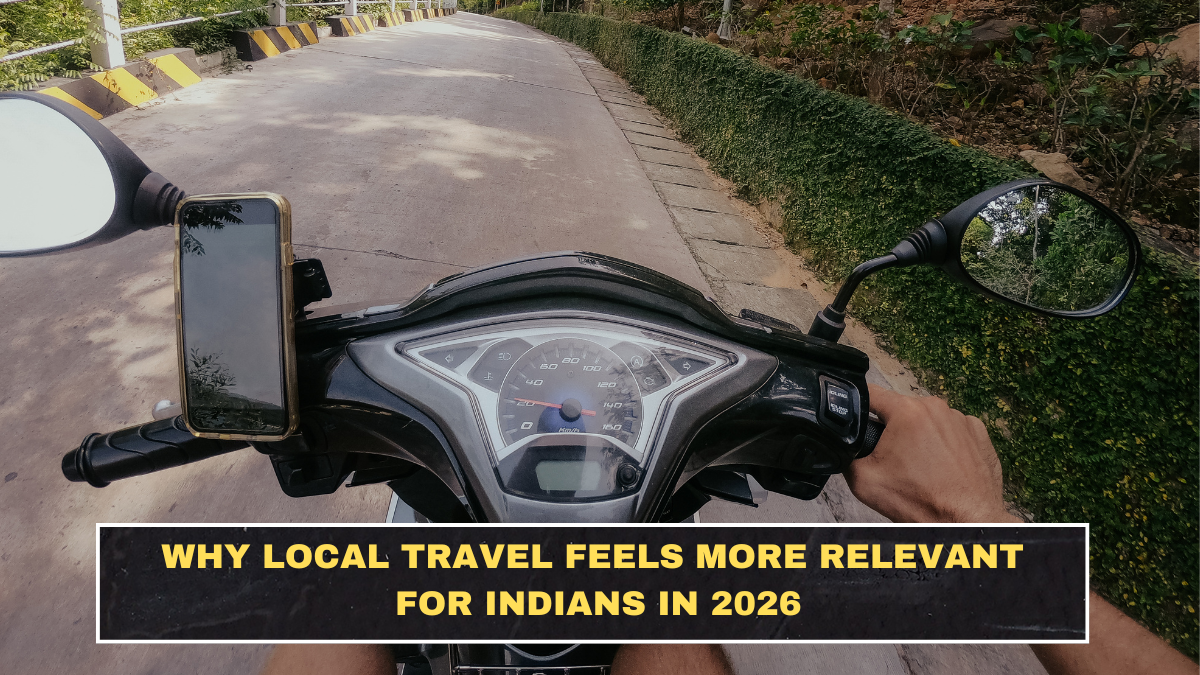
Local travel feels more relevant in India in 2026 because it fits how people actually live now. Many travellers want a break, but not the full cost, planning stress, or leave burden of a long holiday. That is why nearby escapes, weekend trips, and shorter domestic breaks are getting more attention. India’s travel economy is still overwhelmingly domestic: the Ministry of Tourism reported 2509.13 million domestic tourist visits in 2024, and a PIB release said India had already recorded 303.59 crore domestic tourist visits by August 2025.
This is not just about budget. It is also about convenience. Shorter trips are easier to plan, easier to recover from, and easier to fit into work-heavy schedules. That makes them more practical for urban Indians than the old idea that travel must always mean a long, expensive vacation. Skyscanner’s 2026 India travel trends also show travellers looking beyond obvious destinations, with places like Jorhat rising sharply in interest, which supports the idea that nearby and less-obvious trips are gaining ground.
What the Numbers Show
| Indicator | Latest signal | Why it matters |
|---|---|---|
| Domestic tourist visits in India, 2024 | 2509.13 million | Shows domestic travel is massive and central to India’s tourism economy |
| Domestic tourist visits in India, by Aug 2025 | 303.59 crore | Confirms strong ongoing momentum in domestic travel |
| Share of Indian trips that were domestic | 99% in 2022 | Shows local and domestic travel dominate Indian travel behaviour |
| Indians preferring driving vacations | 35% | Supports the rise of shorter, flexible, closer-trip formats |
| Social media/OTT influence on travel decisions | 60% | Nearby destinations gain visibility faster through content discovery |
Why Local Travel Feels More Practical Now
A few forces are pushing this shift:
- people want easier breaks without heavy planning
- travel budgets are being watched more carefully
- shorter leaves fit better with work pressure
- road trips and nearby getaways feel more flexible
- social media keeps surfacing lesser-known places closer to home
This matters because many Indian travellers are no longer chasing only “big trip” status. They are also looking for convenience, mood change, and quick reset value. That makes local travel stronger not because international travel disappeared, but because nearby travel solves a more frequent need.
Why This Trend Is Bigger Than Just Weekend Getaways
A lot of people reduce this trend to “people are taking short trips.” That is too shallow. The deeper shift is that local exploration now feels legitimate, not second-best. Travellers are more willing to visit nearby hill towns, heritage cities, nature pockets, or lesser-known cultural spots without feeling the trip has to be huge to count. Skyscanner’s 2026 trends explicitly highlight growing interest in less-obvious destinations and culture-rich escapes.
There is also a practical psychological reason. Long vacations require commitment, money, and energy. Short local trips ask for less and can happen more often. For many people, that makes travel feel more accessible and sustainable rather than rare and stressful.
Who Is Driving This Trend
This trend is not limited to metro travellers. IBEF reported that Tier-II cities are driving faster growth for the travel industry, while preferences are diversifying across road trips, cruises, scenic train journeys, and group formats. That matters because local travel becomes stronger when interest spreads beyond a small premium urban segment.
The travel industry also benefits from this pattern. Domestic travel is easier to stimulate, easier to market through content, and less exposed to international uncertainty. That is one reason government tourism messaging continues to frame domestic tourism as a key growth driver.
What Travellers Should Focus On
For Indian travellers, local travel works best when it is approached realistically:
- choose destinations within manageable travel time
- prioritize experiences over overpacked itineraries
- verify season, crowd levels, and road conditions
- keep budgets clear instead of treating short trips as careless spending
- look beyond the most overused tourist circuits
That last point matters. If everyone keeps chasing the same few “viral” spots, local travel becomes crowded, expensive, and disappointing. The smarter opportunity is in well-connected but underexplored destinations.
Conclusion
Local travel feels more relevant for Indians in 2026 because it matches real behaviour better than the old fantasy of constant big vacations. The data shows domestic travel remains dominant, and newer trend signals suggest travellers are paying more attention to nearby, flexible, and less-obvious destinations.
The blunt truth is simple: shorter trips are not a downgrade. For many Indians, they are the more realistic, repeatable, and satisfying version of travel now. Anyone ignoring that shift is reading the market badly.
FAQs
Why is domestic travel so important in India?
Domestic travel is important because it represents the overwhelming majority of Indian travel activity. Government figures show massive domestic tourist volumes, making it the backbone of the tourism sector.
Are short trips becoming more popular in India?
Yes. Preference signals such as growing interest in driving vacations and less-obvious destinations suggest shorter and more flexible domestic trips are becoming more relevant.
Why do nearby destinations feel more appealing now?
They are easier to plan, cheaper than bigger vacations, and fit better into modern work schedules. They also get discovered more easily through social media and digital travel research.
Is local travel only a budget trend?
No. Budget matters, but convenience, flexibility, and frequency matter too. Many travellers choose local trips because they are easier to do more often, not just because they cost less.