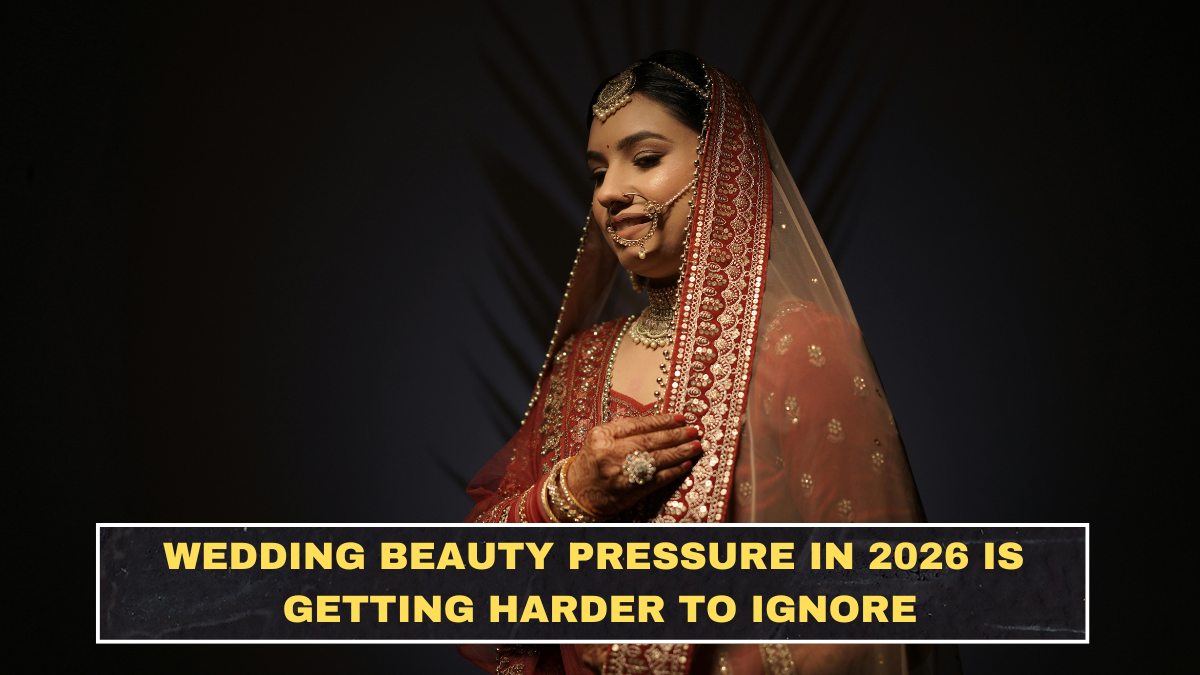
Wedding beauty pressure is not new, but in 2026 it is becoming more medical, more expensive, and harder to dismiss as harmless “self-care.” Vogue reported this month that GLP-1 use has entered wedding prep in a visible way, citing Zola data showing 10% of couples planning 2026 weddings say they are currently using a GLP-1 and another 10% are considering it before the wedding. More than half of those current users said the wedding was the main reason.
That matters because it shows the pressure is no longer limited to hair trials, makeup, facials, or dress fittings. Wedding prep is increasingly tied to body reshaping, injectables, and appearance-based “optimization.” Vogue also reported that the average spend on wedding-related beauty enhancements in this category was about $1,100, rising to nearly $2,000 for people using medical enhancements. This is not just beauty planning anymore. It is a bigger commercial and emotional system telling people they should look transformed, not simply like themselves.
Why is wedding beauty pressure getting stronger in 2026?
Because weddings now sit at the intersection of social media, body image, and a much larger beauty economy. Zola’s 2026 trend report shows GLP-1 use has already become part of the conversation among engaged couples, and Vogue describes weddings as a major trigger for body-focused decision-making because the day is treated as permanent, highly photographed, and socially visible. That combination intensifies the urge to “fix” something before the event.
There is also a broader cultural backdrop. KFF reported in late 2025 that about one in eight U.S. adults were currently taking a GLP-1, and its March 2026 public-opinion summary said 18% of adults had ever taken one, including 12% currently. So wedding culture is not creating GLP-1 use from nothing. It is absorbing a medication trend that is already mainstream enough to feel available, discussable, and marketable.
What does this pressure actually look like?
It looks like a shift from traditional grooming toward transformation pressure. Bridal beauty used to mean salon appointments, skincare, and event styling. Those still exist, of course. The Knot said the average cost of bridal hair and makeup in 2025 was $290, showing that standard beauty services remain part of normal wedding spending. But that baseline is now sitting beside a more aggressive layer of weight-loss drugs, Botox, skin-tightening treatments, and other medicalized prep.
That is the real change. The problem is not that people want to feel good at their wedding. The problem is that the standard keeps moving. When normal beauty prep is no longer enough, the message becomes: your natural body is not wedding-ready yet. That is where pressure stops being celebratory and starts becoming corrosive.
| Wedding beauty layer | What it includes | What is changing in 2026? |
|---|---|---|
| Traditional prep | Hair, makeup, nails, facials, dress fittings | Still common and budgeted into weddings |
| Wellness prep | Workouts, skincare routines, diet changes | More tied to visible “before and after” pressure |
| Medicalized prep | GLP-1s, injectables, aesthetic procedures | Becoming more normalized in wedding culture |
Sources: Zola 2026 trend data, Vogue reporting, The Knot cost data.
Why are GLP-1 weddings drawing so much attention?
Because they expose how far beauty pressure has moved into health and medicine. Vogue’s reporting on “GLP-1 wedding weight loss” shows that some couples are treating prescription drugs as part of the wedding-prep toolkit, not as a side issue. That is a big cultural signal. It means the pressure is no longer just aesthetic in the cosmetic sense. It is entering the medical space and being justified as part of looking “best” for the event.
And no, this is not just about brides. Vogue’s reporting explicitly framed it as affecting couples more broadly, including grooms and nonbinary people, which makes the trend more significant. Wedding image pressure is widening, not staying confined to old-school bridal expectations.
What are people misunderstanding about this trend?
A lot of people still call all of this empowerment, and sometimes that is partly true. Adults are allowed to change their appearance. That is obvious. But pretending every pre-wedding transformation decision is purely free and pressure-free is dishonest. When the surrounding culture keeps rewarding thinness, polished perfection, and photogenic transformation, personal choice does not exist in a vacuum.
There is also a class issue people ignore. Weddings are already expensive. The Knot says the average wedding cost from couples married in 2025 was $34,200. Add medical beauty spending, injectables, and extended treatment plans, and the financial pressure expands alongside the body-image pressure. So this is not only about insecurity. It is also about how the wedding industry keeps finding new categories to monetize.
What should couples take from this in 2026?
The useful lesson is not “never do beauty prep.” That would be simplistic nonsense. The real lesson is to check whether the decision is coming from desire or from panic. Wanting makeup, hair styling, or skin prep is normal. Feeling pushed toward extreme weight-loss or medical treatment because your wedding photos must prove something is a different issue.
Couples should also be honest about cost. If beauty spending is quietly turning into another major budget category, then it deserves the same scrutiny as venue upgrades or vendor add-ons. Zola and The Knot data already show weddings are data-heavy, expensive planning events. Adding image anxiety on top of that can make a stressful process worse, not better.
Conclusion?
Wedding beauty pressure in 2026 is getting harder to ignore because it is becoming more medical, more normalized, and more expensive. GLP-1 use among engaged couples is the clearest proof that pre-wedding appearance pressure has moved beyond ordinary grooming into something heavier. The industry may sell that as confidence-building, but the uglier truth is that many people are being pushed to feel unfinished unless they transform first.
FAQs
Are GLP-1 drugs really becoming part of wedding planning?
Yes. Zola’s 2026 report said 10% of couples planning 2026 weddings were currently using a GLP-1 and another 10% were considering it before the big day.
Is wedding beauty pressure only affecting brides?
No. Recent reporting describes this pressure as affecting couples more broadly, not just brides, especially as wedding imagery and appearance standards intensify across genders.
How much are normal bridal beauty services costing?
The Knot reported that average bridal hair and makeup cost $290 in 2025, before any added medical or cosmetic enhancement spending.
Why is this trend getting more attention in 2026?
Because it now overlaps with mainstream GLP-1 use, rising cosmetic normalization, and a wedding culture that increasingly treats physical transformation as part of preparation.