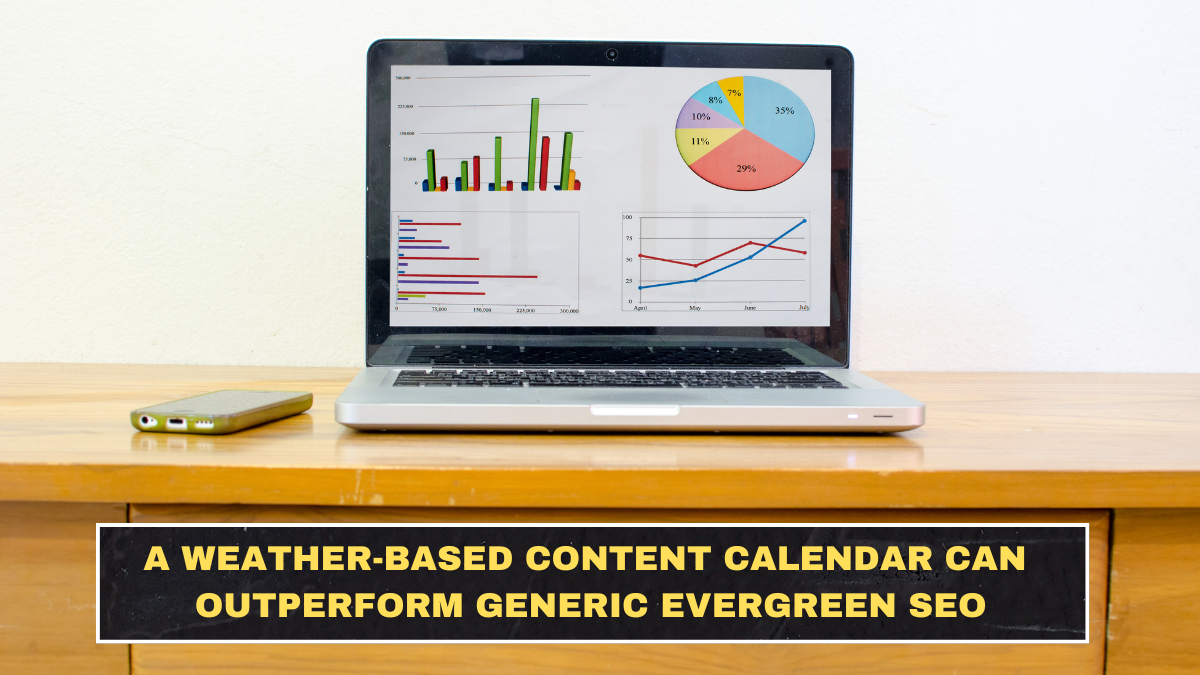
A weather-based content calendar is often stronger than generic evergreen SEO because weather changes create immediate, practical, repeatable user interest. Google Discover shows content based on user interests from Google’s indexed content, and that usually favors topics with timely relevance, not just static keyword volume. If your editorial plan reacts to heatwaves, cold spells, heavy rain, allergy shifts, crop stress, travel disruption, or energy use, you are publishing around real life instead of writing another bland article nobody urgently needs.
This is where many publishers get lazy. They keep producing broad evergreen articles because those feel safe. But safe often means forgettable. A weather-based calendar gives you a more rational system: publish content when seasonal conditions are likely to trigger demand. Google Trends exists precisely to track how interest changes over time, and NOAA’s Climate Prediction Center publishes official 30-day and 90-day outlooks on a fixed monthly schedule, which gives publishers a planning framework instead of guesswork.
Why weather-based planning works better
Weather affects search and content demand because it changes what people need right now. Heat leads to searches around sleep, electricity bills, dehydration, AC use, and summer travel. Heavy rain drives interest in flooding, road closures, insurance, skin issues, and crop damage. Cold snaps push searches around heating costs, winter care, illness, and transport disruption. When interest is tied to lived conditions, the article has a stronger reason to exist.
Discover is a good fit for this because relevance and timing matter. Google’s Discover documentation makes clear that content appears based on what users are interested in, and Discover can show both new and evergreen content. In practice, weather-linked stories often work because they connect current conditions to practical consequences.
What a weather-based calendar should include
| Calendar layer | What to track | Why it helps |
|---|---|---|
| Seasonal outlooks | 30-day and 90-day forecasts | Helps plan content before interest peaks |
| Search signals | Google Trends patterns | Shows whether interest is rising early |
| Consequence topics | Sleep, bills, health, travel, crops, retail | Turns weather into human-impact content |
| Geographic targeting | Region or city-level angles | Improves relevance for local readers |
| Refresh schedule | Weekly or biweekly updates | Keeps topics timely for Discover-style traffic |
How to build the calendar properly
Start with forecast windows, not keywords. NOAA’s CPC issues monthly 30-day and 90-day outlooks, so you can map likely periods of heat, rain, drought, or cooler weather before they dominate public attention. Then use Google Trends to check whether related searches usually rise one to three weeks before the weather impact peaks. That is your planning window.
Then build content in layers:
- forecast explainer content
- impact content for households and consumers
- regional content for affected locations
- follow-up content when the weather actually arrives
- recap content if the event creates policy, cost, or behavior changes
That layered model is better than publishing one generic “summer tips” article and hoping it lasts all season.
What publishers usually get wrong
The biggest mistake is writing weather content as vague seasonal filler. “Summer is here” is not a strategy. “Warm nights are rising in north India and hurting sleep” is a strategy. The article needs a consequence, not just a season. Otherwise it becomes generic evergreen fluff with no urgency.
Another mistake is relying only on fixed annual dates. Weather does not care about your monthly content spreadsheet. CPC outlooks, WMO seasonal updates, and local forecast shifts give better signals than a rigid “June means monsoon article” habit. WMO’s March–April–May 2026 global seasonal update and CPC’s rolling outlooks show why weather planning needs live inputs, not only recycled calendar assumptions.
What content types work best
The strongest weather-based content usually connects event to consequence:
- heatwave to sleep disruption
- unseasonal rain to crop prices
- early summer to power bills
- weak monsoon to food inflation
- weather shifts to travel booking changes
- humidity to skincare or appliance use
That structure tends to outperform generic evergreen SEO because it answers a concrete question readers suddenly care about.
Why this can outperform evergreen SEO
Evergreen SEO still matters, but generic evergreen content is often too broad to win attention. A weather-based calendar gives you three advantages:
- timeliness
- repeated annual demand
- easier Discover relevance
Google Discover can surface both fresh and evergreen pages, but weather-linked content has a better chance of being relevant when user interest spikes suddenly. That does not guarantee traffic, but it gives the article a real-world trigger instead of a keyword-only justification.
Conclusion
A weather-based content calendar can outperform generic evergreen SEO because it follows real demand instead of theoretical demand. Forecast cycles, Google Trends patterns, and seasonal consequence angles give publishers a smarter way to plan. If your content calendar still ignores weather, you are probably missing one of the easiest ways to make timely articles feel useful instead of recycled.
FAQs
1. What is a weather-based content calendar?
It is an editorial plan built around forecast-driven and season-driven audience interest, using weather conditions as the trigger for publishing relevant content.
2. Why can it work better than generic evergreen SEO?
Because it aligns content with live demand. Weather changes often create immediate interest in health, travel, energy, shopping, and local-impact topics.
3. What tools are useful for building one?
Google Trends helps track rising search interest, while NOAA CPC outlooks help publishers plan around expected seasonal conditions before they peak.
4. What is the biggest mistake publishers make with weather content?
They usually publish vague seasonal filler instead of linking weather to practical human consequences. That weakens urgency, usefulness, and audience interest.