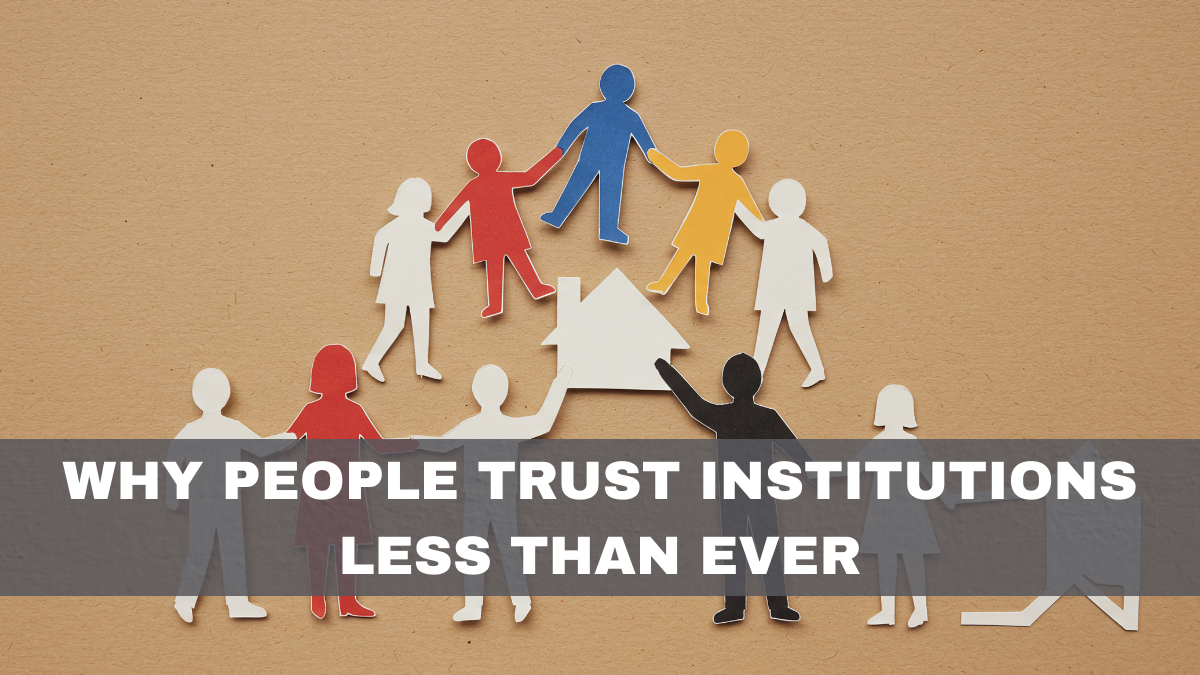
Trust used to be the default. Governments, media, corporations, and public systems were imperfect, but they were generally believed to act in good faith. Today, that assumption has eroded. Across countries and cultures, trust issues society are deepening. Skepticism has replaced confidence, and doubt now feels rational rather than cynical.
This shift didn’t happen overnight. It’s the result of repeated disappointments, information overload, and growing distance between institutions and the people they serve. Understanding why the skepticism rise continues explains a major psychological shift shaping modern society.
What We Mean by “Institutions”
Institutions are systems meant to provide stability and coordination.
They include:
• Governments
• Media organizations
• Corporations
• Financial systems
• Educational bodies
When trust in these systems weakens, social cohesion weakens with it.
Why Trust Was Easier in the Past
Earlier generations had fewer information sources.
Trust felt easier because:
• Narratives were consistent
• Authority was centralized
• Contradictions were less visible
Limited visibility created perceived stability—even when flaws existed.
The Role of Repeated Institutional Failures
Trust breaks through repetition, not one mistake.
People lose trust when:
• Promises are broken repeatedly
• Accountability feels absent
• Mistakes go uncorrected
Each failure compounds the skepticism rise.
How Transparency Exposed Contradictions
Transparency revealed internal inconsistencies.
People now see:
• Conflicting statements
• Policy reversals
• Behind-the-scenes incentives
Visibility didn’t cause corruption—but it exposed it.
Why Apologies No Longer Restore Trust
Apologies without change feel hollow.
Trust erodes when:
• Words aren’t followed by action
• Consequences are uneven
• Responsibility feels symbolic
Repair requires structural change, not statements.
The Impact of Media Fragmentation
Media once provided shared narratives.
Fragmentation created:
• Competing realities
• Confirmation bias
• Distrust of all sources
When everyone sees a different version of truth, trust collapses.
Why Expertise Is Questioned More Than Before
Expert authority declined alongside transparency.
People question experts because:
• Past certainty proved wrong
• Financial incentives surfaced
• Language felt disconnected
Skepticism rise reflects broken expectations, not ignorance.
The Role of Social Proof Over Authority
People now trust peers more than institutions.
They rely on:
• Personal networks
• Online communities
• Shared experience
Relatability replaced authority as a credibility marker.
Why Institutions Feel Distant and Unresponsive
Scale creates distance.
Large systems often feel:
• Slow
• Bureaucratic
• Impersonal
When people feel unheard, trust dissolves.
The Psychology of Broken Trust
Once broken, trust resists repair.
Psychologically:
• Vigilance increases
• Cynicism becomes protective
• Doubt feels safer than belief
Trust issues society aren’t emotional—they’re adaptive.
Why Distrust Spreads Faster Than Trust
Distrust spreads because it feels self-protective.
It spreads through:
• Stories of failure
• Shared skepticism
• Negative reinforcement
Trust requires risk. Distrust feels safer.
The Cost of Widespread Distrust
Low trust damages cooperation.
Consequences include:
• Social fragmentation
• Reduced civic engagement
• Increased polarization
Societies function poorly without baseline trust.
What Rebuilding Trust Actually Requires
Trust can’t be demanded—it must be rebuilt.
It requires:
• Consistent behavior
• Accountability
• Transparency with consequences
• Responsiveness
Without action, trust won’t return.
Why Some Distrust Is Rational
Not all distrust is unhealthy.
Healthy skepticism:
• Prevents blind compliance
• Encourages accountability
• Promotes critical thinking
The problem is when distrust becomes universal.
Conclusion
Trust issues society faces today didn’t emerge from cynicism—they emerged from experience. Repeated failures, exposed contradictions, and emotional distance have fueled a global skepticism rise. Trust wasn’t stolen—it was spent carelessly.
Rebuilding trust requires more than messaging. It requires consistency, humility, and real accountability. Until institutions change behavior, skepticism will remain the rational response.
FAQs
Why is trust in institutions declining?
Because repeated failures, lack of accountability, and visible contradictions eroded confidence.
What does skepticism rise mean?
It refers to the growing tendency to question authority and institutional claims.
Is distrust always bad for society?
No. Some skepticism is healthy, but total distrust damages cooperation.
Can trust in institutions be rebuilt?
Yes, but only through consistent action and accountability over time.
Why do people trust peers more than institutions now?
Because personal experience feels more relatable and less abstract than authority.