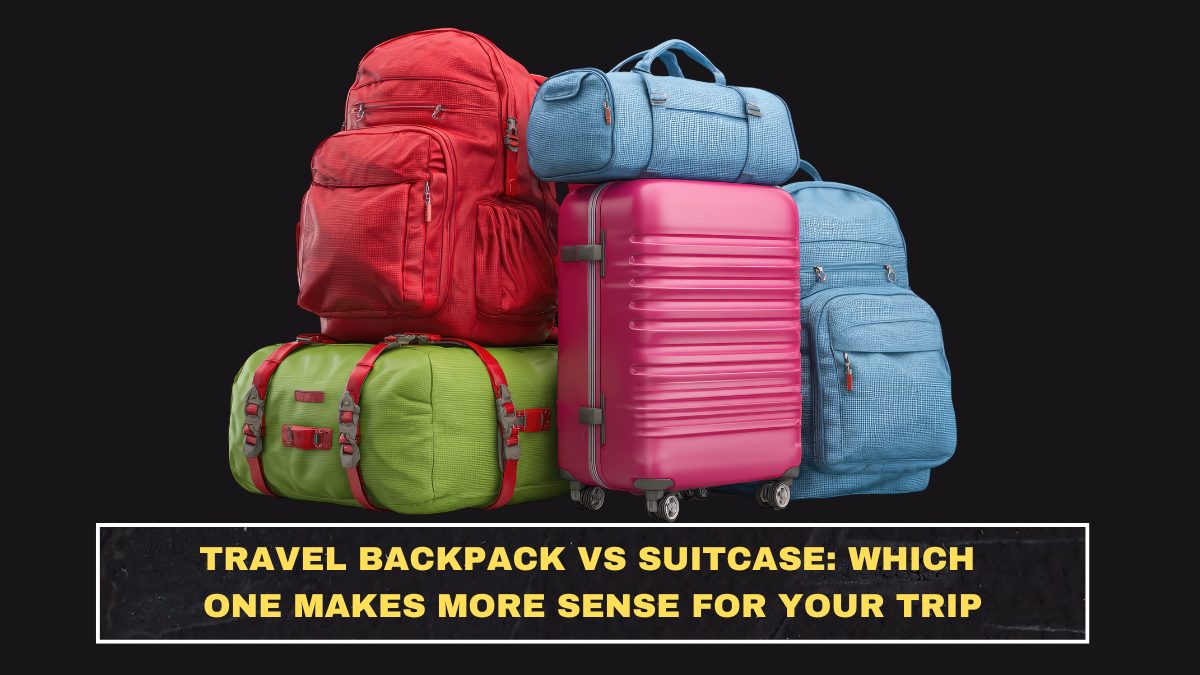
Neither is better in every situation, and that is exactly why people keep arguing about it. The right answer depends on the trip, not on what looked smart in someone else’s airport photo. If you are moving around a lot, dealing with stairs, trains, cobblestones, or budget airlines, a backpack often makes more sense. If you want easier packing, better structure, and less strain on your shoulders, a suitcase usually wins. The lazy mistake is looking for one universal answer when travel reality is messier than that.
When does a travel backpack make more sense?
A backpack makes the most sense when mobility matters more than packing convenience. If your trip includes multiple cities, train stations, hostels, ferries, uneven sidewalks, or lots of walking between transport and accommodation, a backpack can be the smarter tool. Travel + Leisure’s 2026 international carry-on testing called the Pacsafe Venturesafe EXP45 its favorite hands-free option and pointed to anti-theft features and flexibility that suit international travel well. That fits the bigger truth: backpacks work best when the trip is active and the bag needs to move with you instead of just roll beside you.
Backpacks also make sense for travelers trying to stay minimalist. A carry-on backpack naturally limits overpacking because the structure is softer and the carrying experience punishes excess fast. That is useful if you need discipline more than space.
When does a suitcase make more sense?
A suitcase makes more sense when the trip is more stable and the bag is not constantly being carried. If you are flying into one city, taking taxis, staying in hotels, and unpacking for longer stretches, a suitcase is usually easier and less annoying. Travel + Leisure’s 2026 carry-on testing again favored structured rolling luggage for overall convenience, naming the Samsonite Freeform Carry-on Spinner its top carry-on thanks to its organization, capacity, and value. That tracks with real life. Suitcases are just easier to pack, easier to live out of, and easier on your body when the terrain allows them to roll properly.
This is especially true if you carry electronics, shoes, toiletries, or clothing that wrinkles easily. A suitcase gives those things a better chance of arriving like they were packed by an adult instead of crushed into a fabric cube.
| Trip type | Better choice | Why |
|---|---|---|
| Multi-city, lots of walking | Backpack | Easier on stairs, trains, rough streets |
| One or two hotel stays | Suitcase | Easier to pack, unpack, and organize |
| Minimalist, carry-on-only travel | Backpack | Helps limit overpacking |
| Work trip with structured clothing | Suitcase | Better shape and less wrinkling |
| Family or longer trip | Suitcase | More capacity and easier access |
What are the biggest drawbacks of a backpack?
The biggest drawback is obvious: you carry the weight. A backpack sounds romantic until you are sweating through a station platform with too much stuff on your back and one shoulder strap digging into you. Another problem is that backpacks can become black holes if they are not designed well. You end up digging for chargers, toiletries, or one shirt you swore you packed near the top. Even strong carry-on backpacks solve mobility better than organization.
There is also a size trap here. Some travel backpacks look compact online but are bulky when full, which can create overhead-bin problems if you packed like a fool. IATA says many airlines use 56 × 45 × 25 cm as a general reference for carry-on size, though exact airline limits vary, and some carriers also apply weight limits starting at 5 kg. That matters whether the bag has wheels or straps.
What are the biggest drawbacks of a suitcase?
Suitcases fall apart the moment the ground gets annoying. Cobblestones, broken sidewalks, stairs, narrow train platforms, and older buildings with no elevators expose every weakness fast. A rolling bag is wonderful when it rolls. When it does not, it becomes dead weight with a handle.
The other issue is false confidence. A suitcase often makes people overpack because the structure feels spacious and forgiving. Then they are stuck lifting a bag they made too heavy in the first place. So yes, suitcases are easier. They also make it easier to be stupid with your packing.
What should travelers choose based on the actual trip?
Choose a backpack if the trip is mobile, fast-moving, and light. Choose a suitcase if the trip is more settled, more structured, or more comfort-focused. If you are doing three cities in ten days and expect trains, stairs, and walking, the backpack is the smarter call. If you are going on a two-week hotel-based trip with nicer clothes, more toiletries, and less moving around, the suitcase is the more rational choice.
The real decision is not about style. It is about friction. Which bag creates less friction for the kind of trip you are actually taking?
What is the smartest takeaway?
Stop asking which bag is better in general. That question is too lazy to help. A backpack is better when mobility is the problem. A suitcase is better when comfort, organization, and easier access matter more. Travelers who choose based on the trip usually end up happier than travelers who choose based on identity. You are not proving anything by forcing backpack travel on a suitcase trip or dragging a spinner through a backpack trip. Just pick the bag that causes fewer regrets.
FAQs
Is a backpack better than a suitcase for international travel?
Sometimes. A backpack is often better for multi-city trips, trains, stairs, and rough streets, while a suitcase is usually better for hotel-based trips and easier packing.
Does a backpack help prevent overpacking?
Yes, often. Backpacks usually force more discipline because carrying extra weight gets uncomfortable fast.
Is a suitcase easier to live out of?
Yes. A suitcase is generally easier to organize, unpack, and repack, especially on longer or more structured trips.
What carry-on size should travelers watch?
Many airlines use 56 × 45 × 25 cm or 22 × 18 × 10 inches as a general carry-on reference, but airline-specific rules still matter.
Click here to know more