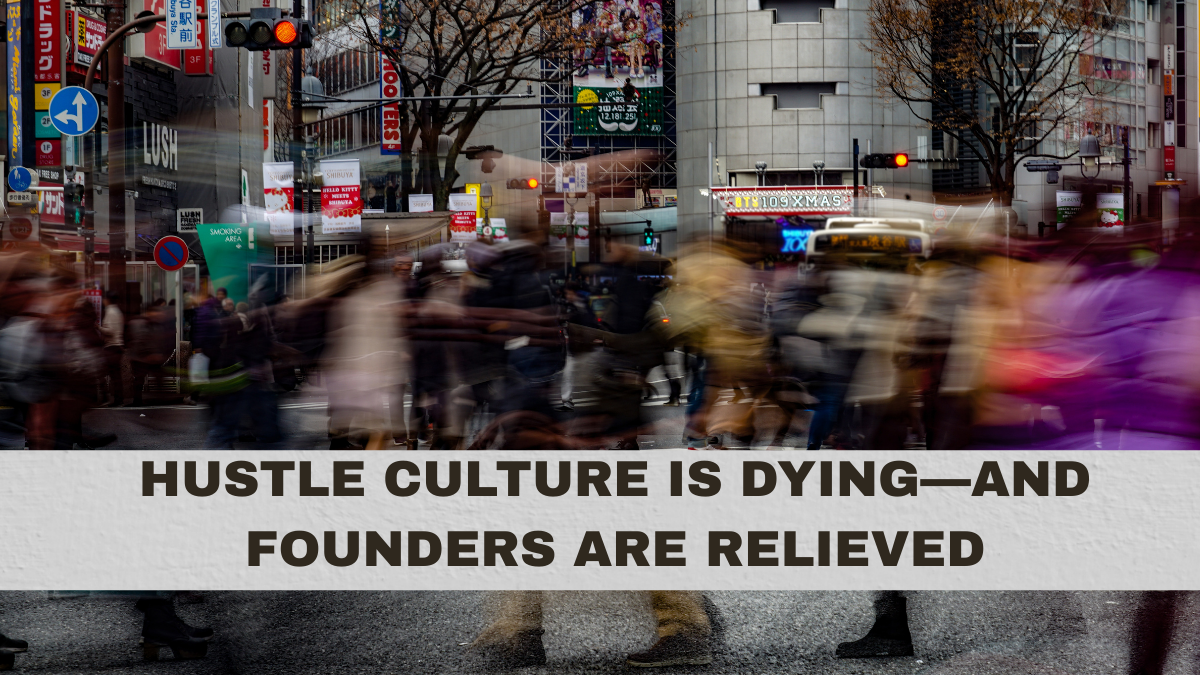
For a decade, hustle was worshipped. Sleep was weakness. Burnout was a badge of honor. In 2026, that story is falling apart. The startup hustle culture death isn’t loud or dramatic—it’s quiet, practical, and deeply relieving for founders who survived the grind.
What’s dying isn’t ambition. It’s the belief that exhaustion equals success.
Why Startup Hustle Culture Finally Broke
The collapse didn’t happen overnight. It cracked under weight.
Key pressures included:
• Prolonged founder burnout
• Mental health crises becoming visible
• Funding climates demanding efficiency, not chaos
• Talent refusing unsustainable expectations
The startup hustle culture death was inevitable once costs outweighed mythology.
The Myth That Hustle Built Better Companies
Hustle sold a simple equation: more hours = more progress.
Reality proved messier:
• Exhausted teams make worse decisions
• Speed without direction wastes capital
• Constant urgency erodes quality
• Burned founders become bottlenecks
Grinding harder didn’t fix flawed strategies.
Founder Burnout Became Impossible to Hide
Burnout used to be private. Now it’s public.
Founders openly admit:
• Chronic anxiety and insomnia
• Loss of motivation after “wins”
• Emotional numbness
• Health issues ignored for years
When leaders speak honestly, startup hustle culture death accelerates.
Why Investors Quietly Stopped Rewarding Grind
Capital changed its mind.
Investors now favor:
• Sustainable unit economics
• Predictable execution
• Low founder dependency
• Teams that don’t implode
The grind narrative stopped impressing people who’ve seen it fail.

What Replaced Hustle as a Success Signal
New markers of competence emerged.
They include:
• Clear priorities
• Calm execution
• Realistic timelines
• Founder resilience
Working fewer hours—but better—became respectable.
How Hustle Culture Hurt Teams, Not Just Founders
The damage was collective.
Team-level consequences:
• High turnover
• Silent resentment
• Reduced creativity
• Loss of trust
When burnout trickles down, culture collapses from the inside.
Why ‘Always On’ Became a Liability
Constant availability blurred boundaries.
Problems included:
• Slack and email never sleeping
• Urgency replacing planning
• No recovery time between sprints
• Leaders modeling unhealthy behavior
The startup hustle culture death began when people stopped admiring exhaustion.
Founders Are Redefining Leadership in 2026
Leadership looks different now.
Shifts include:
• Delegation over heroics
• Systems over willpower
• Rest as performance protection
• Saying no more often
Strong leaders aren’t the busiest—they’re the clearest.
What Early-Stage Startups Are Doing Differently
New companies learned from past wreckage.
Healthier defaults:
• Fewer meetings
• Clear work-hour norms
• No glorifying overtime
• Slower, more deliberate launches
The grind is no longer a requirement to be taken seriously.
Why Hustle Culture Still Lingers (But Weakly)
It hasn’t vanished everywhere.
It survives in:
• Founder echo chambers
• Social media highlight reels
• Survivor bias storytelling
But belief is fading—and startup hustle culture death continues quietly.
What This Means for the Future of Startups
Less burnout changes outcomes.
Likely results:
• Longer founder tenures
• More diverse leadership
• Better decision quality
• Sustainable growth models
Startups don’t die from rest. They die from chaos.
Conclusion
The startup hustle culture death marks a necessary correction. Ambition didn’t disappear—delusion did. Founders in 2026 are choosing sustainability over spectacle, clarity over chaos, and health over hollow praise.
The grind built myths. The next era builds companies.
FAQs
What is startup hustle culture death?
The decline of 24/7 grind ideology in startup environments.
Are founders really working less now?
Many are—while producing better outcomes.
Did hustle ever work?
Sometimes, but at enormous hidden cost.
Do investors support this shift?
Increasingly yes—sustainability matters more now.
Will hustle culture disappear completely?
Not instantly, but its influence is fading fast.
Click here to know more.