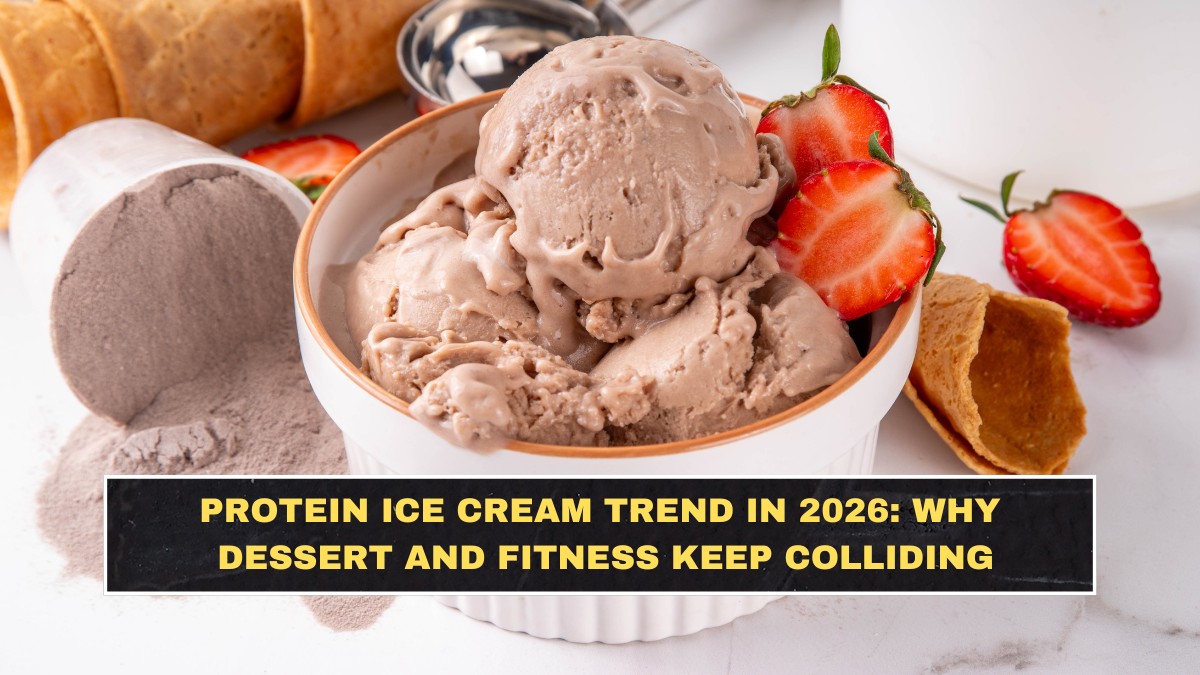
Protein ice cream is getting attention because it promises something people keep chasing: dessert that feels less guilty and more functional. The category is no longer tiny either. Grand View Research estimated the global protein ice cream market at about $2.51 billion in 2023 and projects it to reach $3.82 billion by 2030, showing this is a real commercial segment rather than a passing gym fad.
The broader food environment helps explain the timing. High-protein eating remains one of the strongest consumer habits across categories, and Conagra’s 2026 frozen-food report said frozen protein desserts and ice cream saw strong momentum, with volume up 36% in 2025 for that segment. That is the kind of growth signal that tells you the category is not only being talked about online. It is moving actual product in freezers.
What is protein ice cream really selling to buyers?
It is selling permission. Buyers want dessert, but they also want to feel like they are staying aligned with fitness, weight management, or better-for-you eating. Protein ice cream sits perfectly in that gap because it lets people frame indulgence as something functional. Grand View’s market summary explicitly ties growth to fitness lifestyles and demand for more nutritious treats, which is exactly the emotional logic behind the category.
This is why the trend is stronger than simple novelty. A normal dessert asks buyers to accept indulgence. Protein ice cream asks buyers to reinterpret indulgence as strategy. That is a much easier sell in a culture obsessed with protein, macros, and “healthier” versions of comfort food. Food-industry reporting in 2025 also described high-protein frozen desserts as expanding the market by attracting consumers who want more from sweet treats than just sugar and calories.
Why is this category growing faster than many people expected?
Because it fits several consumer trends at once. It is high protein, often lower sugar than traditional ice cream, easy to understand, and sold inside a category people already love. It also benefits from the fact that frozen food is getting less stigma than it used to. Conagra’s 2026 report frames frozen as a category where consumers now expect more convenience plus more function, which gives protein ice cream an ideal shelf context.
There is also a practical buying reason. Unlike supplements, protein ice cream does not feel clinical. Unlike protein bars, it still feels like a treat. That middle ground matters. The category is winning because it does not ask consumers to stop wanting dessert. It just gives them a more socially acceptable story for buying it. That is why dessert and fitness keep colliding here instead of staying in separate aisles.
Is this trend really about health, or mostly about marketing?
Both, and pretending otherwise is stupid. Protein ice cream can genuinely offer more protein and often less sugar or fewer calories than standard premium ice cream, depending on the brand. That makes it relevant for some buyers who want a different macro profile. But the category also relies heavily on halo effects. “High protein” can make consumers assume the whole product is automatically healthy, which is not always true. Market analysis from Grand View and Polaris both frame growth around wellness, fitness, and formulation innovation, but neither suggests the category has magically stopped being dessert.
That is the reality buyers need to hear. A pint with more protein is still a processed sweet product. It may fit a goal better than regular ice cream. It does not become a nutrition miracle because the label says protein. The trend works because it blends real nutritional adjustments with very effective positioning.
What is pushing protein ice cream in 2026 more than anything else?
| Driver | Why it matters in 2026 |
|---|---|
| High-protein obsession | Consumers keep prioritizing protein across snacks and desserts |
| Better-for-you dessert demand | Buyers want indulgence with a cleaner macro story |
| Frozen category momentum | Frozen protein desserts saw strong recent volume growth |
| Fitness-meets-convenience appeal | Easier than making high-protein desserts at home |
| Product innovation | Brands keep improving flavors, formulations, and textures |
This table gets to the point. The category is growing because it is not relying on one trend. It is riding multiple ones at once. Protein remains powerful, frozen desserts remain popular, and brands keep reformulating to make the experience more acceptable to mainstream buyers. Food trend reporting for 2026 also points to protein-rich concepts continuing to shape sweet innovation, which reinforces why this category still has room to grow.
What are buyers actually looking for in protein ice cream?
They are looking for a compromise that does not feel like punishment. That means decent taste, acceptable texture, enough protein to justify the purchase, and a calorie or sugar profile that sounds smarter than traditional ice cream. If the taste is bad or the texture feels artificial, the “high protein” claim stops mattering fast. That is why category growth depends on formulation quality, not just nutrition labels. Grand View and Polaris both point to flavor innovation and evolving consumer preferences as key growth factors.
This is also why the category has staying power only if it keeps improving. Buyers will tolerate a slight tradeoff for better macros. They will not tolerate a frozen protein lecture that tastes like chalk. The brands that survive are the ones that make the compromise feel worth it, not the ones that hide behind fitness language.
Who is this trend really for?
Protein ice cream makes the most sense for buyers who already care about protein intake, calorie control, or functional snacking but still want dessert. It also fits people who are trying to make their food environment less extreme, meaning they would rather choose a better-positioned treat than swing between rigid dieting and binge-style indulgence. That is exactly the kind of consumer logic market reports are describing when they point to fitness lifestyles and demand for nutritious treats as category drivers.
It makes less sense for people who are pretending it is not dessert. That is where the category becomes self-deception. Protein ice cream can be a smarter swap in the right context. It is not a free-eat loophole just because the macros look more respectable. If someone uses it as an excuse to overconsume, they have missed the point completely. That is not a product problem. That is a discipline problem.
Why is this trend likely to keep growing?
Because the broader frozen dessert market is still expanding and the protein subcategory has a cleaner story than many other indulgent foods. Mordor Intelligence says the global ice cream market is expected to grow from about $125.42 billion in 2026 to $152.96 billion by 2031, while functional frozen products continue gaining shelf space. That gives protein ice cream two advantages at once: it benefits from overall dessert demand and from the health-positioning tailwind.
The category also has room to spread beyond hardcore fitness buyers. As formulations improve and more mainstream consumers get comfortable with high-protein foods, protein ice cream becomes easier to sell as a household freezer item rather than a niche gym purchase. That is why this trend looks durable. It is moving from identity food to normal food.
Conclusion
Protein ice cream is growing in 2026 because it solves a modern consumer contradiction: people want dessert, but they also want macros, convenience, and a better story about what they are eating. The market data shows real growth, frozen-food reporting shows strong recent momentum, and the category continues to benefit from the wider obsession with protein.
The blunt truth is that protein ice cream is still dessert. But it is dessert that fits current buying behavior much better than traditional indulgence does. That is why the trend has traction. It is not replacing normal ice cream because it is morally superior. It is rising because it gives people a more acceptable excuse to keep eating something they already wanted.
FAQs
Is protein ice cream actually healthier than regular ice cream?
Sometimes, but not automatically. It often offers more protein and sometimes less sugar or fewer calories, but it is still a processed dessert and should not be treated like a health food by default.
Why is protein ice cream trending so much in 2026?
Because it sits at the intersection of indulgence and fitness. Consumers still want dessert, but they increasingly prefer products with a more functional nutrition story.
Who is protein ice cream really for?
It makes the most sense for people who want dessert with a higher-protein profile and a more controlled macro tradeoff, especially those already focused on fitness or better-for-you snacking.
Is this just a temporary fitness-food fad?
It looks stronger than a short fad. Market forecasts remain positive, and frozen protein desserts showed strong recent volume growth, which suggests the category has moved beyond a niche gym-only audience.