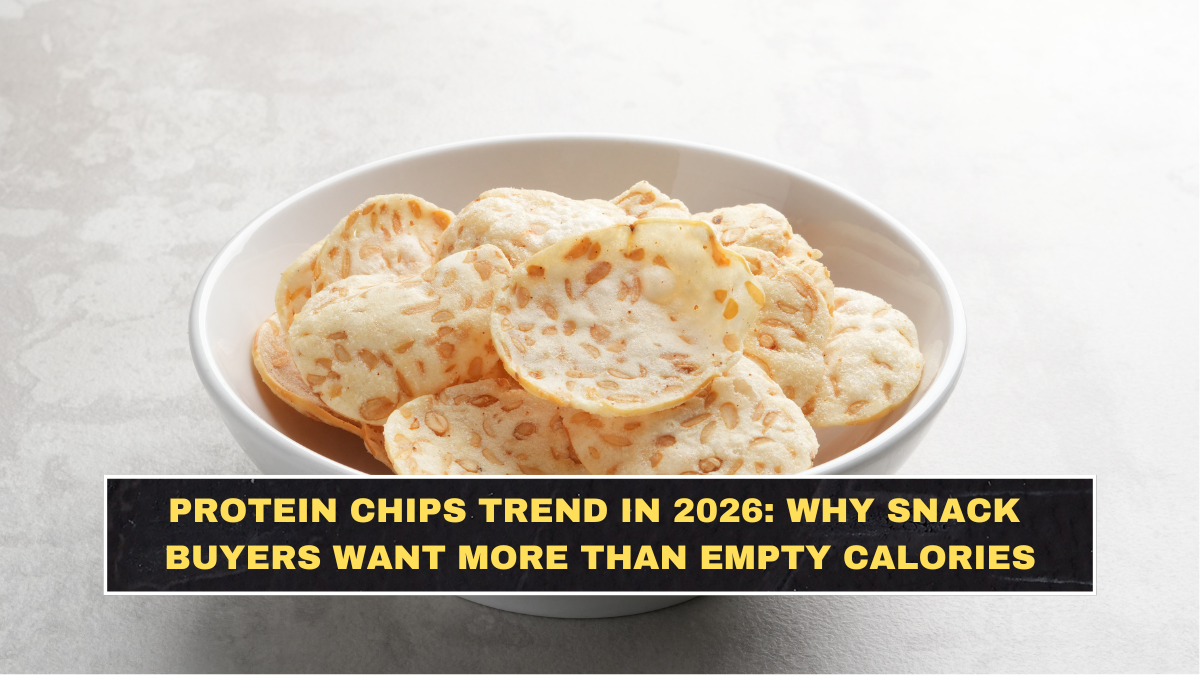
Protein chips are getting attention because they promise a simple upgrade to one of the most familiar snack habits people already have. Buyers still want crunch, salt, and convenience, but they now want those things wrapped in a better nutrition story. That broader shift is showing up in market data too. One 2026 report values the global protein snacks market at $5.86 billion in 2026 and projects it to reach $8.87 billion by 2030, while another 2026 estimate puts the market at $8.45 billion in 2026 and $13.93 billion by 2033. The exact totals vary, but the direction is obvious: protein-led snacking is expanding fast.
This trend also fits what snack buyers say they want. Innova Market Insights reported in March 2026 that half of global consumers say “high in protein” is an important snack attribute, and it specifically pointed to high-protein chips as products that can fit both movie-night indulgence and between-meal snacking. That matters because protein chips are not being framed as hardcore sports nutrition anymore. They are being sold as normal snacks with a better excuse.
What are protein chips actually selling to consumers?
They are selling “permissible indulgence.” That phrase shows up directly in recent 2026 snack-trend commentary, which describes consumers trading standard high-carb chips for lentil, chickpea, soy, pea, or other protein-forward crisps that still deliver a familiar crunchy snack experience. That is the entire logic of the category: keep the emotional comfort of chips, but swap in a more respectable nutrition label.
That does not mean buyers suddenly care only about protein. They still care about taste, portability, and whether the snack feels satisfying. Protein chips are working because they let people tell themselves they are choosing something smarter without fully giving up the chips experience. The category sits right in the middle of health aspiration and junk-food behavior, which is exactly where a lot of modern food trends succeed.
Why does this trend have more traction than a lot of other “healthy snack” ideas?
Because chips are already a dominant snack format. Consumers do not need to learn new behavior to buy protein chips. They just need a reason to switch bags. At the same time, broader healthy-snack demand is still rising. One 2026 forecast values the healthy snacks market at $115.07 billion in 2026, up from $108.34 billion in 2025. That gives protein chips a strong tailwind because they can live inside both the “healthy snack” and “high-protein snack” conversations.
There is also a bigger snacking shift happening. A recent Barron’s report noted that Americans are moving away from some traditional sweets and toward saltier or more functional snacks. That does not prove protein chips are winning by themselves, but it does show the market is already leaning toward snacks that feel more purposeful than empty-calorie indulgence. Protein chips fit that mood extremely well.
What kinds of protein chips are driving the category?
A lot of the momentum is coming from alternative-base chips rather than old potato chips with a protein claim slapped on top. Recent 2026 snack commentary keeps pointing to lentil, chickpea, soy, pea, and black-bean-based crisps and puffs as examples of where the category is going. These formats work because they signal both protein and a more modern ingredient profile, often with extra plant-based or gluten-free appeal layered in.
That matters because buyers are not only chasing protein grams. They are also responding to identity cues like plant-based, better-for-you, and ingredient-led. Once a chip can signal protein, fiber, and maybe a cleaner ingredient image, it becomes easier to justify as a regular pantry purchase instead of a weird gym snack.
What do buyers actually want from protein chips?
| What buyers want | Why it matters |
|---|---|
| More protein | Makes the snack feel more functional |
| Familiar crunch | Without that, the category falls apart |
| Better nutrition story | Lower guilt than standard chips |
| Convenience | Easy to eat anywhere, like normal chips |
| Taste that does not feel “fitness” | Repeat buying depends on this |
This is the real buying framework. People are not shopping protein chips like a supplement. They are shopping them like chips with upgraded math. If the protein is decent but the taste is bad, the category fails. If the macros look cleaner but the texture feels fake, the product becomes a one-time curiosity purchase instead of a habit. That is why flavor and format innovation matter as much as nutrition in this trend.
Are protein chips actually healthier than normal chips?
Sometimes yes, but not automatically. They can offer more protein and sometimes more fiber or a different ingredient base than standard chips. That can make them a smarter option in some contexts. But let’s not be stupid about it: they are still processed snack foods. “High protein” does not magically erase sodium, oils, flavor systems, or overeating. This is where the category gets a halo effect it has not fully earned.
The better way to think about them is as a more useful version of the same behavior, not a total nutrition upgrade. If someone wants a crunchy packaged snack and chooses a protein chip that genuinely has better macros and reasonable ingredients, that can be a rational swap. If someone starts acting like protein chips are equivalent to whole food or a serious meal, they are fooling themselves. That is not health. That is label worship.
Who is really driving this trend?
The trend is being driven by buyers who want convenience without feeling nutritionally careless. That includes gym-adjacent consumers, but it goes beyond them. Protein chips are increasingly appealing to ordinary snack buyers, movie-night snackers, commuters, and people trying to shift away from empty-calorie junk without becoming diet extremists. Innova’s 2026 snack analysis makes this clear by placing protein chips in everyday snack moments, not only fitness moments.
The strongest growth likely comes from exactly that middle market: people who are not bodybuilders, but who still want snack choices that sound less stupid on paper. That is why this category has more staying power than many niche functional foods. It does not demand a full identity shift. It just makes a familiar habit easier to rationalize.
Conclusion
Protein chips are trending in 2026 because they match what snack buyers now want: convenience, crunch, and a better nutrition story than standard chips usually offer. The market for protein snacks is growing strongly, healthy snacking remains a huge category, and consumer research shows that protein is now one of the most attractive snack claims in the world.
The blunt truth is that protein chips are not a nutrition miracle. They are a smarter version of a very old impulse. That is exactly why they are working. They let people keep snacking while feeling less like they are throwing pure junk into their body. In food trends, that kind of compromise usually wins.
FAQs
Are protein chips actually healthier than regular chips?
They can be healthier in a limited sense, especially if they offer more protein and a better macro profile, but they are still processed snack foods and should not be treated like clean nutrition by default.
Why are protein chips trending so much in 2026?
Because buyers want snacks that still feel indulgent but come with a stronger nutrition story, and protein is now one of the most desirable snack attributes globally.
What are protein chips usually made from?
Many current products use lentils, chickpeas, soy, peas, beans, or similar protein-forward bases rather than relying only on standard potato-chip formulas.
Who is this trend really for?
It is for buyers who still want chips but want them to feel more functional and less empty-calorie than traditional snack options. That includes fitness-minded shoppers, but it also includes ordinary consumers who just want a better snack compromise.
Click here to know more