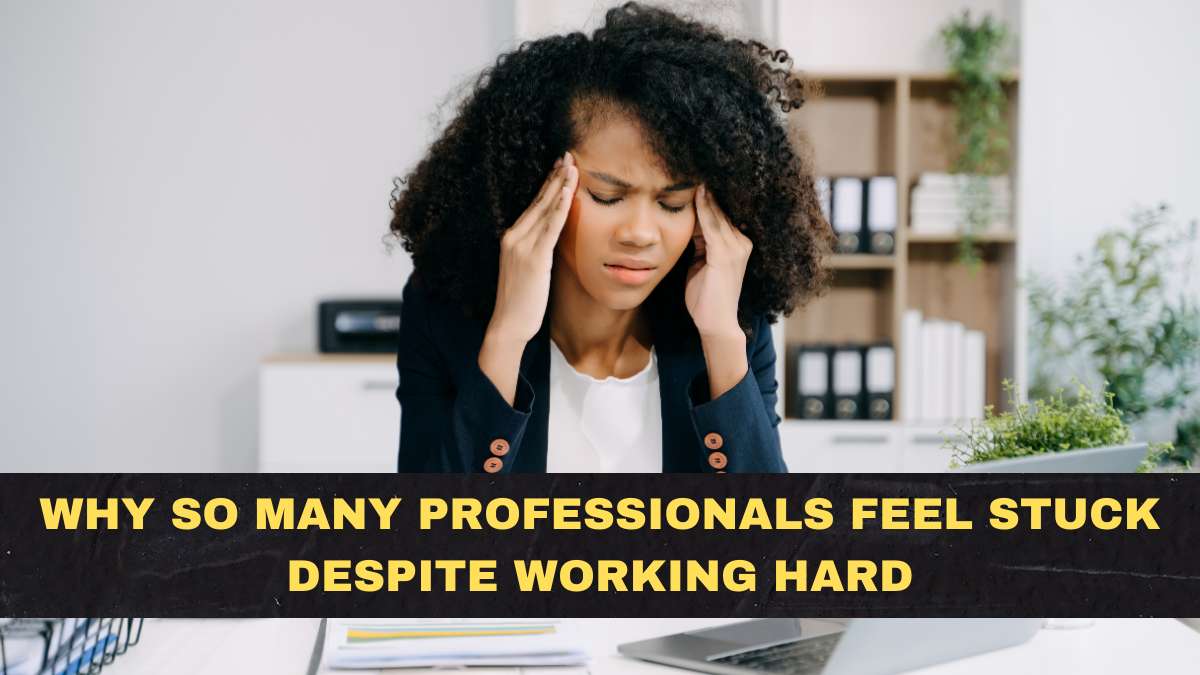
Working hard has long been sold as the guaranteed path to progress, but in 2026 that promise feels increasingly hollow for many professionals. People are putting in long hours, meeting targets, and staying loyal to organizations, yet promotions, meaningful growth, and satisfaction remain elusive. This growing sense of being stuck is not about laziness or lack of ambition; it is about how modern careers are structured.
What makes professional stagnation especially frustrating is its invisibility. From the outside, everything appears stable. Inside, however, professionals feel mentally stuck, underutilized, and unsure how to move forward. This silent plateau has become one of the most common career struggles in today’s workforce.

Why Hard Work Alone No Longer Guarantees Growth
Career growth used to follow effort closely. In 2026, growth depends on timing, visibility, and organizational structure as much as performance.
Many roles have limited upward mobility. No matter how hard someone works, there are few positions to move into.
This disconnect creates frustration and confusion about what effort actually leads to.
The Rise of Flat Organizational Structures
Companies have flattened hierarchies to reduce costs and increase speed. Fewer layers mean fewer promotions.
While efficiency improves, career ladders shrink. Professionals remain in the same role longer than expected.
Flat structures quietly trap capable employees at the same level.
Performance Without Visibility
Many professionals deliver results quietly while others focus on visibility and networking.
In modern workplaces, perception often matters as much as output. Those who work hard but stay unnoticed stagnate.
In 2026, effort without visibility rarely translates into advancement.
Skill Growth That Doesn’t Match Role Growth
Professionals often develop new skills but remain in the same job scope.
When responsibilities do not expand, learning feels wasted. Motivation drops over time.
Skill stagnation and role stagnation reinforce each other.
The Fear of Taking Career Risks
Stability feels safer than experimentation. Many avoid switching teams, roles, or companies due to uncertainty.
This risk avoidance leads to comfort-based stagnation. Growth slows quietly.
In 2026, fear keeps more professionals stuck than lack of opportunity.
Why Loyalty Is No Longer Rewarded Consistently
Staying loyal once meant long-term growth. Today, loyalty often leads to being taken for granted.
Organizations prioritize immediate needs over individual development.
Professionals who stay too long without change often plateau.
Burnout Masquerading as Stagnation
Sometimes feeling stuck is actually exhaustion. Burned-out professionals lose curiosity and initiative.
Without energy, even opportunities feel unappealing. Growth stalls internally first.
In 2026, burnout and stagnation frequently overlap.
The Comparison Trap in Professional Life
Seeing peers progress faster triggers self-doubt. Social media amplifies this effect.
Professionals question their worth without knowing the full context of others’ success.
Comparison intensifies the feeling of being left behind.
Why Promotions Are Slower Than Before
Economic caution, cost control, and performance saturation slow promotions.
Managers delay decisions, waiting for perfect timing that rarely comes.
Career timelines stretch longer than expectations.
What Actually Causes Long-Term Career Plateaus
Plateaus form when roles stop evolving and professionals stop repositioning themselves.
Without deliberate strategy, stagnation becomes the default.
In 2026, passive career management is a major risk.
How Professionals Can Break Out of Stagnation
Reframing growth beyond promotions helps. Skill expansion, lateral moves, and visibility matter.
Seeking feedback and redefining goals restores momentum.
Small strategic shifts often unlock progress.
Conclusion: Feeling Stuck Is a Signal, Not a Failure
Professional stagnation is not a personal flaw; it is a response to changing career structures.
In 2026, careers require active navigation, not just effort.
Recognizing stagnation early and responding strategically is the difference between long-term fulfillment and silent frustration.
FAQs
Why do professionals feel stuck despite working hard?
Because growth now depends on structure, visibility, and timing, not effort alone.
Is professional stagnation the same as burnout?
They are different but often overlap and reinforce each other.
Do flat organizations cause stagnation?
Yes, fewer hierarchy levels mean fewer promotion opportunities.
Can switching jobs fix stagnation?
Sometimes, but without strategy, stagnation can repeat.
How can professionals regain career momentum?
By increasing visibility, redefining goals, and making strategic moves.
Is stagnation common in 2026?
Yes, it is one of the most widespread modern career challenges.