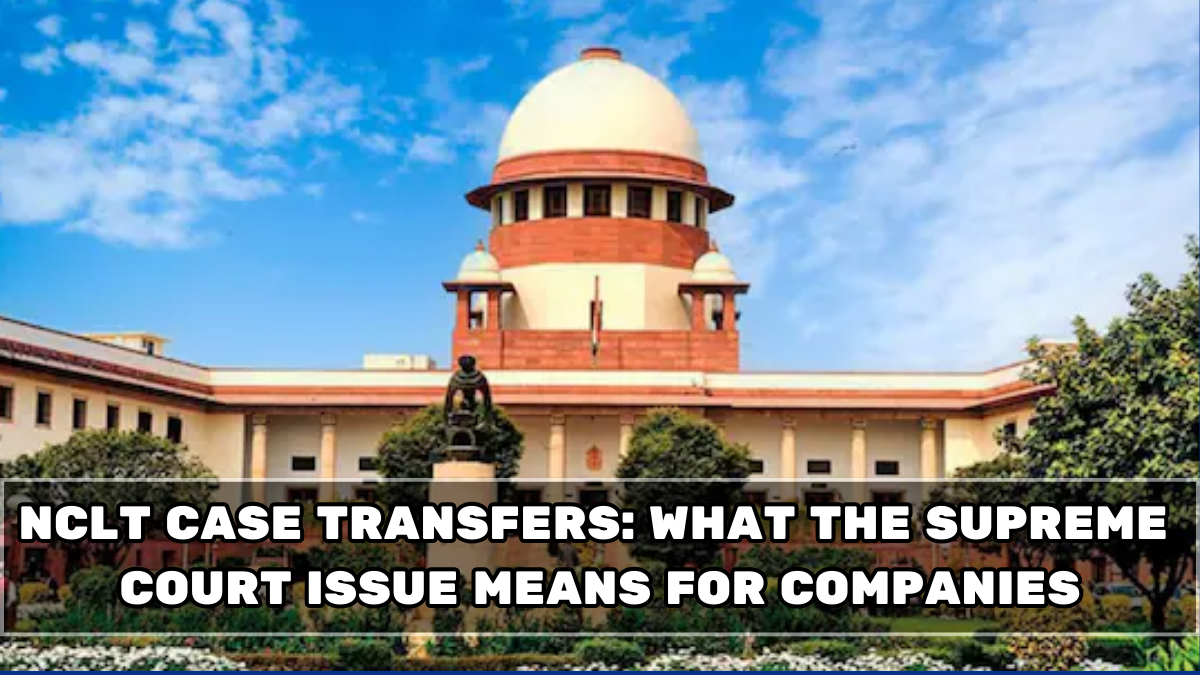
The NCLT case transfer Supreme Court issue is trending because it directly affects how fast—or slow—corporate disputes get resolved in India. For companies, startups, and promoters already stuck in long legal battles, even a procedural shift can mean months of delay or sudden acceleration. Most people see “case transfer” as a technical detail. It’s not. It decides who hears your case, where it’s heard, and how quickly decisions move.
This article explains the issue in plain language, why the Supreme Court is involved, and what this really means for businesses navigating NCLT proceedings.
What Is an NCLT Case Transfer
At its core, a transfer is about jurisdiction.
An NCLT case transfer means:
• Moving a case from one NCLT bench to another
• Shifting jurisdiction due to workload, conflict, or legal clarity
• Ensuring fair hearing or procedural consistency
Transfers are legal tools—not punishments.
Why the Supreme Court Got Involved
The NCLT case transfer Supreme Court discussion exists because conflicting interpretations started emerging.
Key reasons for intervention:
• Disputes over which bench has authority
• Allegations of forum shopping
• Inconsistent rulings across benches
• Concerns over procedural fairness
The Supreme Court steps in when uniformity is at risk.
Why Case Transfers Matter So Much
For companies, venue is not neutral.
Transfer decisions affect:
• Hearing speed
• Legal costs
• Strategy continuity
• Interim relief timelines
A case heard quickly in one bench may crawl in another.
Corporate Cases Most Affected by Transfers
Not all cases feel the impact equally.
High-impact categories include:
• Insolvency proceedings
• Shareholder disputes
• Merger objections
• Oppression and mismanagement cases
These cases are time-sensitive by nature.
Impact on Startups and Fast-Growing Companies
Startups feel this pain more sharply.
Why startups are vulnerable:
• Limited legal budgets
• Dependency on quick resolutions
• Investor confidence tied to outcomes
For them, an NCLT case transfer Supreme Court ruling can change survival timelines.
What “Forum Shopping” Means in This Context
This term is often misunderstood.
Forum shopping refers to:
• Choosing a bench perceived as favorable
• Filing cases strategically to gain advantage
• Creating jurisdictional ambiguity
Transfers are often used to neutralise this behavior.
How Transfers Can Delay or Accelerate Cases
Transfers cut both ways.
Potential delays:
• Re-hearing of arguments
• Fresh scheduling
• Administrative backlog
Potential acceleration:
• Moving cases to less-burdened benches
• Clarifying jurisdiction disputes
Outcome depends on execution—not intention.
What the Supreme Court Is Trying to Clarify
The court’s role is structural, not emotional.
Key clarifications sought:
• Who has final authority to order transfers
• When transfers are justified
• How to prevent misuse
Clarity reduces litigation gamesmanship.
Why Investors and Lenders Are Watching Closely
Legal timelines affect money.
Investors care because:
• Insolvency delays block recovery
• Uncertainty affects valuation
• Exit timelines get distorted
The NCLT case transfer Supreme Court issue directly touches capital confidence.
What Companies Should Prepare For
This isn’t a one-time event.
Companies should:
• Prepare for jurisdictional challenges
• Budget for procedural delays
• Align legal strategy with transfer risk
Ignoring procedural risk is costly.
What This Means for Insolvency Timelines
IBC cases are especially sensitive.
Transfer implications include:
• Missed statutory deadlines
• Extended resolution periods
• Increased creditor frustration
Speed is the backbone of insolvency law.
Will This Reduce or Increase Litigation
Short-term friction is likely.
But long-term:
• Clear rules reduce disputes
• Fewer tactical filings
• More predictable outcomes
Structure eventually beats chaos.
Why This Issue Is Trending Now
Timing explains virality.
Factors include:
• High-profile corporate cases
• Startup ecosystem growth
• Increased NCLT workload
Legal plumbing only trends when it leaks.
Conclusion
The NCLT case transfer Supreme Court issue is not a technical footnote—it’s a structural question that shapes how corporate justice functions. Transfers influence speed, cost, and fairness. For companies, startups, and investors, understanding this shift is essential because procedural clarity often decides outcomes before arguments do.
In corporate law, where your case is heard can matter as much as what your case is about.
FAQs
What is an NCLT case transfer?
It means moving a case from one NCLT bench to another for jurisdiction or fairness reasons.
Why did the Supreme Court intervene?
To resolve conflicting interpretations and prevent misuse of jurisdiction.
Do case transfers delay proceedings?
They can—but sometimes they speed things up depending on the bench.
Are startups affected by NCLT case transfers?
Yes, delays impact funding, operations, and investor confidence.
Will this lead to clearer rules?
That is the objective—uniformity and predictability.