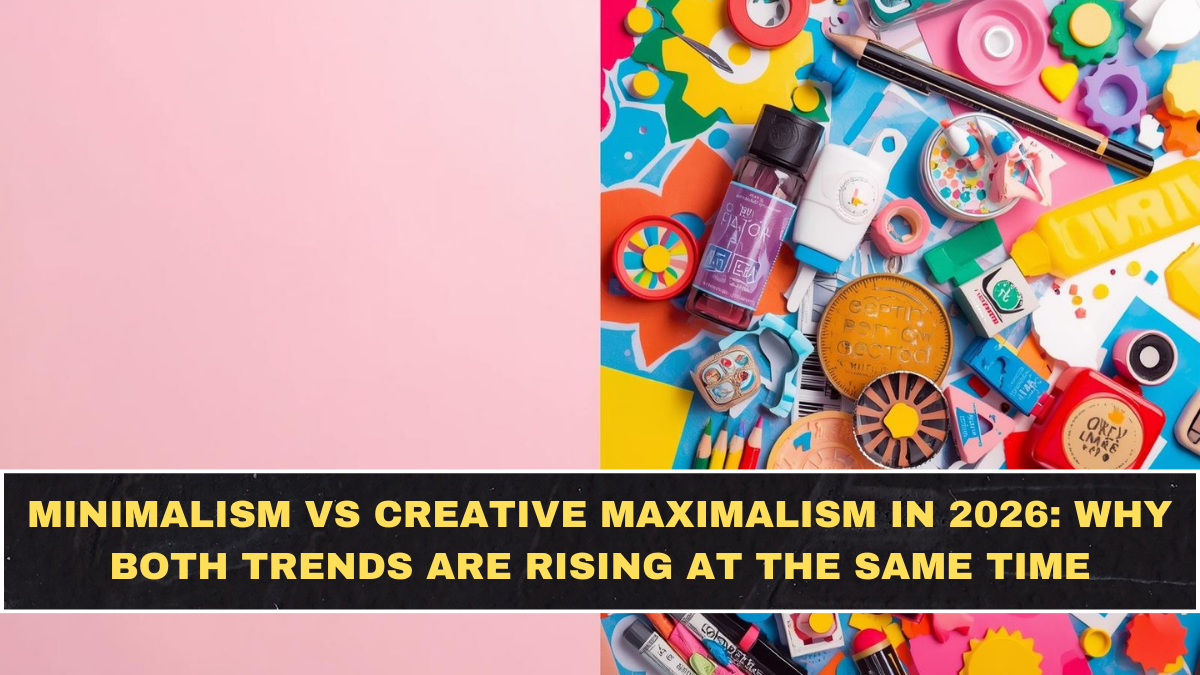
In 2026, culture feels oddly split in two directions at once. On one side, minimalism continues to thrive, emphasizing calm spaces, fewer possessions, and intentional living. On the other, creative maximalism is exploding across fashion, interiors, branding, and digital expression, celebrating color, chaos, layering, and personality. At first glance, these trends seem contradictory, yet both are rising simultaneously and strongly.
This coexistence is not accidental. It reflects how people are responding to overload, identity pressure, and constant visibility. Minimalism offers relief and control, while creative maximalism offers release and self-expression. In 2026, people are not choosing one lifestyle universally; they are choosing different modes for different parts of their lives.
Why Minimalism Still Resonates Deeply in 2026
Minimalism survives because mental fatigue has not gone away. Notifications, obligations, and digital noise continue to pile up, making simplicity feel like survival rather than style. Clean spaces, fewer choices, and visual quiet reduce cognitive strain in everyday life.
For many, minimalism is no longer about aesthetics but emotional regulation. It creates predictability and calm in an unpredictable world. In 2026, minimalism is less about owning nothing and more about removing friction wherever possible.
Why Creative Maximalism Is Rising Just as Fast
Creative maximalism is a reaction to emotional suppression. After years of curated feeds and neutral palettes, people crave visible personality. Color, texture, references, and playful excess signal individuality in a world that feels algorithmically flattened.
Maximalism thrives where expression matters more than efficiency. In fashion, digital content, and youth culture, standing out feels necessary. In 2026, maximalism becomes a language for saying “this is me” without explanation.
The Emotional Logic Behind Both Trends
Minimalism and maximalism solve different emotional problems. Minimalism reduces anxiety by limiting stimuli. Maximalism reduces numbness by increasing sensation and engagement.
People move between these modes depending on context. Calm at home, expressive online. Order in routines, chaos in creativity. In 2026, lifestyle choices are situational, not ideological.
How Social Media Amplified the Split
Algorithms reward extremes. Highly minimal spaces photograph cleanly and signal discipline. Maximalist visuals stop the scroll through visual intensity.
This creates parallel aesthetics that both perform well. Platforms do not push balance; they push clarity. In 2026, digital visibility accelerates both ends of the spectrum.
Minimalism Becomes “Realness,” Not Luxury
Earlier minimalism was often tied to wealth and aspirational emptiness. In 2026, it shifts toward practicality and honesty. Visible wear, imperfect materials, and functional layouts matter more than showroom perfection.
This “realness” minimalism focuses on living comfortably rather than looking curated. It values ease over elegance, making it accessible rather than elite.
Creative Maximalism as Participation Culture
Maximalism aligns with remix culture. Stickers, layers, references, memes, and mismatched elements invite interpretation.
Instead of consuming finished aesthetics, people add to them. In 2026, maximalism works because it invites participation rather than admiration.
How Brands Navigate This Duality
Brands no longer commit to one aesthetic globally. They segment. Calm, minimal product design paired with loud, expressive campaigns.
This flexibility allows brands to meet consumers in different emotional states. In 2026, adaptability matters more than consistency.
Interiors Reflect the Split Clearly
Homes are becoming hybrid spaces. Neutral foundations with expressive zones.
People keep bedrooms minimal for rest while turning living rooms or studios into creative environments. This layered approach reflects emotional needs, not design rules.
Fashion Shows the Same Pattern
Daily wear leans functional and minimal. Occasion wear becomes expressive and playful.
People conserve energy in routine and spend it on moments that matter. In 2026, fashion mirrors emotional budgeting.
Why Neither Trend Is “Winning”
Neither minimalism nor maximalism replaces the other because they address different psychological needs.
Trying to choose one permanently creates tension. Flexibility creates relief.
The coexistence itself is the trend.
What This Says About Identity in 2026
Identity is no longer singular. People present different versions of themselves across spaces.
Minimalism and maximalism become tools, not labels. They are expressions, not commitments.
In 2026, identity is modular.
Conclusion: The Future Is Not Balance, It’s Choice
The rise of minimalism and creative maximalism together is not a contradiction; it is a reflection of modern life. People want calm without silence and expression without chaos. They want control in some spaces and freedom in others.
In 2026, the most important shift is not which trend wins, but the permission people give themselves to switch. Lifestyle is no longer about loyalty to an aesthetic. It is about choosing what supports the moment you are in, without apology.
FAQs
Why are minimalism and maximalism both trending in 2026?
Because they solve different emotional needs: calm versus expression.
Is minimalism declining in popularity?
No, it is evolving into a more practical and realistic form.
Who is driving creative maximalism?
Younger audiences, creators, and participation-driven cultures.
Can both styles exist in the same space?
Yes, many people intentionally mix them by zone or purpose.
How should brands respond to this split?
By adapting tone and design to context instead of choosing one aesthetic.
Is this trend temporary?
No, it reflects long-term behavioral and emotional shifts.