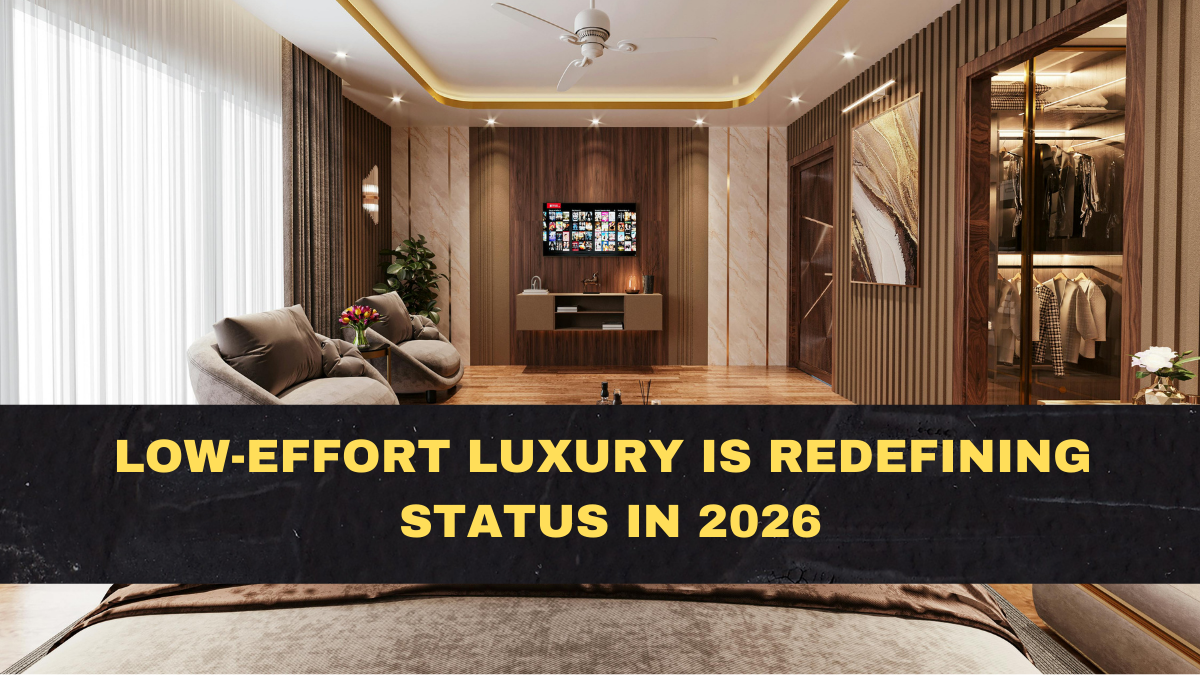
Luxury used to be loud. Logos, excess, and visible expense once defined status. In 2026, that definition feels outdated. Low effort luxury is quietly taking over as people redefine what it means to live well. Instead of signaling wealth through complexity or display, modern status is expressed through ease, comfort, and restraint.
This isn’t about buying less—it’s about doing less. The quiet luxury trend reflects a broader lifestyle shift where effortlessness itself becomes aspirational. The most desirable things now look simple, calm, and unforced.
What Low Effort Luxury Actually Means
Low effort luxury prioritizes ease over extravagance.
It typically shows up as:
• Comfortable but high-quality clothing
• Neutral, timeless design choices
• Minimal branding or none at all
• Experiences that remove friction
• Products that “just work” without explanation
Luxury becomes invisible rather than performative.
Why Loud Luxury Lost Its Appeal
Overexposure changed perception.
Consumers grew tired because:
• Logos became oversaturated
• Status signaling felt insecure
• Social media flattened exclusivity
• Wealth became performative rather than personal
What once impressed now feels obvious.
How the Quiet Luxury Trend Took Hold
Quiet luxury didn’t emerge overnight—it accumulated credibility.
It gained momentum through:
• Public fatigue with influencer excess
• Appreciation for craftsmanship
• Desire for longevity over trends
• Cultural shift toward understatement
Subtlety began to signal confidence.
Why Effortlessness Became Aspirational
Effort is visible—and visibility now signals strain.
Effortlessness appeals because it:
• Suggests control over time
• Implies resources without display
• Feels calm in chaotic environments
• Rejects constant optimization
Looking relaxed now communicates power.
Low Effort Luxury in Fashion and Style
Fashion reflects the shift most clearly.
Key signals include:
• Neutral palettes
• Relaxed tailoring
• High-quality basics
• Minimal accessories
Nothing looks “styled”—and that’s the point.
How This Lifestyle Shift Goes Beyond Products
Low effort luxury extends into daily life.
It influences:
• Home design focused on calm
• Travel choices prioritizing ease
• Food choices favoring simplicity
• Technology that fades into the background
Luxury becomes how life feels, not what it shows.
Why Younger Consumers Embrace This Shift
Younger consumers grew up online and exposed.
They gravitate toward low effort luxury because:
• They’ve seen excess lose meaning
• Authenticity matters more than status
• Burnout makes simplicity attractive
• Minimalism feels emotionally lighter
Restraint reads as maturity.
The Psychology Behind Low Effort Luxury
Psychologically, effortlessness reduces comparison.
It works because:
• It doesn’t invite competition
• It avoids trend-chasing
• It feels self-assured
• It removes the need for explanation
Confidence doesn’t announce itself.
How Brands Are Adapting to the Trend
Brands are learning that less sells more.
Adaptations include:
• Subtle branding
• Focus on materials and fit
• Long-term product lines
• Storytelling around craft, not hype
Excess marketing undermines the message.
Who This Trend Excludes—and Why That Matters
Low effort luxury isn’t universally accessible.
Barriers include:
• High entry costs
• Cultural interpretation gaps
• Misunderstanding restraint as laziness
The trend raises questions about inclusivity and perception.
Why Low Effort Luxury Is Sticking Around
This isn’t a passing aesthetic—it’s a value shift.
By late 2026:
• Status is defined by ease
• Excess signals insecurity
• Comfort outranks spectacle
• Calm becomes aspirational
Luxury aligns with well-being.
Conclusion
Low effort luxury is redefining status by rejecting noise, excess, and performance. Through the quiet luxury trend and a broader lifestyle shift, people are choosing comfort, simplicity, and effortlessness as markers of success. In 2026, true luxury doesn’t demand attention—it avoids it.
The most expensive thing now is ease.
FAQs
What is low effort luxury?
It’s a form of luxury defined by simplicity, comfort, and subtle quality rather than display.
How is quiet luxury different from traditional luxury?
Quiet luxury avoids logos and spectacle, focusing on materials and ease.
Why is this trend popular in 2026?
Because people are burned out by excess and value calm, control, and comfort.
Is low effort luxury only about fashion?
No. It influences lifestyle, travel, home design, and technology choices.
Will loud luxury disappear completely?
No, but it’s losing cultural dominance as values shift.