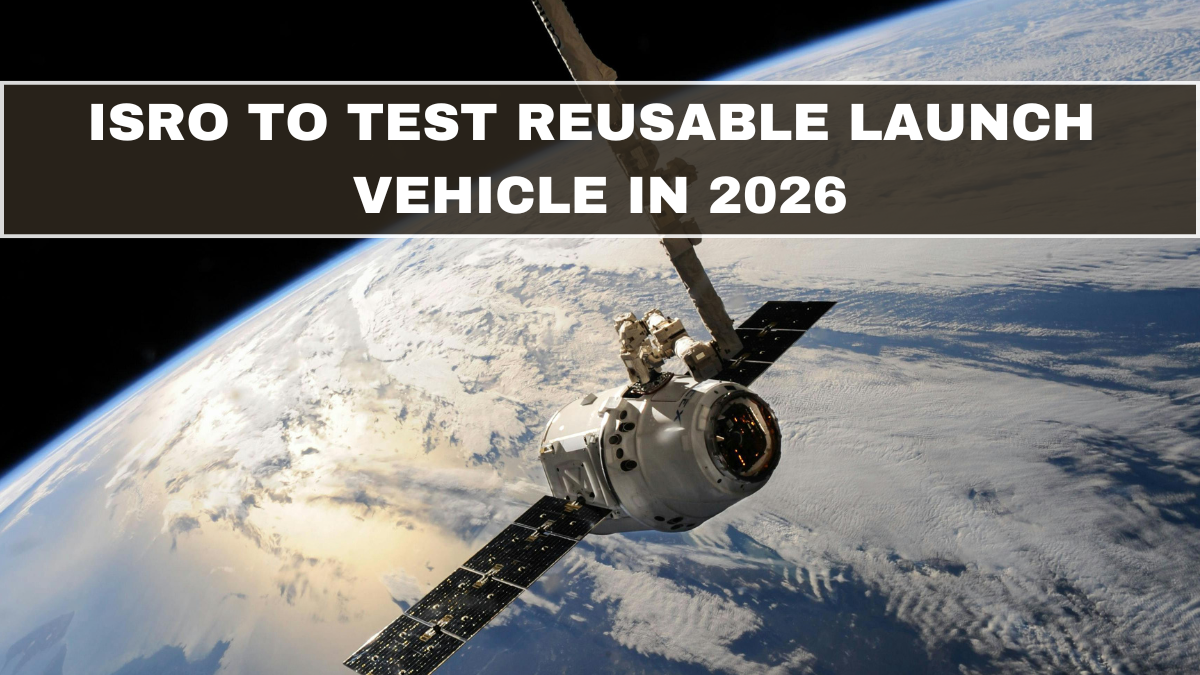
The Indian Space Research Organisation (ISRO) has announced plans to conduct a reusable launch vehicle (RLV) test in 2026, marking a significant milestone in India’s space ambitions. The ISRO reusable launch vehicle test aims to reduce launch costs, increase mission frequency, and enhance India’s capability in space technology. This initiative aligns with global trends where reusable rockets are being deployed to improve efficiency and sustainability in space operations.
ISRO’s RLV program represents the next step in India’s efforts to achieve advanced space capabilities, including satellite deployment, exploration missions, and potential commercial space ventures.
What Is the Reusable Launch Vehicle?
An RLV is a spacecraft or rocket system that can be launched, recovered, and reused for multiple missions. Key features include:
-
Cost Efficiency: Reusing components reduces manufacturing and operational costs.
-
Sustainable Operations: Minimizes space debris and promotes eco-friendly space launches.
-
Technological Advancement: Incorporates advanced materials, aerodynamics, and autonomous landing systems.
-
Rapid Mission Turnaround: Enables faster scheduling of satellite launches and space missions.
ISRO’s focus on reusable technology positions India to compete with international space agencies and private space ventures.
ISRO’s RLV Program Objectives
The ISRO reusable launch vehicle test has multiple objectives:
-
Demonstrate Technology: Test aerodynamics, thermal protection systems, and autonomous navigation during re-entry and landing.
-
Lower Launch Costs: Reusable components help reduce the cost of satellite deployment.
-
Increase Launch Frequency: Reusability allows for more frequent missions without building new rockets for every launch.
-
Support Future Missions: Enables complex missions such as deep space exploration and multi-satellite launches.
-
Strengthen Global Competitiveness: Positions India as a leader in cost-effective and advanced space technology.
This program reflects ISRO’s strategic vision to expand India’s capabilities in both governmental and commercial space sectors.
Previous Milestones and Tests
ISRO has already conducted successful precursor missions leading up to the 2026 RLV test:
-
RLV-TD Experiments: Earlier test flights of scaled-down RLV prototypes demonstrated autonomous landing and thermal protection technologies.
-
Hypersonic Flight Tests: High-speed flight experiments tested the vehicle’s stability and re-entry capabilities.
-
Technology Validation: Components like carbon composites, navigation systems, and re-entry guidance algorithms have been rigorously tested.
These foundational tests give ISRO confidence to move forward with a full-scale RLV test in 2026.
Importance for India’s Space Sector
The reusable launch vehicle is expected to transform India’s space capabilities in several ways:
-
Affordable Satellite Launches: Enables domestic and commercial satellites to be launched at lower costs.
-
Boosting Research & Innovation: Encourages academic and industry participation in advanced space technologies.
-
Global Collaboration: Opens doors for international partnerships and commercial contracts for launches.
-
Strategic Advantage: Enhances India’s capability for defense-related satellite deployment and space monitoring.
-
Economic Growth: Supports space-related industries, jobs, and private sector involvement.
By reducing costs and increasing flexibility, the RLV is a game-changer for India’s space ambitions.
Future Missions Supported by RLV
Once operational, the ISRO reusable launch vehicle could support:
-
Earth Observation Satellites: For climate monitoring, agriculture, and urban planning.
-
Communication Satellites: Expanding internet and telecommunication coverage across India.
-
Scientific Research Missions: Low-cost launches for experiments and observation satellites.
-
Commercial Launch Services: Catering to international clients seeking cost-effective satellite deployment.
-
Exploration Missions: Future missions to the Moon, Mars, and beyond may leverage reusable technology.
These applications underline the transformative potential of reusable launch systems for India’s space strategy.
Challenges and Considerations
Despite its potential, the RLV program faces technological and operational challenges:
-
Thermal Protection: Ensuring the vehicle withstands high temperatures during re-entry.
-
Precision Landing: Autonomous systems must reliably guide the vehicle back to designated landing zones.
-
Component Durability: Parts must withstand multiple launch cycles without degradation.
-
Cost vs. Investment: High initial R&D and infrastructure costs must be balanced against long-term savings.
-
Global Standards Compliance: Maintaining safety and reliability in line with international aerospace standards.
Addressing these challenges is critical to the successful deployment of reusable launch technology.
Conclusion
The ISRO reusable launch vehicle test in 2026 represents a major leap for India’s space sector. By demonstrating reusability, ISRO aims to reduce launch costs, enhance mission frequency, and strengthen India’s position in global space exploration. With successful technology validation and rigorous planning, the RLV program is set to revolutionize satellite deployment, foster innovation, and expand opportunities for both government and private sector participation in space missions. This milestone underscores India’s commitment to sustainable, advanced, and cost-effective space technology for the future.
FAQs
What is the ISRO reusable launch vehicle test?
It is a planned test of a rocket system that can be launched, recovered, and reused to reduce launch costs and increase mission frequency.
Why is RLV important for India?
RLV lowers satellite launch costs, promotes technological innovation, and positions India as a competitive player in space technology.
What previous tests has ISRO conducted for RLV?
ISRO completed RLV-TD flights, hypersonic tests, and technology validation of re-entry guidance and thermal protection systems.
What types of missions will RLV support?
RLV can launch Earth observation, communication, scientific, commercial, and exploration satellites at lower costs.
What challenges does the RLV program face?
Challenges include thermal protection, precision landing, component durability, investment costs, and adherence to global aerospace standards.
Click here to know more.