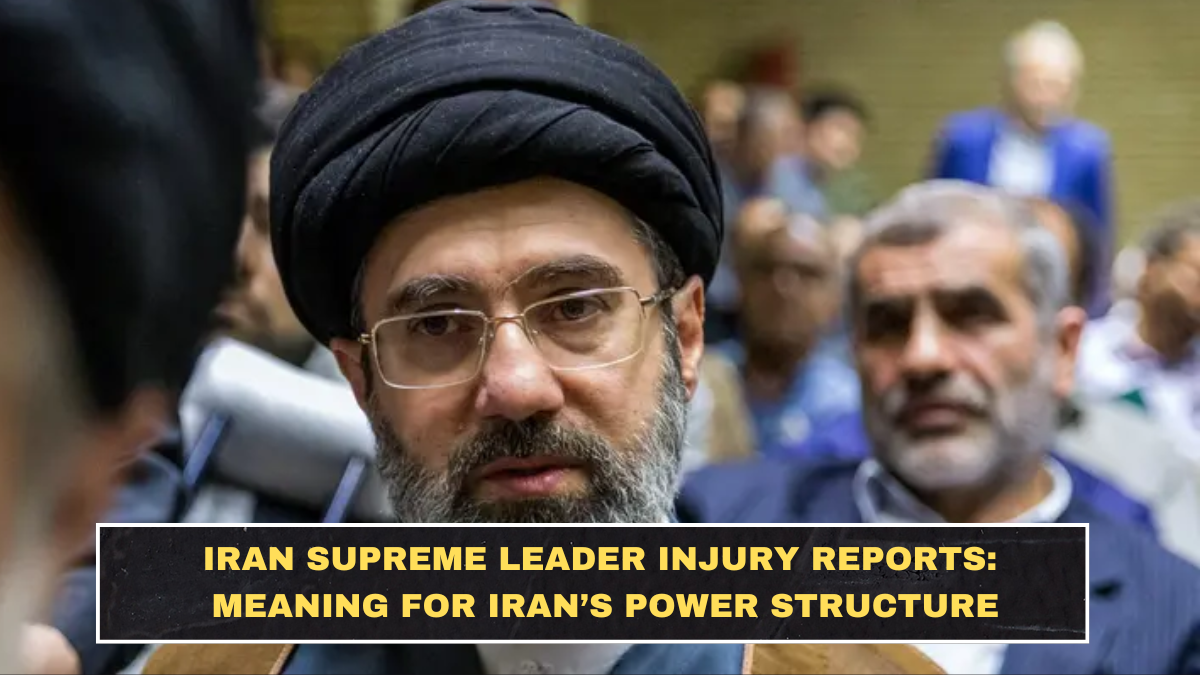
Fresh reports about Iran’s supreme leader being badly wounded matter because they deepen uncertainty at the top of a system that is already under severe military, diplomatic, and economic pressure. Reuters reported on April 11 that Iran’s current supreme leader, Mojtaba Khamenei, is recovering from severe facial and leg injuries suffered in the February 28 airstrike that killed his father, former supreme leader Ali Khamenei. Reuters said the wounds were disfiguring, that he may have lost a leg, and that he is still taking part in high-level decisions remotely.
That distinction matters because a lot of people are still confusing the two men. Ali Khamenei is not the injured leader in the current reports. He was reported killed in the opening strikes of the war, and Mojtaba Khamenei was then elevated as successor on March 8. AP and Reuters both describe Mojtaba as the current supreme leader, and both note that he has not appeared publicly since being wounded.
What is actually being reported about the injury?
The strongest current reporting comes from Reuters, which says sources close to Mojtaba’s circle and U.S. officials described severe injuries to his face and leg, with possible loss of a leg. Reuters also reports that despite the injuries, he is considered mentally fit and remains involved in decision-making from a secure location. AP has separately reported that Mojtaba has not been publicly seen since being wounded.
This is important because absence creates its own political story. In a system built on symbolism, authority, and fear, not being seen is not a minor detail. Reuters reported that the Iranian regime has released no new images or recordings of Mojtaba since his appointment, and that his silence has fed speculation about both his condition and his grip on power.
Why does this matter for Iran’s power structure?
Because Mojtaba was already seen as a weaker and more dependent leader than his father. Reuters has reported that the Revolutionary Guards played a central role in pushing his elevation and that his authority is closely tied to their backing. If he is seriously injured and physically absent, that dependence likely becomes even stronger. That does not automatically mean he loses power, but it does mean power may be exercised even more through security institutions around him rather than through visible personal leadership.
That is the real issue people should focus on. The injury is not only about health. It is about who actually governs if the new supreme leader cannot appear, cannot project control, and must rule remotely during war talks and internal crisis. Reuters explicitly says his rise already signaled greater Revolutionary Guard influence. The injury makes that more, not less, likely.
Does this change the succession question again?
Not immediately, but it reopens it in practice even if not in law. Reuters reported in March that Mojtaba’s elevation followed pressure from the Revolutionary Guards on wavering senior clerics. AP also reported that earlier in March, a leadership council was discussing the Assembly of Experts process for selecting the next supreme leader. That means the system only recently forced a succession under wartime conditions. Serious injury at the top could easily revive quiet fears about continuity all over again.
The uncomfortable truth is simple: a regime that just went through one violent leadership transition does not want to look vulnerable to another one. So even if Mojtaba stays in post, his condition matters because it affects how stable that transition really is.
Which political effects matter most right now?
| Issue | Why it matters now |
|---|---|
| Public absence | A supreme leader who cannot appear publicly looks vulnerable in the middle of crisis. |
| Revolutionary Guards influence | Reuters says the Guards helped elevate Mojtaba and may now wield even more real power. |
| Negotiations with the U.S. | Injury reports land just as high-stakes talks are underway in Islamabad. |
| Regime legitimacy | Rumors like “Where is Mojtaba?” reflect doubt about visibility and authority. |
| Future succession risk | A wounded new leader revives questions the regime wanted closed after March. |
Could this affect the current diplomacy?
Yes, because timing matters. Reuters published the injury report the same day U.S.-Iran talks began in Islamabad, and AP has said the ceasefire remains tentative and fragile. A leader who is badly wounded, unseen, and ruling remotely may have less room to look flexible, because compromise can look like weakness when internal legitimacy is already in question. On the other hand, a system under strain may also want negotiations precisely because it needs breathing space. Both interpretations are plausible, which is why the reports matter.
What would be foolish is pretending the injury is just a personal medical story. It lands in the middle of succession politics, Revolutionary Guard influence, ceasefire management, and direct talks with Washington. In other words, it lands at the exact point where the Iranian system is least able to absorb uncertainty.
What should people be careful about when reading these reports?
They should separate verified reporting from rumor. Reuters and AP both support the broad point that Mojtaba Khamenei was wounded and has not appeared publicly since taking office. Reuters provides the more detailed account of severe and disfiguring injuries. But outside those reported facts, there is still a lot nobody can honestly claim with certainty: the exact medical condition, long-term recovery, or whether his physical weakness will directly produce a political fracture.
That means the smart reading is disciplined, not dramatic. The injury reports are important because they increase uncertainty, not because they prove imminent collapse. Anyone claiming they already know exactly how this ends is guessing.
Conclusion
The current injury reports matter because they point to a wounded, unseen, newly installed supreme leader trying to govern during war diplomacy and internal pressure. Reuters says Mojtaba Khamenei suffered severe injuries in the strike that killed his father, and AP confirms he has not been seen publicly since. That alone is enough to make this a major political story, not just a health update.
The bigger issue is what the injury does to Iran’s power structure. Mojtaba already appeared more dependent on the Revolutionary Guards than his father. If he remains physically absent and visibly weakened, that dependence could deepen. That does not guarantee a fresh succession fight, but it absolutely means Iran’s leadership is less stable than it wants the world to believe.
FAQs
Who is the injured Iranian supreme leader in the current reports?
The current reports concern Mojtaba Khamenei, not Ali Khamenei. Ali Khamenei was reported killed in the February 28 strike, and Mojtaba became supreme leader on March 8.
How badly was Mojtaba Khamenei injured?
Reuters reported that he suffered severe and disfiguring facial and leg injuries and may have lost a leg, though he remains mentally capable and involved in decisions remotely.
Has Mojtaba Khamenei appeared in public since becoming supreme leader?
Reuters says no new images or recordings have been released since his appointment, and AP also reports that he has not been publicly seen since being wounded.
Why do these injury reports matter politically?
Because Mojtaba was already seen as relying heavily on the Revolutionary Guards. Serious injury and continued public absence can increase doubts about his authority and widen the Guards’ practical control over the system.