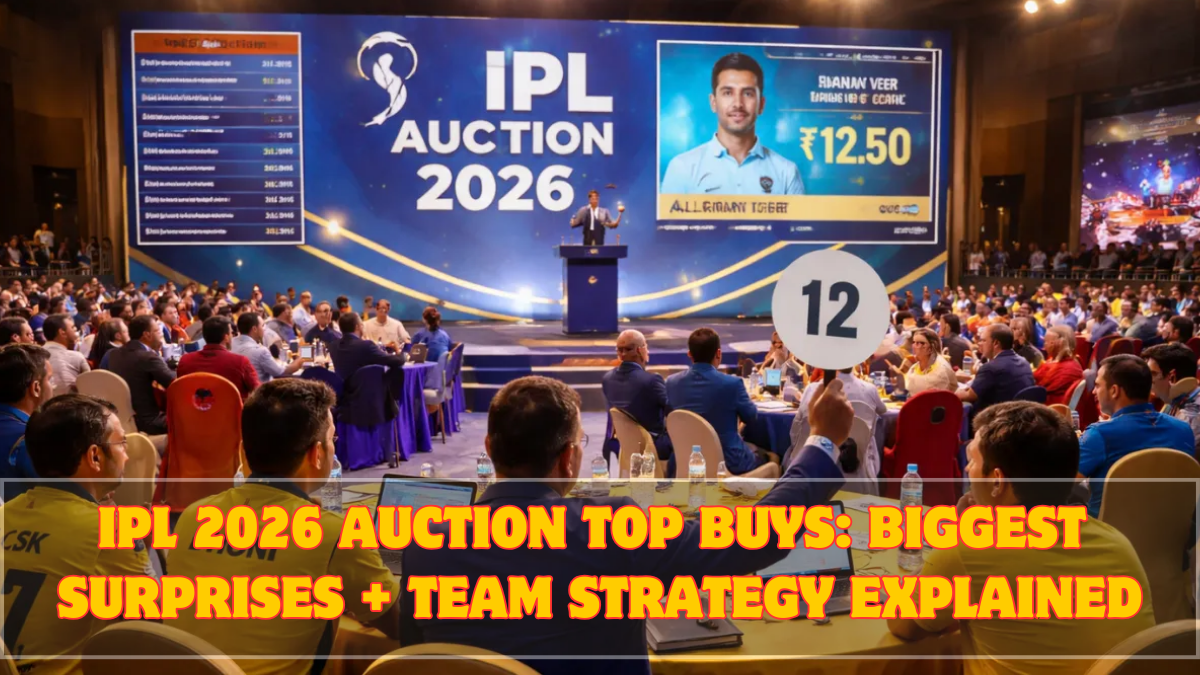
The IPL 2026 auction top buys tell a much bigger story than price tags. Every auction looks chaotic on the surface—paddles flying, last-minute bids, shocked reactions—but underneath, teams are following very specific strategies. Some franchises paid big for stability, others gambled on upside, and a few quietly rebuilt entire cores without headline noise.
This breakdown explains who went big, why they did it, and what it reveals about each team’s 2026 plan, without auction jargon or fan bias.
Why the IPL 2026 Auction Felt Different
The IPL Auction marked a clear shift in thinking.
Key differences this year:
• Less obsession with “star power”
• More focus on role clarity
• Heavy demand for Indian core players
• Shorter patience for inconsistency
Teams weren’t just buying players—they were buying certainty.
What Counts as a “Top Buy” in 2026
Top buys aren’t always the most expensive names.
In 2026, a top buy means:
• Fits a specific role
• Solves a known weakness
• Can start immediately
• Matches team conditions
A ₹20+ crore tag without role clarity is no longer impressive.
Most Expensive Players: What Teams Paid For
The most expensive players went high for clear reasons.
Why teams paid premium prices:
• Proven performance under pressure
• Multi-skill utility (bat + bowl / bowl + bat)
• Leadership experience
• Low-risk consistency
High bids were about reducing uncertainty, not hype.
The Biggest Surprises of the Auction
Every IPL auction has “wait, what?” moments.
This year’s surprises included:
• Proven names going underpriced
• Uncapped players triggering bidding wars
• Overseas stars being ignored late
• Teams walking away early from bidding
These weren’t mistakes—they reflected shifting priorities.
Why Uncapped Indian Players Were in Demand
This trend was impossible to miss.
Reasons teams chased uncapped talent:
• Impact Player rule flexibility
• Cost efficiency
• Local condition familiarity
• Long-term squad building
Teams are investing earlier in domestic pipelines.
Team Strategy Shift: Specialists Over All-Rounders
Earlier auctions chased generic all-rounders.
In 2026:
• Teams preferred clear specialists
• Defined batting roles mattered
• Bowling matchups were prioritized
Specialists simplify captaincy decisions.
How Each Team Approached the Auction (Big Picture)
Most teams followed one of three approaches.
Broad strategies seen:
• Core reinforcement (small fixes)
• Aggressive rebuild (multiple changes)
• Tactical plug-ins (specific gaps)
Understanding this explains why some teams looked “quiet” but smart.
Why Some Big Names Went Unsold
Unsold doesn’t mean unwanted.
Common reasons big names were skipped:
• Injury concerns
• Role overlap
• High base price
• Poor recent form in Indian conditions
Teams are less sentimental now.
Squad Analysis: Balance Over Brilliance
Good squads win tournaments—not highlight reels.
Strong squad traits in 2026:
• Bench strength
• Bowling depth
• Left-right batting balance
• Flexible playing XIs
This is why some “boring” auctions were actually excellent.
Impact Player Rule Changed Auction Math
The rule reshaped valuations.
Impact Player influence:
• Bowlers gained value
• Pure hitters found niches
• All-rounders lost monopoly
Teams optimized for matchups, not balance illusions.
Why Overseas Players Faced Tougher Competition
Foreign slots are limited—and teams used them carefully.
Overseas picks were chosen for:
• Match-winning spikes
• Specific pitch suitability
• Tactical flexibility
Average overseas players struggled to attract bids.
Hidden Value Picks Most Fans Missed
Not all smart buys trend on social media.
Hidden value picks:
• Reliable domestic bowlers
• Middle-order anchors
• Fielding specialists
These players win tight games quietly.
What the Auction Reveals About IPL 2026 Season Style
The league is evolving.
Expect:
• Lower tolerance for slow starts
• Tactical bowling changes
• Data-driven selections
• Faster mid-season adjustments
Strategy depth is increasing every year.
Which Teams Improved the Most on Paper
Improvement isn’t about spending.
Teams that improved:
• Filled multiple gaps
• Reduced dependency on one star
• Strengthened bench options
Paper strength often predicts early momentum.
Common Fan Misreads After the Auction
Fans often judge emotionally.
Common misreads:
• “They didn’t buy big names”
• “Auction was boring”
• “They overspent”
Context matters more than headlines.
What Matters More Than Auction Wins
Auctions don’t win titles—execution does.
Key success factors:
• Injury management
• Captaincy decisions
• Playing XI consistency
• Form at the right time
The auction only sets the stage.
Conclusion
The IPL 2026 auction top buys show a league getting sharper, calmer, and more strategic. Teams prioritized role clarity, domestic depth, and low-risk performance over flashy names. While surprises and big bids grabbed attention, the real story lies in how franchises quietly built squads designed to adapt, rotate, and win under pressure.
The smartest auction doesn’t always look exciting—but it usually pays off.
FAQs
Who were the most expensive buys in IPL 2026?
The highest bids went to proven performers with clear roles and consistent records.
Why did some star players go unsold?
Injuries, role overlap, high base prices, and recent form worked against them.
Are uncapped players becoming more important?
Yes. Teams value cost-effective domestic talent under the Impact Player rule.
Did teams overspend in the auction?
Mostly no—bids reflected risk management, not emotion.
Does winning the auction guarantee IPL success?
No. Match execution, fitness, and leadership matter more than auction results.