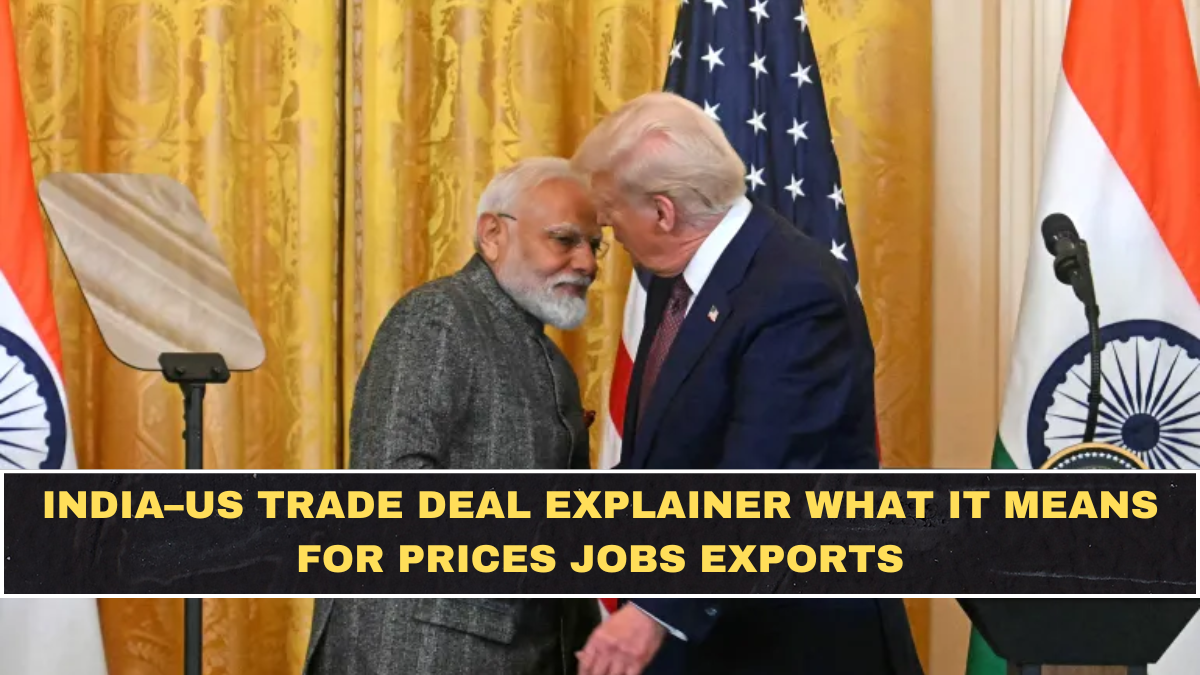
The India–US trade relationship has always been less about single announcements and more about slow recalibration. In 2026, that recalibration has become visible again through a trade deal framework that adjusts tariffs, access rules, and sector-level cooperation. While headlines tend to frame it as a win or loss, the real impact sits in how prices move, which industries gain breathing room, and where job creation or pressure shows up next.
This article explains the deal in practical terms. Instead of focusing on diplomatic language, it looks at what actually changes on the ground for businesses, workers, and consumers. The goal is to understand direction and consequence, not hype or fear.
What the India–US Trade Deal Is Really About
At its core, the 2026 trade deal is about smoothing friction rather than rewriting the entire relationship. It addresses specific pain points that had built up around tariffs, compliance barriers, and sector access. Rather than a single sweeping agreement, it functions as a targeted reset.
The focus is on predictability. Both sides benefit when exporters and importers can plan without sudden rule shifts. This deal signals a preference for stability over confrontation, especially at a time when global supply chains remain sensitive.
How the Deal Affects Prices for Consumers
For consumers, the most noticeable impact tends to arrive quietly. Reduced tariffs or eased trade barriers can lower input costs for companies, which may eventually reflect in product pricing. However, these changes are gradual rather than immediate.
In sectors like electronics, industrial components, and certain consumer goods, cost pressures ease slightly. That does not always translate into sharp price drops, but it does help prevent further inflation driven by trade friction.
Impact on Indian Exports to the US
Indian exporters stand to benefit from clearer access conditions and reduced uncertainty. Sectors such as manufacturing, engineering goods, and select agricultural products gain from smoother entry and fewer administrative delays.
What matters most is reliability. When exporters know rules are unlikely to change mid-cycle, they invest more confidently in scaling operations. This creates a longer-term export advantage rather than a short-term spike.
What It Means for Jobs in India
Job impact from trade deals is rarely instant, but it is real. Increased export activity supports employment in manufacturing, logistics, and ancillary services. The effect is strongest in regions already tied into global supply chains.
At the same time, some domestic industries face stronger competition. This does not necessarily lead to job losses, but it does push firms to improve efficiency. The net employment effect depends on how quickly businesses adapt.
US-Side Implications That Affect India Indirectly
The deal also reflects shifts in US trade priorities. By recalibrating terms with India, the US diversifies supply chains and reduces overdependence on a narrow set of partners. That strategic diversification indirectly benefits Indian producers.
For India, this means greater relevance in global trade flows. Being positioned as a reliable alternative partner strengthens long-term demand, even when global conditions fluctuate.
Which Sectors Are Most Affected
Not all sectors feel the impact equally. Manufacturing-linked industries, technology services, and select energy-related segments see the clearest effects. These areas already operate at scale and can respond quickly to improved access.
Smaller or highly regulated sectors may see slower change. For them, compliance and standards alignment matter more than tariffs alone. The deal opens doors, but walking through them still requires preparation.
Why This Deal Matters in 2026 Specifically
The timing of the deal is important. Global trade in 2026 is shaped by uncertainty around geopolitics, energy flows, and inflation management. In that environment, stable bilateral agreements carry more weight than ambitious multilateral promises.
This deal signals that both countries prefer managed cooperation over abrupt trade shocks. That reassurance matters to markets, investors, and businesses making medium-term plans.
What the Deal Does Not Do
It does not eliminate all trade barriers. Many sensitive sectors remain protected, and disputes still exist. The deal is not a blanket free-trade agreement, nor does it override domestic policy priorities.
Understanding these limits prevents unrealistic expectations. The agreement improves conditions, but it does not remove every structural challenge overnight.
How Businesses Should Read This Deal
For businesses, the deal is a signal rather than a shortcut. It suggests a friendlier operating environment, but success still depends on competitiveness, compliance, and market understanding.
Companies that respond by investing in quality, scale, and reliability are best positioned to benefit. Those waiting for immediate windfalls may be disappointed.
What to Watch Going Forward
The most important developments will come through implementation. How customs processes adapt, how disputes are handled, and whether follow-up adjustments occur will determine real impact.
Watching sector-specific notifications and operational changes matters more than tracking political statements after the announcement phase fades.
Conclusion: A Directional Shift, Not a Dramatic Break
The India–US trade deal of 2026 is best understood as a directional shift. It lowers friction, improves predictability, and strengthens long-term trade ties without promising instant transformation. Its value lies in what it enables over time, not what it declares upfront.
For consumers, businesses, and workers, the impact unfolds gradually. Those who understand the mechanics early can position themselves ahead of the curve, which is where trade deals truly deliver value.
FAQs
Is this a full free-trade agreement between India and the US?
No, it is a targeted trade framework addressing specific issues, not a comprehensive FTA.
Will prices fall immediately because of this deal?
Price effects are gradual and depend on how businesses pass on reduced costs.
Which Indian sectors benefit the most?
Manufacturing-linked exports, engineering goods, and select services see clearer gains.
Does the deal create jobs in India?
It can support job creation indirectly through higher export activity and investment.
Are any sectors negatively affected?
Some domestic industries face increased competition, but impact varies by sector.
What matters most after the deal is announced?
Implementation and consistency in applying the new trade terms matter most.