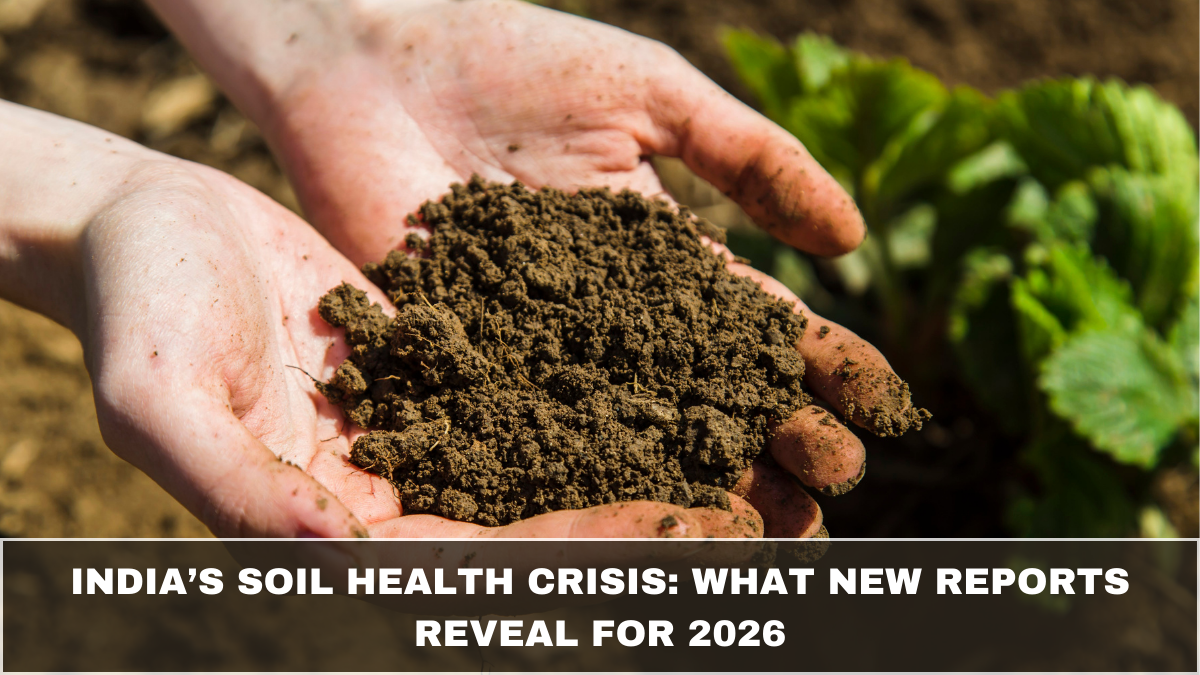
India’s agriculture sector, which supports millions of livelihoods, is facing a critical challenge in 2026: declining soil health. Recent studies and reports indicate that soil fertility is deteriorating at an alarming rate due to overuse of chemical fertilizers, unsustainable farming practices, monocropping, and inadequate organic matter replenishment. This trend poses serious threats to crop yields, food security, and rural incomes.
The soil health crisis in India is becoming a national concern as policymakers, scientists, and farmers seek solutions. Soil is a non-renewable resource in practical terms; its depletion could have cascading effects on agriculture, economy, and the environment. Understanding the drivers, impacts, and mitigation strategies is vital to safeguard India’s agricultural future.
What Is Causing Soil Health Decline in India?
Experts identify multiple factors contributing to the soil health crisis:
-
Excessive Chemical Fertilizers: Over-reliance on nitrogen, phosphorus, and potassium (NPK) fertilizers has depleted micro-nutrients.
-
Monocropping Practices: Repeated cultivation of the same crops reduces soil fertility and biodiversity.
-
Soil Erosion: Water and wind erosion remove nutrient-rich topsoil, especially in rainfed and hilly regions.
-
Deforestation and Land Degradation: Conversion of forests and grasslands into agricultural lands disrupts soil ecosystems.
-
Poor Irrigation Practices: Salinization and waterlogging degrade soil quality in some regions.
These factors collectively reduce organic content, affect soil structure, and diminish its ability to support crops sustainably.
Impacts on Agriculture and Food Security
The soil health crisis has direct and indirect consequences for Indian agriculture:
-
Declining Crop Yields: Fertility loss lowers productivity, forcing farmers to increase input costs.
-
Higher Costs for Farmers: More fertilizers, water, and labor are needed to maintain yields.
-
Reduced Nutritional Quality: Crops grown in nutrient-poor soil may have lower protein, vitamins, and minerals.
-
Food Security Threats: India’s growing population depends on stable agricultural output, making soil health critical.
-
Economic Vulnerability: Millions of small and marginal farmers risk income losses if soil quality continues to decline.
Sectors like horticulture, pulses, and cereals are especially sensitive to soil degradation, affecting both domestic consumption and export potential.
Regional Trends in Soil Degradation
Different regions in India are facing unique soil health challenges:
-
Northern Plains: Intensive rice-wheat cropping cycles have led to nutrient depletion.
-
Southern India: Excessive fertilizer use in paddy and sugarcane fields is affecting micro-nutrients.
-
Western India: Salinity and alkalinity issues are prevalent in Gujarat and Rajasthan.
-
Eastern India: Soil erosion and flooding reduce fertility in Bihar, Odisha, and West Bengal.
-
Hilly Regions: Deforestation accelerates erosion, affecting terraced farming areas.
Understanding regional differences is key to implementing effective soil health management programs.
Government Initiatives to Address the Crisis
The Indian government has introduced multiple schemes and programs to counter soil degradation:
-
Soil Health Card Scheme: Provides farmers with nutrient profiles and customized fertilizer recommendations.
-
Organic Farming Incentives: Encourages reduced chemical use and promotes compost, bio-fertilizers, and crop rotation.
-
Watershed Management Programs: Prevents erosion, improves water retention, and enhances soil fertility.
-
Capacity Building: Training farmers on sustainable practices such as intercropping, cover cropping, and minimal tillage.
-
Research & Innovation: Supporting development of soil-friendly technologies, micro-nutrient supplements, and AI-assisted soil monitoring.
These initiatives aim to restore fertility, optimize input use, and build awareness among farmers about sustainable agriculture.
How Farmers Can Improve Soil Health
Beyond government support, farmers are adopting practical strategies to rejuvenate soil:
-
Crop Rotation and Diversification: Planting legumes and varied crops improves nitrogen content.
-
Organic Manure and Compost: Adding farmyard manure, green manure, and compost replenishes nutrients.
-
Cover Cropping: Prevents erosion, improves soil structure, and retains moisture.
-
Reduced Tillage Practices: Minimal soil disturbance preserves micro-organisms and soil structure.
-
Soil Testing: Regular soil analysis helps determine nutrient deficiencies and guides fertilizer application.
Implementing these practices helps restore soil fertility while reducing dependency on chemical inputs.
Long-Term Implications
If left unchecked, India’s soil health crisis could have far-reaching consequences:
-
Agricultural Sustainability Threatened: Land productivity may decline, jeopardizing food security.
-
Rural Livelihood Risks: Farmers face income losses, which may increase rural distress and migration.
-
Environmental Impact: Poor soil management contributes to greenhouse gas emissions, erosion, and reduced biodiversity.
-
Economic Consequences: Lower yields and higher costs could impact both domestic markets and exports.
Mitigation requires urgent attention from policymakers, scientists, and farmers working together.
Conclusion
India’s soil health crisis in 2026 is a wake-up call for sustainable agriculture. Declining fertility, nutrient depletion, and erosion threaten crop productivity, food security, and rural livelihoods. While government initiatives, organic practices, and farmer awareness can help, urgent and coordinated action is essential. By adopting sustainable soil management practices and monitoring nutrient use, India can secure its agricultural future and ensure long-term food security while protecting the environment.
FAQs
What is causing India’s soil health crisis?
Overuse of chemical fertilizers, monocropping, soil erosion, deforestation, and poor irrigation practices are key factors.
How does soil degradation affect food security?
Declining fertility lowers crop yields and nutrient quality, threatening the availability and affordability of food.
Which regions in India are most affected?
Northern plains, southern states, western regions with salinity issues, eastern flood-prone areas, and hilly terrains all face unique challenges.
What government programs address soil health?
The Soil Health Card Scheme, organic farming incentives, watershed management, and farmer training initiatives are key programs.
How can farmers improve soil fertility?
Practices like crop rotation, organic manure application, cover cropping, reduced tillage, and regular soil testing help restore soil health.