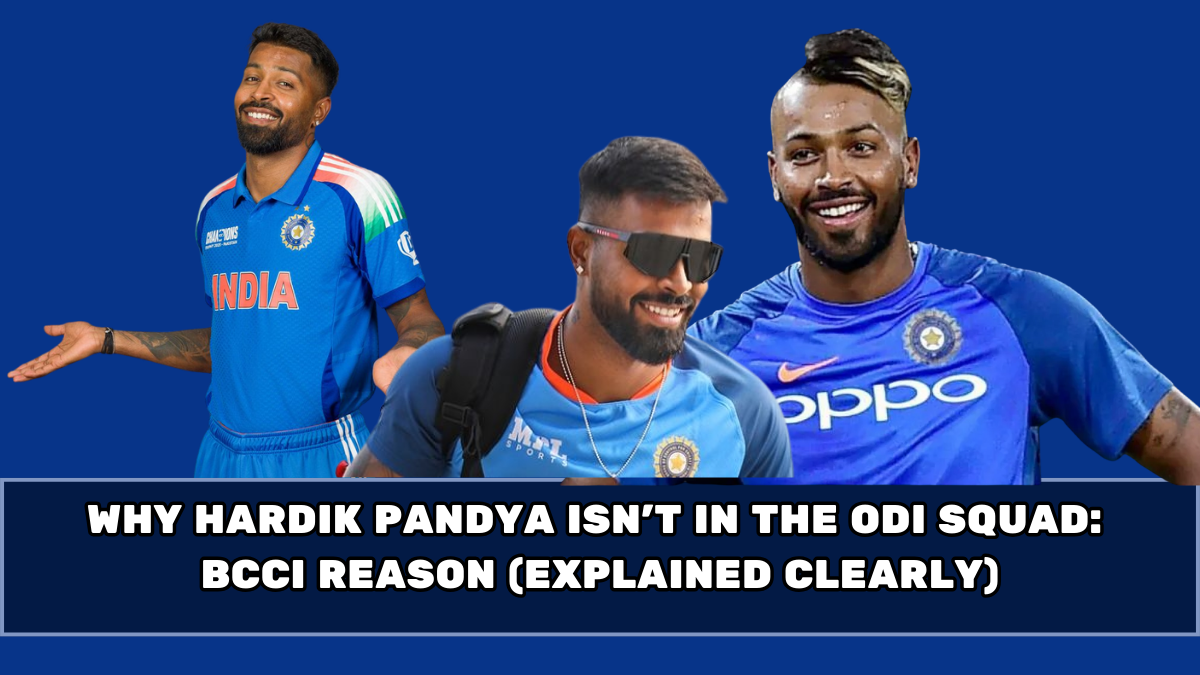
Hardik Pandya missing ODI squad immediately triggered speculation—injury rumors, rift theories, and form debates flooded timelines. Most of that noise ignores one uncomfortable truth: Hardik’s value to Indian cricket is too high to be managed casually. The decision to keep him out isn’t about punishment, politics, or panic. It’s about control.
This article explains the BCCI’s reasoning in plain terms, what “workload management” actually means in Hardik’s case, why bowling fitness matters more than batting form here, and what realistically comes next.
What the BCCI Officially Said
The BCCI explanation has been consistent and deliberate.
Key points communicated:
• Focus on workload management
• Emphasis on long-term bowling fitness
• Avoiding overlap across formats
• Prioritising availability over short-term selection
This isn’t vague language—it’s strategic caution.
What “Workload Management” Really Means
This phrase gets mocked, but it’s specific.
In Hardik’s case, workload means:
• Limiting bowling overs across formats
• Managing recovery between spells
• Avoiding back-to-back series strain
• Preventing recurrence of past injuries
Hardik isn’t being rested because he’s fragile—he’s being protected because he’s irreplaceable.
Why Bowling Fitness Matters More Than Batting
This is the key misunderstanding.
Hardik as a batter:
• Can play without physical overload
Hardik as a bowler:
• Takes repeated impact
• Faces higher injury risk
• Requires recovery windows
The Hardik Pandya missing ODI squad decision is about preserving his bowling—not questioning his batting.
Why ODIs Are the First Format to Be Sacrificed
This isn’t emotional—it’s tactical.
Why ODIs take the hit:
• ODIs demand sustained bowling spells
• Limited recovery gaps in bilateral series
• Less flexible role compared to T20s
Test cricket has different physical rhythms. T20s allow controlled bursts. ODIs sit awkwardly in between.
Why This Isn’t a Demotion or Signal Loss
Some fans are reading too much into absence.
What this is NOT:
• Not a loss of trust
• Not a form-related snub
• Not a leadership downgrade
Hardik remains a first-choice all-rounder when conditions align.
How Past Injuries Shape This Decision
History matters—even if fans ignore it.
Key context:
• Recurring stress-related injuries
• Long rehabilitation cycles previously
• Limited bowling workloads post-return
Ignoring history is how careers get shortened.
What This Means for India’s Squad Balance
Hardik’s absence forces adjustment.
Immediate effects:
• Different all-rounder combinations
• More reliance on specialist bowlers
• Clearer role separation
This isn’t ideal—but it’s manageable short-term.
Who Fills the Gap in His Absence
No one replaces Hardik one-to-one.
Instead, teams compensate by:
• Splitting batting and bowling roles
• Using part-time options selectively
• Leaning on depth rather than balance
That’s the trade-off for protecting a premium asset.
When Could Hardik Return to ODIs
This is the most asked question.
Realistic triggers for return:
• Bowling workload stabilisation
• Medical clearance for sustained spells
• Series importance outweighing risk
There is no fixed date—only fitness thresholds.
What Fans Should Stop Assuming
This needs saying clearly.
Stop assuming:
• Absence equals decline
• Rest equals weakness
• Selection equals reward or punishment
Modern cricket selection is resource management.
Why This Decision Is Actually Sensible
It’s unpopular—but logical.
Why it makes sense:
• Extends Hardik’s career
• Preserves all-rounder impact
• Avoids burnout before major tournaments
Short-term pain protects long-term gain.
What This Signals About BCCI’s Approach
This reflects a shift.
BCCI is now:
• Proactive, not reactive
• Data-driven in fitness decisions
• Willing to face fan backlash
That’s how elite teams operate.
Conclusion
The Hardik Pandya missing ODI squad decision isn’t a mystery—it’s a calculated choice rooted in fitness management, bowling longevity, and long-term planning. Hardik’s absence is not about what he can’t do today, but about ensuring he can deliver when it truly matters.
Sometimes the smartest selection decision is the one fans hate the most.
FAQs
Why is Hardik Pandya missing from the ODI squad?
Due to workload management and focus on bowling fitness.
Is Hardik Pandya injured right now?
No confirmed injury—this is a preventive decision.
Will Hardik return to ODIs soon?
Only when bowling workload thresholds are safely met.
Does this affect his place in the team long-term?
No—he remains a key all-rounder when fit.
Why not rest him from T20s instead of ODIs?
ODIs demand sustained bowling spells, increasing injury risk.