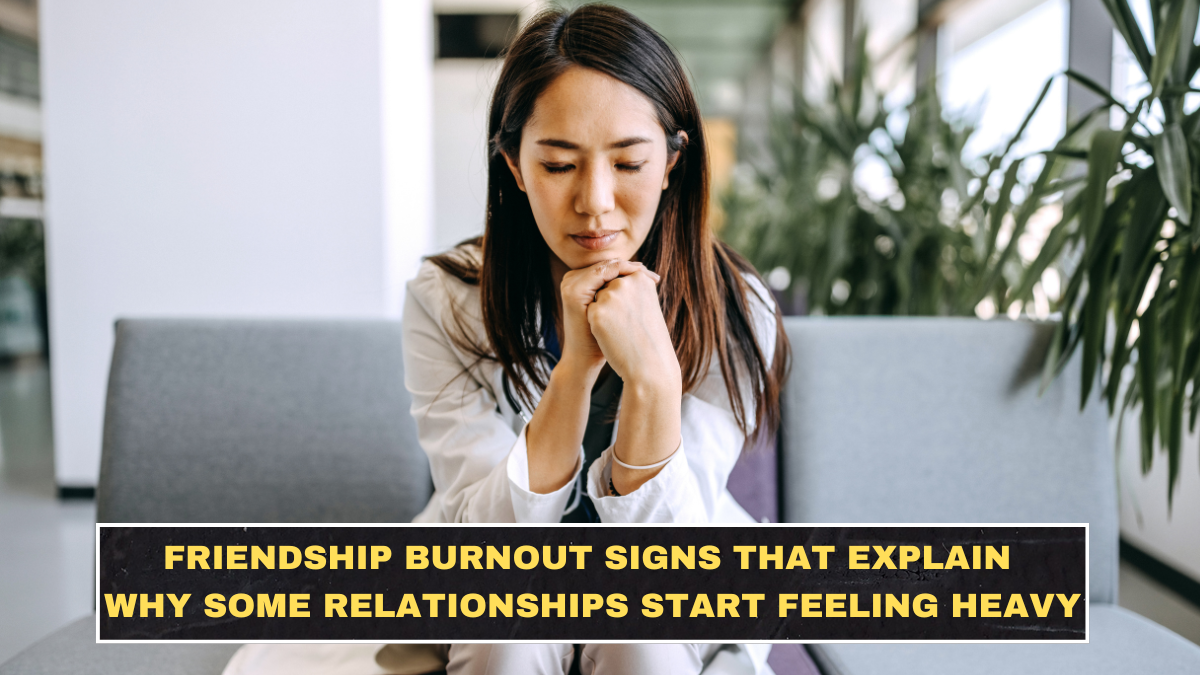
Friendship burnout is what happens when a relationship stops feeling supportive and starts feeling like recurring emotional labor. That does not automatically mean the friend is toxic. It often means the dynamic has become uneven, draining, or too demanding to keep carrying in the same way. This matters because social connection is clearly tied to well-being, yet many adults are already operating with limited emotional bandwidth. Pew reported in 2025 that 16% of Americans say they feel lonely or isolated all or most of the time, while 38% say they sometimes feel that way.
That pressure shows up inside friendships too. Pew’s 2023 friendship data found that 53% of Americans say they have between one and four close friends, while 8% say they have none. In other words, close friendships matter a lot because many adults are not sitting on a huge emotional support bench. When one important friendship becomes exhausting, people feel it more sharply.
What does friendship burnout actually look like?
It usually looks less dramatic than people expect. Friendship burnout is often not one betrayal or one huge fight. It is the slower feeling that every interaction takes more than it gives. You begin dreading replies, delaying meetups, or feeling relief when plans get canceled. That is a useful warning sign, because healthy friendships can involve stress sometimes, but they should not regularly leave you emotionally depleted.
A second sign is predictability in the worst sense: the conversation always returns to their crisis, their needs, their updates, or their emotions, while your inner life barely enters the room. Pew’s 2025 data found women are more likely than men to say they would turn to a friend for emotional support, and men communicate less often with close friends. That does not prove burnout by itself, but it shows how uneven support patterns can already be across adult friendships.
Which signs usually mean the friendship is getting too heavy?
The clearest sign is persistent imbalance. You are the one checking in, remembering details, initiating plans, and managing tension. Another sign is emotional hangover: after talking to them, you feel guilty, irritated, tired, or vaguely trapped instead of more grounded. A third sign is that honesty feels expensive. You start editing yourself because telling the truth about your limits seems likely to trigger defensiveness, neediness, or conflict.
There is also social resentment. You may notice that a simple message from them feels like an obligation rather than connection. That reaction does not make you cruel. It usually means the relationship has been running on obligation for too long. Given that younger adults are already more likely than older adults to report loneliness, overloaded friendships can become especially confusing because people cling to connection even when the connection is draining. Pew found adults under 50 are much more likely than those 50 and older to say they often feel lonely.
| Friendship pattern | What it may signal | Why it matters |
|---|---|---|
| You always initiate | Uneven effort | Relationship may rely on one person’s labor |
| You feel drained after contact | Emotional overload | Support is becoming costly |
| You avoid replying | Dread and resentment | Connection feels like duty |
| Your needs never fit | One-sided dynamic | Mutuality is breaking down |
| Boundaries trigger guilt | Fragile friendship structure | Honesty is not being tolerated |
What do people misunderstand about friendship burnout?
They confuse it with cruelty or disloyalty. That is the first mistake. Feeling burned out does not mean you do not care. It means care by itself is no longer enough to carry a dynamic that has become too lopsided. People also confuse frequency with closeness. Constant texting, constant access, and constant availability do not automatically mean a friendship is healthy. Sometimes they are just signs that no real boundary exists.
Another misunderstanding is that a friendship must be “toxic” to justify distance. That is childish thinking. Some friendships are not abusive or malicious. They are simply unsustainable in their current form. Pew’s 2025 findings show most adults do have at least one close friend, but not all friendships function as equal support systems, and many people draw on different networks unevenly.
What should someone do when friendship burnout starts showing up?
Start by being honest about the pattern before labeling the person. Ask yourself what is actually exhausting: frequency, emotional intensity, one-sidedness, lack of reciprocity, or guilt-based expectations. Then change something concrete. Reply slower. Say no more clearly. Stop over-functioning. If the friendship only works when you overextend yourself, that tells you the truth faster than any overanalysis will.
This matters because social support is valuable, but forced support at the cost of your own stability is not healthy. APA has highlighted the broader mental-health importance of connection, but that does not mean every friendship should be preserved in its most demanding form. Good relationships should help regulate life, not repeatedly overload it.
Conclusion?
Friendship burnout usually starts before people admit it. It shows up as dread, imbalance, resentment, and the feeling that one relationship has become heavier than it should be. Not every strained friendship is toxic, but pretending a draining dynamic is normal just because it has history is weak thinking. Some friendships need clearer boundaries. Some need less access. Some need to end. The honest sign is simple: if connection keeps costing you more than it restores, something is off.
FAQs
Is friendship burnout the same as a toxic friendship?
No. Burnout usually means the relationship has become exhausting or uneven. Toxicity implies a more consistently harmful pattern. A friendship can be draining without being abusive.
What is the biggest sign of friendship burnout?
Persistent emotional exhaustion is usually the clearest sign. If contact regularly leaves you depleted, resentful, or relieved when it stops, the dynamic likely needs attention.
Can a good friendship still cause burnout?
Yes. Even caring friendships can become unsustainable when one person carries most of the emotional work or when boundaries disappear.
Why do adults stay in burned-out friendships so long?
Because loneliness is real, history feels important, and many people think needing distance makes them selfish. Pew’s data showing substantial loneliness and relatively modest close-friend networks helps explain why people tolerate draining friendships longer than they should.
Click here to know more