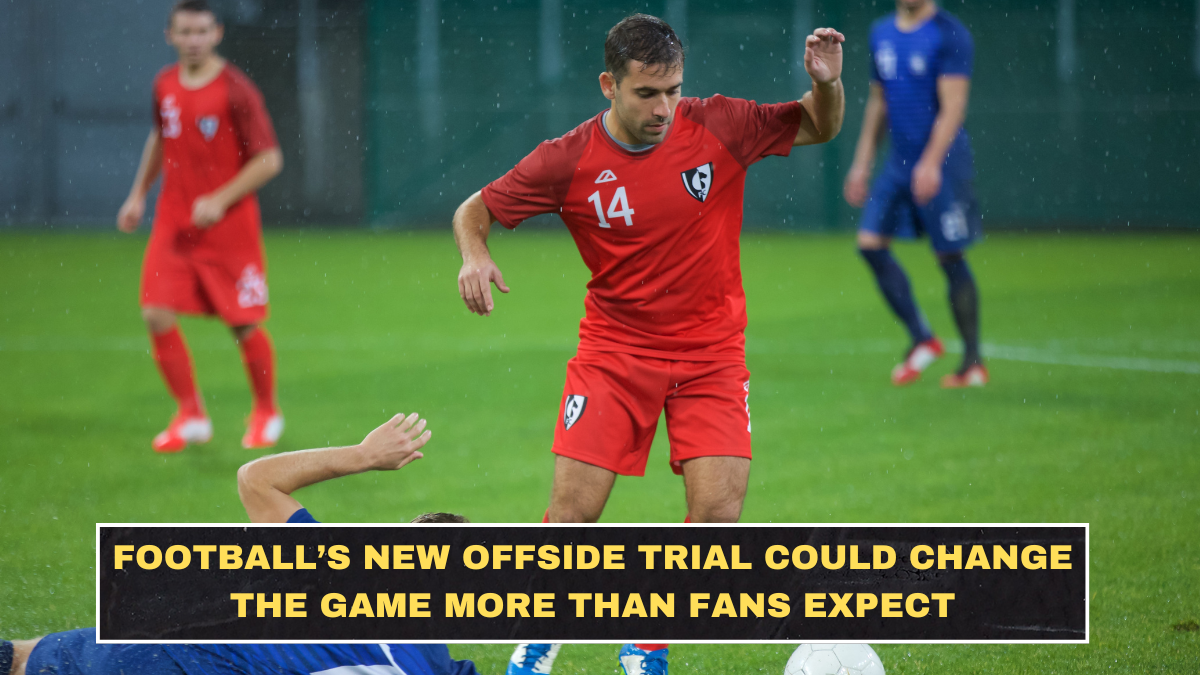
Arsène Wenger’s “daylight” offside idea is no longer just a debate-show gimmick. The Canadian Premier League will become the first professional league to trial it during the 2026 season, with the pilot beginning when the season starts on April 4. Under the new interpretation, an attacker is only offside if there is clear space, or “daylight,” between the attacker and the second-last defender. If any part of the attacker’s body that can score is level with or behind that defender, the player stays onside.
That is a major shift from the current system, where even a tiny fraction of a shoulder, knee, or toe ahead of the defender can trigger offside. Wenger has pushed this idea for years because he believes modern offside calls punish attackers for microscopic margins and slow the game down with endless replay arguments. The Canadian trial is the first serious professional test of whether his solution actually improves football or just creates a new kind of chaos.

What the new offside rule would actually do
The simplest way to understand it is this: the current law punishes any scoring body part being beyond the second-last defender. Wenger’s version flips that balance back toward the attacker. A player would only be offside if their entire scoring body position is clearly beyond the defender, with visible daylight between them.
That sounds small, but it is not. It would make borderline attacking runs easier to reward and should reduce the number of goals ruled out for absurdly tight margins. FIFA and the CPL both framed the trial as a way to boost attacking play, improve flow, and create a clearer visual threshold for decisions.
| Rule element | Current interpretation | Trial interpretation |
|---|---|---|
| Basic offside line | Any scoring body part beyond the second-last defender can mean offside | Player is only offside if there is visible daylight between attacker and defender |
| Benefit of doubt | Often very limited under tight replay calls | Shifts more toward the attacker |
| Likely effect | More tight offside calls, more disallowed goals | More onside calls, potentially more attacking play |
The point many fans miss is that this is not just a VAR argument. It changes how strikers time runs, how defenders hold their line, and how assistant referees read attacks in real time. That is why the reaction is so divided.
Why fans are split
Supporters of the change think modern offside enforcement has become ridiculous. They are tired of goals being ruled out because a player’s shoulder was millimetres beyond the line. Wenger’s rule is meant to restore a more attacking version of “benefit of the doubt.”
Critics are less convinced, and they have a point too. A rule that favors attackers more aggressively could force defenders deeper, create more one-on-one breakaways, and distort the balance between attack and defence. It may also create new arguments about what counts as “daylight” in tight moments. So no, this is not obviously a clean fix. It could simply move the controversy to a different place. That last point is an inference from how the proposed interpretation works.
Why the Canadian Premier League matters here
The CPL is not being used randomly. FIFA said the trial will be run in cooperation with Canada Soccer, with preparation for clubs, players, and officials. The league is also introducing Football Video Support, a lighter review system backed by FIFA and IFAB, as part of a wider push to test ways of improving tempo and reducing time-wasting.
That makes this more important than a minor league experiment. If the trial produces more goals, fewer stoppages, and less replay rage, the pressure to test it elsewhere will grow fast. If it creates tactical weirdness or refereeing confusion, the idea could stall just as quickly.
What could change on the pitch
A few likely effects stand out:
- attackers may make earlier runs because the risk of being flagged drops
- defenders may retreat slightly instead of holding an ultra-high line
- more close calls may end with goals standing rather than being chalked off
- teams built around quick vertical attacks could benefit more than possession-heavy sides
These are reasoned projections based on the rule design, not confirmed outcomes yet. The trial exists precisely because nobody knows the full effect until real matches test it.
Conclusion
Football’s new offside trial could change the game more than fans expect because it is not tweaking a detail. It is shifting the balance of the sport toward attackers in a very visible way. The Canadian Premier League will now test whether Wenger’s daylight idea makes football clearer and better, or whether it simply replaces one kind of controversy with another. Either way, this is a more serious rule experiment than most people realize.
FAQs
What is Wenger’s daylight offside rule?
It is a proposed offside interpretation where an attacker is only offside if there is visible daylight between them and the second-last defender.
Where will the rule be trialled first?
The Canadian Premier League will be the first professional competition to trial it in the 2026 season.
When does the trial start?
FIFA said the CPL trial begins when the 2026 season starts on April 4.
Why are fans divided over it?
Some think it will reduce absurd marginal offside calls and help attacking football, while others fear it could unfairly favor attackers and create new arguments.