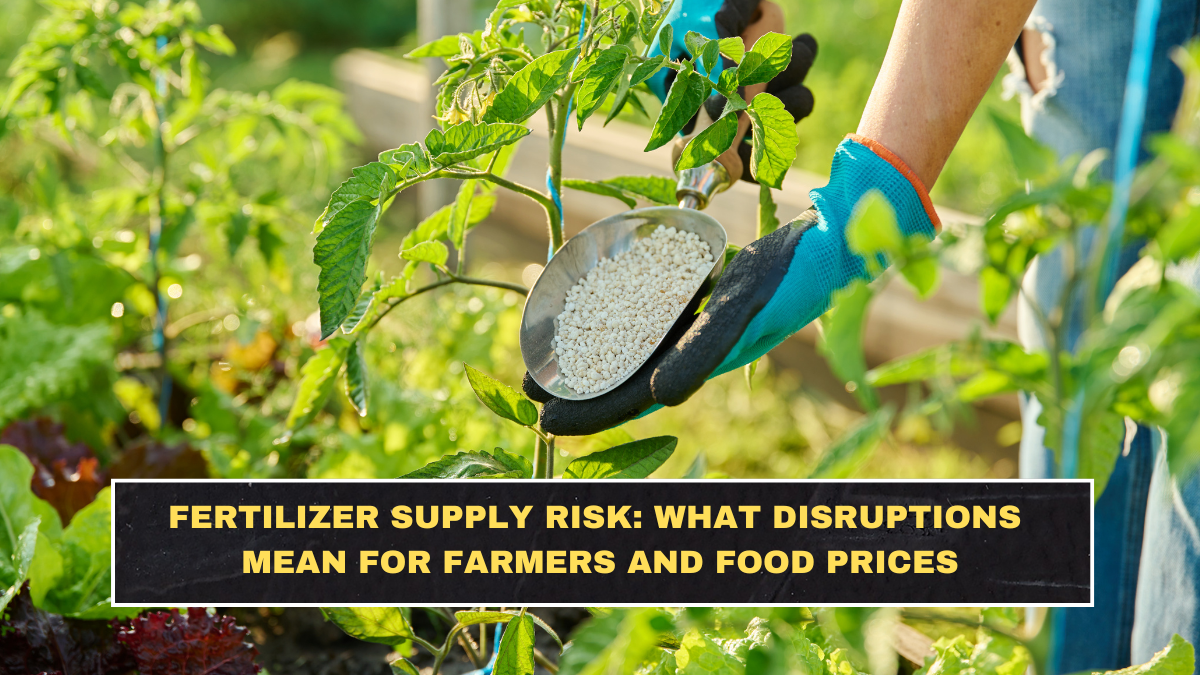
Fertilizers are a critical input in modern agriculture, helping farmers improve crop yields and maintain soil productivity. In countries like India, where agriculture supports millions of livelihoods, stable fertilizer supply is essential for both food production and economic stability.
However, disruptions in global supply chains, rising energy costs, or production challenges can sometimes lead to concerns about fertilizer availability. When such disruptions occur, they can affect farming costs, crop production planning, and eventually food prices in the market.
Understanding how fertilizer supply works helps explain why these disruptions attract attention from farmers, policymakers, and economists.

Why Fertilizers Are Essential for Agriculture
Fertilizers provide essential nutrients that crops need to grow efficiently and produce higher yields.
| Nutrient Type | Role in Plant Growth |
|---|---|
| Nitrogen | Supports leaf and plant growth |
| Phosphorus | Helps root development |
| Potassium | Improves plant strength and disease resistance |
Balanced use of these nutrients helps farmers maintain soil fertility and agricultural productivity.
Types of Fertilizers Commonly Used in India
Different types of fertilizers are used depending on the crop and soil requirements.
| Fertilizer Type | Primary Nutrient |
|---|---|
| Urea | Nitrogen |
| DAP (Diammonium Phosphate) | Nitrogen and phosphorus |
| MOP (Muriate of Potash) | Potassium |
| NPK fertilizers | Combination of key nutrients |
These fertilizers support major crops such as wheat, rice, sugarcane, and pulses.
Factors That Can Cause Fertilizer Supply Disruptions
Several global and domestic factors can influence fertilizer availability.
| Factor | Explanation |
|---|---|
| Energy prices | Fertilizer production requires natural gas |
| Global trade disruptions | Shipping delays affect imports |
| Production shortages | Manufacturing output fluctuations |
| Policy changes | Export restrictions or regulations |
Because fertilizer production depends on multiple resources, supply chains can sometimes face disruptions.
Impact on Farmers
When fertilizer supply becomes uncertain or prices rise, farmers may face challenges in managing crop production costs.
| Farming Impact | Effect |
|---|---|
| Higher input cost | Increased expense for fertilizers |
| Crop planning changes | Adjustments in planting decisions |
| Yield concerns | Possible reduction in crop output |
| Financial pressure | Greater cost burden on farmers |
These factors highlight the importance of stable fertilizer availability for agricultural planning.
Possible Effect on Food Prices
Agricultural input costs often influence the price of food products in the market.
| Economic Factor | Possible Outcome |
|---|---|
| Increased farming costs | Higher crop production expenses |
| Reduced yield | Lower supply of certain crops |
| Market adjustments | Changes in commodity prices |
| Consumer impact | Potential rise in food prices |
However, the actual impact depends on several factors including government policies and market conditions.
India’s Fertilizer Supply System
India maintains a large fertilizer distribution system to support farmers across the country.
| Supply Element | Description |
|---|---|
| Domestic production | Fertilizer manufacturing within India |
| Imports | Additional supply from international markets |
| Government support | Subsidies to maintain affordability |
| Distribution network | Delivery through agricultural centers |
This system helps ensure fertilizers remain accessible to farmers during cultivation seasons.
Measures to Maintain Supply Stability
Governments and agricultural authorities often take steps to ensure fertilizer availability during critical farming periods.
| Measure | Purpose |
|---|---|
| Strategic imports | Increase supply when needed |
| Subsidy programs | Reduce cost burden on farmers |
| Production incentives | Support domestic manufacturing |
| Distribution monitoring | Ensure availability in rural areas |
Such measures aim to protect agricultural productivity.
Conclusion
Fertilizer supply plays a vital role in supporting agricultural production and maintaining stable food supplies. When disruptions occur in global or domestic supply chains, they can affect farming costs and potentially influence food prices.
By monitoring supply conditions and implementing supportive policies, governments and agricultural institutions work to ensure that farmers continue to have access to essential fertilizers needed for crop production.
FAQs
Why are fertilizers important for farming?
Fertilizers provide nutrients that help crops grow efficiently and improve agricultural yields.
What causes fertilizer shortages?
Factors such as high energy prices, production issues, or global trade disruptions can affect supply.
How do fertilizer prices affect farmers?
Higher fertilizer prices increase production costs for farmers and may influence crop planning decisions.
Can fertilizer shortages affect food prices?
Yes. Increased farming costs or reduced crop yields can contribute to higher food prices.
How does India ensure fertilizer availability?
Through domestic production, imports, subsidies, and nationwide distribution networks.