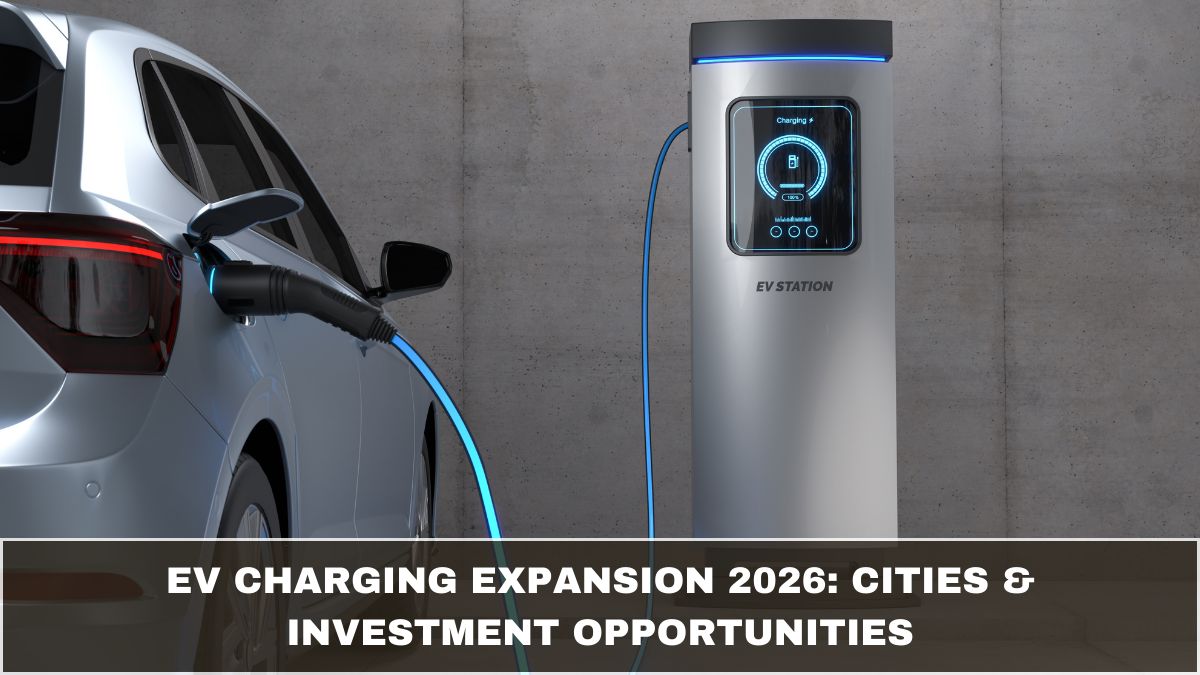
The EV charging infra boom: where to invest is gaining momentum in India as electric vehicle adoption accelerates. With supportive government policies, technological advances, and growing consumer demand, cities are rapidly expanding public and private EV charging networks. Fast chargers, smart stations, and accessible infrastructure are key drivers of India’s EV revolution in 2026.
This article provides a comprehensive overview of cities witnessing EV charging growth, policy incentives, and investment opportunities for businesses and entrepreneurs.
The Rise of EV Charging Infrastructure in India
India’s EV market is projected to expand rapidly in 2026, fueling demand for reliable charging solutions. Key trends include:
-
Deployment of fast chargers in metro and Tier-2 cities
-
Integration of EV charging points with highways and expressways
-
Smart network solutions with app-based monitoring and payment systems
-
Public-private partnerships and state-backed investment incentives
The EV charging infra boom: where to invest highlights cities with the fastest-growing infrastructure and highest investment potential.
Cities Leading EV Charging Expansion
Several Indian cities are becoming hubs for EV charging networks:
-
Delhi NCR: Rapid deployment of fast chargers in residential, commercial, and highway locations
-
Mumbai & Pune: EV-friendly policies supporting both home and public charging stations
-
Bengaluru: Technology-driven charging networks integrated with renewable energy
-
Hyderabad & Chennai: Smart city initiatives including EV corridors and fast charging hubs
-
Kolkata & Ahmedabad: Expansion of public charging points and fleet-based infrastructure
These cities are attracting investors and entrepreneurs seeking to capitalize on the EV ecosystem.
Policy Changes Driving Growth
Government policies in 2026 are supporting EV charging expansion:
-
Faster Approval Processes: Simplified permits for public and private charging stations
-
Subsidies & Incentives: Financial support for installation of chargers and renewable integration
-
Tax Benefits: Reduced GST rates for EV infrastructure and equipment
-
State-Level Initiatives: Delhi, Maharashtra, Karnataka, and Telangana are offering special incentives for fast chargers
Policy support is critical in enabling investors to participate in India’s EV growth story.
Investment Opportunities in 2026
The EV charging infra boom: where to invest creates multiple business opportunities:
-
Fast-Charging Stations: High-speed chargers along highways and urban hubs
-
Battery Swapping Solutions: Short-duration swap stations for two-wheelers and three-wheelers
-
Smart Charging Networks: IoT-enabled systems with digital payment and monitoring solutions
-
Renewable Energy Integration: Solar-powered charging stations reducing operating costs
-
EV Fleet Support: Infrastructure for delivery, ride-sharing, and logistics electric vehicles
Investors can explore partnerships with private developers, municipal authorities, and EV OEMs to maximize returns.
Benefits for Businesses and Consumers
EV charging expansion in 2026 benefits multiple stakeholders:
-
Consumers: Convenient, reliable, and fast access to charging points
-
Businesses: New revenue streams and alignment with sustainability goals
-
Local Governments: Reduced urban emissions and support for smart city objectives
-
Energy Sector: Growth in electricity demand and renewable energy deployment
Well-planned investments can yield long-term economic, environmental, and social benefits.
Challenges and Considerations
Despite rapid growth, challenges exist in the EV charging sector:
-
High upfront costs for infrastructure deployment
-
Grid capacity and energy management requirements
-
Standardization of charging protocols across different EV models
-
Ensuring accessibility in smaller towns and semi-urban areas
-
Maintenance and operational efficiency for public charging stations
Strategic planning and technology partnerships can mitigate these risks and ensure profitable investment.
Conclusion
The EV charging infra boom: where to invest highlights India’s shift toward sustainable mobility in 2026. With fast chargers, policy incentives, and growing EV adoption, cities like Delhi NCR, Bengaluru, Mumbai, Hyderabad, and Chennai are at the forefront of infrastructure expansion. Investors and entrepreneurs have opportunities in smart charging networks, renewable-powered stations, fleet solutions, and battery swapping. By understanding city-specific trends, regulatory support, and emerging technologies, stakeholders can position themselves for long-term growth in India’s EV ecosystem.
FAQs
Which Indian cities are leading EV charging expansion in 2026?
Delhi NCR, Bengaluru, Mumbai, Hyderabad, and Chennai are the fastest-growing EV infrastructure hubs.
What types of EV charging investments are most promising?
Fast-charging stations, smart charging networks, battery swapping, renewable-powered stations, and fleet infrastructure.
How are government policies supporting EV charging in 2026?
Policies include subsidies, tax incentives, simplified approvals, and state-specific programs to encourage fast-charger deployment.
What benefits do EV charging networks offer to consumers?
Convenient and reliable access to charging, faster travel, and integration with renewable energy.
What challenges should investors consider?
High setup costs, grid capacity, standardization issues, accessibility in smaller cities, and maintenance requirements.