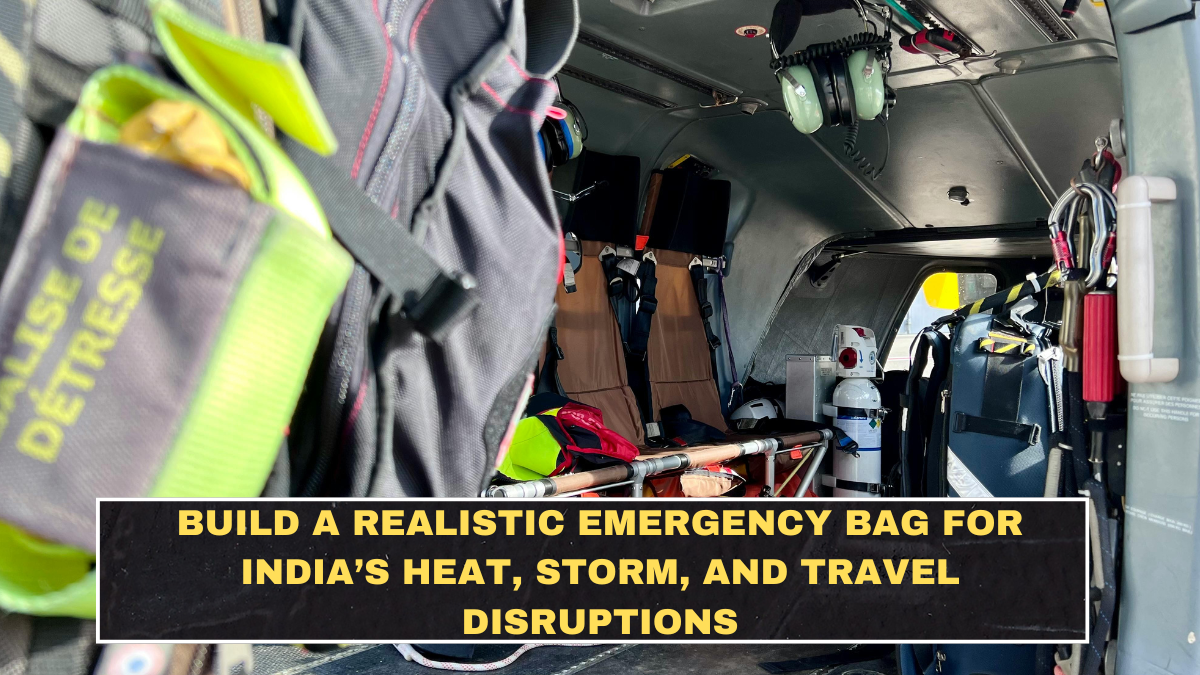
Most people build useless “emergency kits” in their head. They imagine dramatic disaster scenes, then buy random items they never use. That is the wrong approach. In India, the more realistic risks are heat stress, sudden storms, power cuts, local flooding, transport disruption, and being stuck outside or on the road longer than expected. IMD is still issuing heat guidance and outlooks, and NDMA continues to treat heatwave preparedness as a real public-safety issue, not seasonal background noise.
The smarter move is to build one practical bag that works for three situations: a bad travel delay, a long power outage, or a fast move out of the house for a few hours. That means water, medicines, light, power, documents, and simple weather protection. Not camping fantasy gear.
What a realistic emergency bag should do
Your bag is not meant to help you “survive the apocalypse.” It is meant to buy you time and reduce panic. Ready.gov’s disaster-kit guidance still gets the basics right: water, food, flashlight, batteries, first aid, sanitation items, documents, and communication tools belong in a core emergency kit. WHO and heat-safety checklists also emphasize hydration, electrolyte support, sun protection, and planning for vulnerable people during extreme heat.
For India, add a little realism. Your bag should also handle heat exposure, wet weather, phone dependence, and sudden transport breakdown. If the power goes, your fan stops, your phone battery starts dying, UPI may fail in some moments, and you may be standing in heat or rain longer than planned. That is the actual problem.
The essentials to pack
| Item | Why it belongs in the bag |
|---|---|
| Water bottle | Hydration is the first need in heat and delays; emergency-kit guidance consistently prioritizes water. |
| ORS or electrolyte sachets | More useful than plain panic-buying juice during heat stress. WHO and heat checklists support hydration and electrolyte planning. |
| Basic dry snacks | Keep energy stable during travel disruption or long waits. Non-perishable food is standard emergency-kit guidance. |
| Power bank + charging cable | Your phone is your map, payment tool, contact line, and alert system. |
| Flashlight or torch | Power cuts and storm evenings make this non-negotiable. |
| Small first-aid pouch | Bandages, antiseptic, pain relief, and regular medicines are standard essentials. |
| Copies of key documents | ID, emergency contacts, prescriptions, and insurance details matter if networks or phones fail. |
| Cash in small notes | UPI is great until battery, signal, or outage problems show up. |
| Rain cover / poncho | More useful in Indian storm season than bulky clothing. |
| Cap / scarf / small towel | Helps with direct sun, sweat, and basic cooling. WHO advises sun protection and light clothing in heat. |
| Sanitation items | Tissues, wipes, sanitary products, and waste bags are standard kit items. |
What to customize for your household
A generic list is not enough. If your home has children, older adults, or people with chronic illness, the bag needs to reflect that. WHO and other emergency-preparedness guidance repeatedly stress planning for medicines, health information, and special-needs items. So add regular prescriptions, spare spectacles, baby supplies, or pet essentials if relevant.
Also think in two layers. Keep one family bag at home and one lighter daily version for the car or office commute. That is more realistic than stuffing everything into one overloaded backpack you never touch.
What people pack that is mostly pointless
This is where people waste money. You do not need survival knives, giant canned-food stacks in a go-bag, or ten gadgets that all need charging. You need compact, boring, high-utility items. If the bag is too heavy, too expensive, or too dramatic, you will stop maintaining it. Then it becomes performative preparedness, which is the same as being unprepared.
What to check every month
Emergency bags fail because people pack once and forget them. Check expiry dates on medicines, ORS, and snacks. Recharge the power bank. Replace damaged documents. Rotate water. NDMA-linked preparedness messaging and general emergency-kit guidance both emphasize planning in advance, not during the emergency itself.
Conclusion
A good emergency bag for Indian heat and storm season is not complicated. It should help you handle dehydration, darkness, dead phones, minor injury, wet weather, and short-term disruption without scrambling like an amateur. That means water, ORS, light, power, medicines, cash, documents, and basic weather protection. Anything beyond that is secondary.
The mistake most people make is waiting for a warning to start preparing. That is backward. IMD and NDMA guidance exists precisely because weather stress and disruption are predictable enough to prepare for before they hit.
FAQs
What is the most important item in an emergency bag during heat season?
Water is the first priority, followed by ORS or electrolytes, because heat stress and dehydration escalate fast. Emergency-kit and heat-safety guidance consistently puts hydration first.
Should an emergency bag for India include rain gear?
Yes. Sudden storms and travel disruption make a light poncho or compact rain cover more practical than packing extra bulky clothes.
How often should I check my emergency bag?
At least once a month. Recharge devices, rotate medicines and snacks, and update documents and contact lists. Preparedness only works if the bag is usable when needed.
Do I need separate bags for home and travel?
Ideally yes. A full home bag and a smaller commute bag is more practical than one oversized bag you never carry.